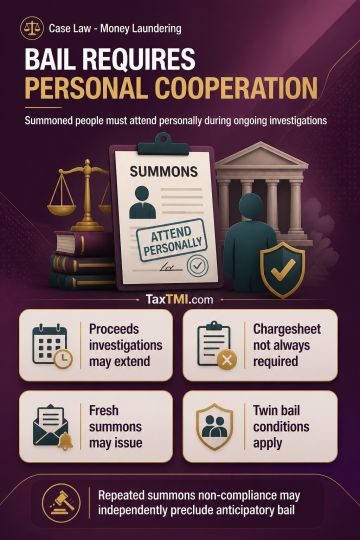
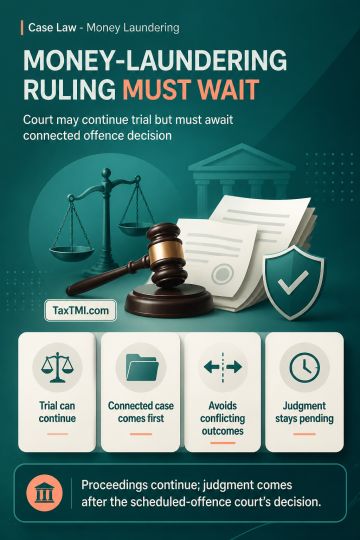
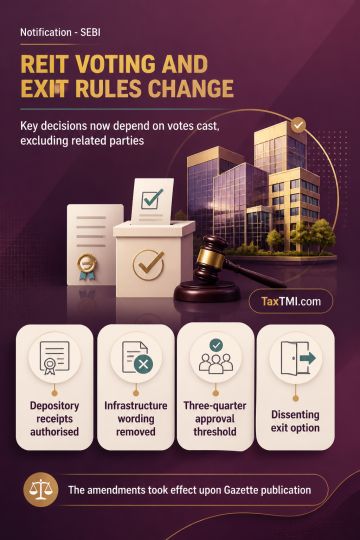
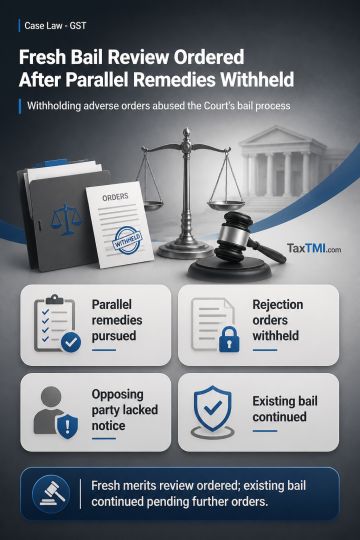
Money-laundering judgment timing requires awaiting the scheduled-offence decision despite continuation of the underlying trial where outcomes directly...
Accredited investor eligibility expands through securities-market exposure, while alternative investment fund disputes require prescribed resolution a...
Customs Assessment Portal centralises classification and valuation guidance to support consistent, transparent and informed compliance across stakehol...
The High Court dismissed the appeal filed u/s 260A, holding that no substantial question of law arises. The Assessing Officer had rejected the assessee's books of accounts and applied a low gross profit rate of 0.54% without valid reasons. The Income Tax Appellate Tribunal (ITAT) observed that the assessee had produced stock statements without negative stock, and the evidence was part of the account books furnished. The ITAT held that it was unjustified to reject accounts merely because buyers' names were not mentioned in cash sales bills, as the assessee traded in gold bullion where rates were ascertainable. The ITAT found no valid reason to doubt the assessee's records, as they maintained quantitative stock tally. The Revenue failed to establish that the assessee did not adopt a consistent accounting method or that profits could not be detected from the books. The High Court upheld the ITAT's findings based on the factual matrix and documents examined by the lower authorities.
The High Court dismissed the appeal filed u/s 260A, holding that no substantial question of law arises. The Assessing Officer had rejected the assessee's books of accounts and applied a low gross profit rate of 0.54% without valid reasons. The Income Tax Appellate Tribunal (ITAT) observed that the assessee had produced stock statements without negative stock, and the evidence was part of the account books furnished. The ITAT held that it was unjustified to reject accounts merely because buyers' names were not mentioned in cash sales bills, as the assessee traded in gold bullion where rates were ascertainable. The ITAT found no valid reason to doubt the assessee's records, as they maintained quantitative stock tally. The Revenue failed to establish that the assessee did not adopt a consistent accounting method or that profits could not be detected from the books. The High Court upheld the ITAT's findings based on the factual matrix and documents examined by the lower authorities.
Note: It is a system-generated summary and is for quick reference only.
 TaxTMI
  TaxTMI
 of 4920