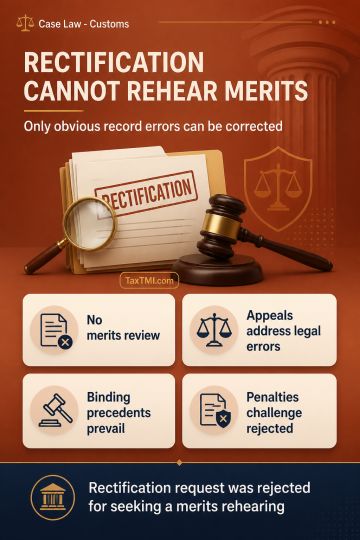
Rectification of mistake remains limited to self-evident record errors, preventing merits review through miscellaneous applications and preserving fin...
Tender creditworthiness conditions may extend to de facto Promoter Directors, with post-participation challenges generally barred absent arbitrariness...
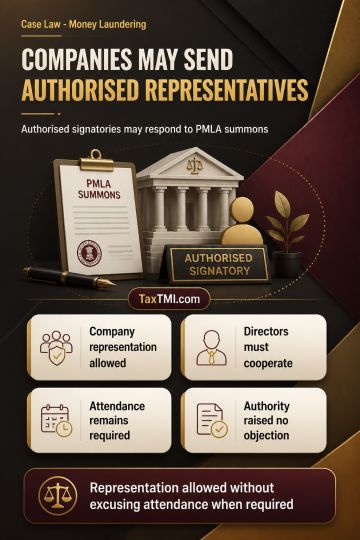
Corporate representation in PMLA summons proceedings permitted through an authorised signatory, subject to directors' continuing cooperation and atten...
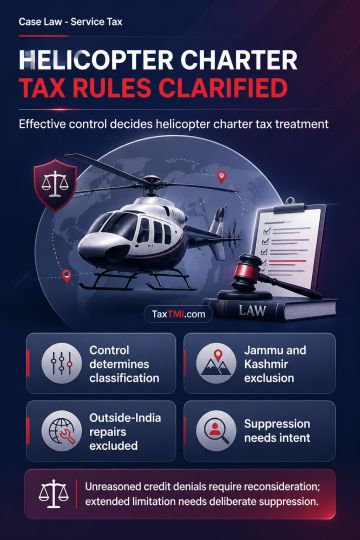
Helicopter charter classification requires effective control analysis, while territorial performance, reasoned credit orders and wilful suppression de...
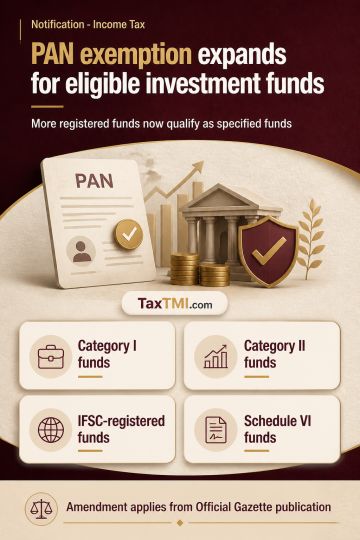
Specified fund definition expands PAN exemption eligibility for registered alternative investment funds and qualifying International Financial Service...
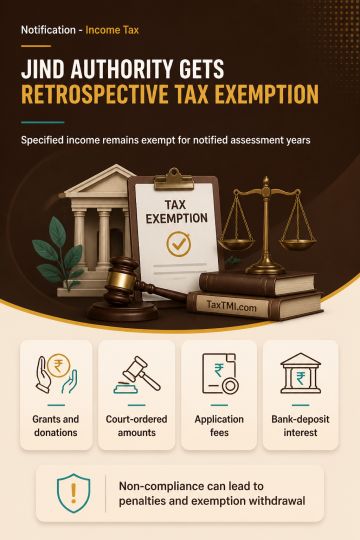
Tax exemption for specified legal-services authority income applies retrospectively, subject to non-commercial activity, unchanged income sources, and...
The High Court dismissed the appeal filed u/s 260A, holding that no substantial question of law arises. The Assessing Officer had rejected the assessee's books of accounts and applied a low gross profit rate of 0.54% without valid reasons. The Income Tax Appellate Tribunal (ITAT) observed that the assessee had produced stock statements without negative stock, and the evidence was part of the account books furnished. The ITAT held that it was unjustified to reject accounts merely because buyers' names were not mentioned in cash sales bills, as the assessee traded in gold bullion where rates were ascertainable. The ITAT found no valid reason to doubt the assessee's records, as they maintained quantitative stock tally. The Revenue failed to establish that the assessee did not adopt a consistent accounting method or that profits could not be detected from the books. The High Court upheld the ITAT's findings based on the factual matrix and documents examined by the lower authorities.
The High Court dismissed the appeal filed u/s 260A, holding that no substantial question of law arises. The Assessing Officer had rejected the assessee's books of accounts and applied a low gross profit rate of 0.54% without valid reasons. The Income Tax Appellate Tribunal (ITAT) observed that the assessee had produced stock statements without negative stock, and the evidence was part of the account books furnished. The ITAT held that it was unjustified to reject accounts merely because buyers' names were not mentioned in cash sales bills, as the assessee traded in gold bullion where rates were ascertainable. The ITAT found no valid reason to doubt the assessee's records, as they maintained quantitative stock tally. The Revenue failed to establish that the assessee did not adopt a consistent accounting method or that profits could not be detected from the books. The High Court upheld the ITAT's findings based on the factual matrix and documents examined by the lower authorities.
Note: It is a system-generated summary and is for quick reference only.
 TaxTMI
 of 4805







 Join Channel


 TaxTMI