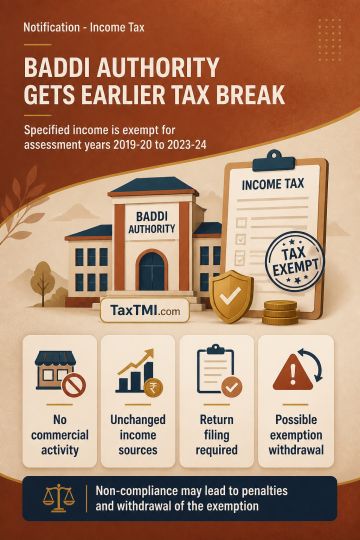
Specified income of Baddi Barotiwala Nalagarh Development Authority receives conditional tax exemption, retrospectively covering its designated assess...
Specified development authority income receives retrospective tax exemption, subject to non-commercial activity, unchanged income sources, and return-...
Unified Brand India framework introduces voluntary Trust Mark certification and funding support for export branding, packaging and global promotional ...
Origin Declaration authentication governs preferential tariff claims under India-UK CETA, requiring a validated reference number before import clearan...
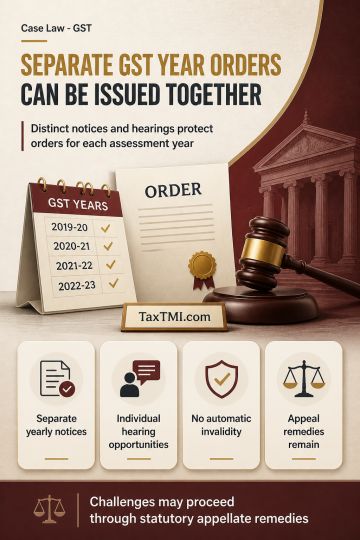
Separate assessment orders for different years remain valid when distinct notices and hearing opportunities prevent prejudice from combined proceeding...
The summary focuses on the interpretation and applicability of Section 271D and Section 269SS of the Income Tax Act. The key points are: Section 271D imposes a penalty for violating the provisions of Section 269SS, which prohibits receiving a sum exceeding Rs. 20,000 as a loan or deposit from any person. However, Section 269SS does not cover the receipt of cash consideration for the sale of immovable property. The authorities erroneously interpreted Section 269SS and imposed a penalty u/s 271D for receiving cash consideration from the sale of immovable properties. The Appellate Tribunal held that the Assessing Officer committed an error in invoking Sections 269SS and 271D in this case and quashed the penalty imposed.
The summary focuses on the interpretation and applicability of Section 271D and Section 269SS of the Income Tax Act. The key points are: Section 271D imposes a penalty for violating the provisions of Section 269SS, which prohibits receiving a sum exceeding Rs. 20,000 as a loan or deposit from any person. However, Section 269SS does not cover the receipt of cash consideration for the sale of immovable property. The authorities erroneously interpreted Section 269SS and imposed a penalty u/s 271D for receiving cash consideration from the sale of immovable properties. The Appellate Tribunal held that the Assessing Officer committed an error in invoking Sections 269SS and 271D in this case and quashed the penalty imposed.
Note: It is a system-generated summary and is for quick reference only.
 TaxTMI
 of 4807















 Join Channel


 TaxTMI

