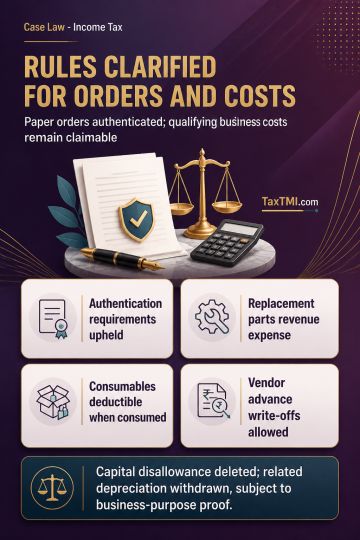
Authentication of paper assessment orders upheld, while qualifying repairs, consumables and vendor advance write-offs remain deductible business claim...
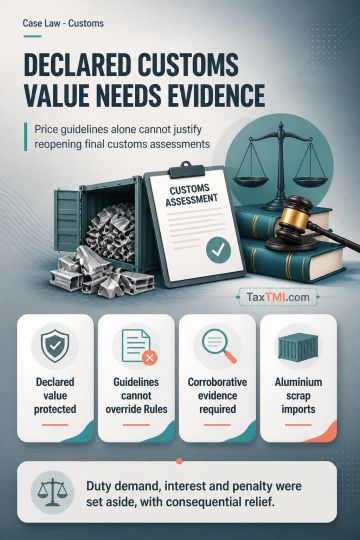
Transaction value cannot be rejected solely on non-statutory valuation guidelines without corroborative evidence supporting reassessment of final cust...
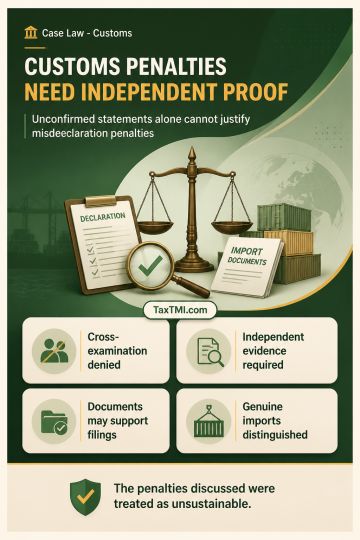
Cross-examination rights and corroborated evidence limit customs penalties for misdeclaration in genuine import transactions involving documented clea...
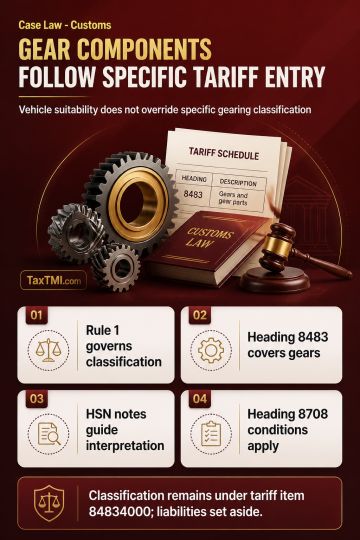
Tariff classification of vehicle gear components follows the specific gearing entry, displacing motor-vehicle parts classification and related liabili...
Necessary-party requirements limit impleadment of independent entities, while deferred consideration does not create an appealable adverse determinati...
The assessee declared purchases from parties issuing bogus purchase vouchers without actual transactions, merely laundering unaccounted money to claim deduction u/s 80HHC. The Assessing Officer treated 25% of unverifiable purchases as income from other sources, alleging inflation of export profits. The CIT(A) confirmed this addition. The ITAT held that rejection of books u/s 145(3) requires specific conditions, which were not satisfied. The AO did not follow the proper procedure or point out defects in accounts. The ITAT relied on judicial precedents to conclude that no addition can be made if the declared gross profit rate is higher than the rate prescribed by the jurisdictional High Court in such cases. The assessee's gross profit rate was found reasonable based on comparable cases and the partner's statement recorded during the search. Consequently, the ITAT allowed the assessee's ground and deleted the addition of 25% of unverifiable purchases.
The assessee declared purchases from parties issuing bogus purchase vouchers without actual transactions, merely laundering unaccounted money to claim deduction u/s 80HHC. The Assessing Officer treated 25% of unverifiable purchases as income from other sources, alleging inflation of export profits. The CIT(A) confirmed this addition. The ITAT held that rejection of books u/s 145(3) requires specific conditions, which were not satisfied. The AO did not follow the proper procedure or point out defects in accounts. The ITAT relied on judicial precedents to conclude that no addition can be made if the declared gross profit rate is higher than the rate prescribed by the jurisdictional High Court in such cases. The assessee's gross profit rate was found reasonable based on comparable cases and the partner's statement recorded during the search. Consequently, the ITAT allowed the assessee's ground and deleted the addition of 25% of unverifiable purchases.
Note: It is a system-generated summary and is for quick reference only.
 TaxTMI
 of 4803












 Join Channel


 TaxTMI
