Food supplement classification requires common parlance and authoritative tests, preventing treatment as proprietary Ayurvedic medicines without suppo...
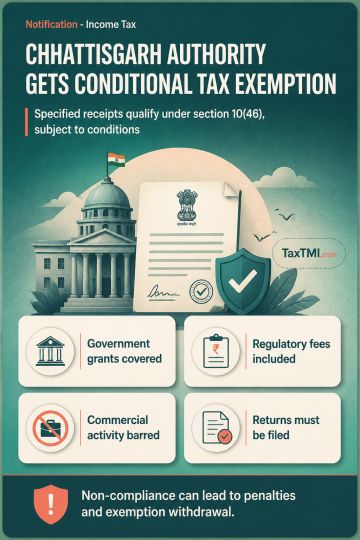
Specified regulatory authority income receives conditional tax exemption, subject to non-commercial activity, unchanged income character, and return f...
Tax exemption for regulatory authority income applies retrospectively, subject to non-commercial activity, unchanged income sources, and return-filing...
Input tax credit conditions remain constitutionally valid, with eligible recipient claims considered under GST circulars and retrospective filing dead...
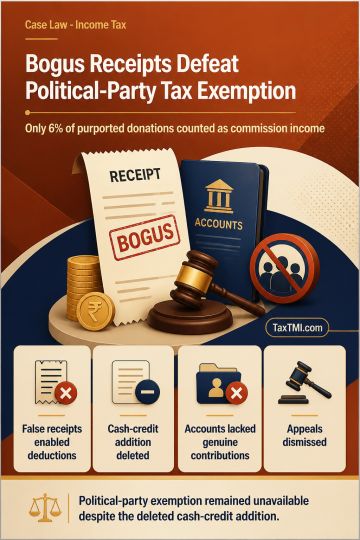
Bogus donation receipts justified commission income assessment and defeated political-party tax exemption for inaccurate accounts and reporting failur...
This is a summary of a case dealing with the determination of fair market value (FMV) for computing long-term capital gains (LTCG) and allowing deductions for cost of improvements. The key points are: the Tax Appellate Tribunal upheld the Assessing Officer's adoption of FMV as per the District Valuation Officer's report, rejecting the assessee's argument for using the 'reverse indexation method'. However, the Tribunal allowed the deduction for cost of improvement incurred in FY 1991-92, which was erroneously omitted by lower authorities. It also directed the Assessing Officer to rectify a mathematical mistake in computing the total indexed cost of improvement. The Tribunal's decision partially favored the assessee regarding the allowable deductions.
This is a summary of a case dealing with the determination of fair market value (FMV) for computing long-term capital gains (LTCG) and allowing deductions for cost of improvements. The key points are: the Tax Appellate Tribunal upheld the Assessing Officer's adoption of FMV as per the District Valuation Officer's report, rejecting the assessee's argument for using the 'reverse indexation method'. However, the Tribunal allowed the deduction for cost of improvement incurred in FY 1991-92, which was erroneously omitted by lower authorities. It also directed the Assessing Officer to rectify a mathematical mistake in computing the total indexed cost of improvement. The Tribunal's decision partially favored the assessee regarding the allowable deductions.
Note: It is a system-generated summary and is for quick reference only.
 TaxTMI
 of 4803














 Join Channel


 TaxTMI