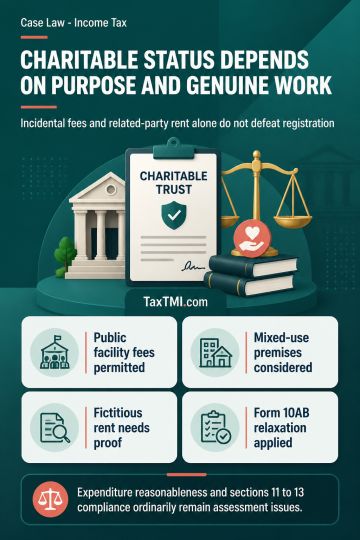
Charitable registration turns on predominant purpose and genuine activities, while incidental fees and related-party rent require supporting adverse m...
MAT book-profit adjustments exclude disallowances for exempt-income expenditure and demerger expenditure unless expressly listed under the statutory c...
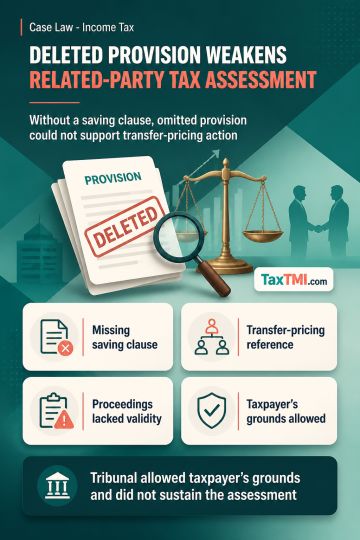
Omitted specified domestic transaction provision invalidates related-party expenditure transfer-pricing references and assessments based on consequent...
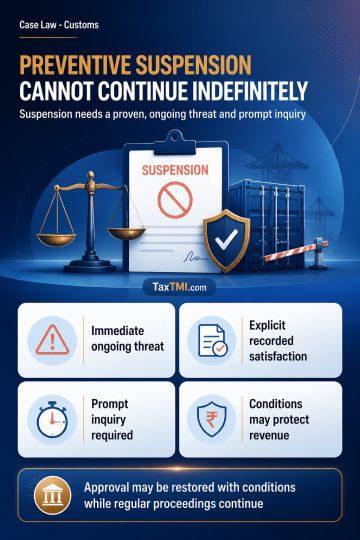
Preventive suspension requires an immediate continuing threat and cannot become indefinite without inquiry, fresh evidence, or proportionate safeguard...
Page of 4800
Press 'Enter' after typing page number.
261 to 280 of 96000 Results
❮
❯
❯❯
0 / 200
Expand Note
Add to Folder
No Folders have been created
+
Are you sure you want to delete "My most important" ?
Constitutional validity of Sections 104, 105, and 108 of the Customs Act, 1962, concerning the legality of search and seizure operations conducted by the respondents. It examines whether the alleged acts or omissions constitute prohibited goods or evasion of duty exceeding fifty lakh rupees, rendering Section 155 of the Criminal Procedure Code (Cr.P.C.) inapplicable. The court held that while gold is not absolutely prohibited, failure to comply with conditions amounts to prohibited goods u/ss 2(33) and 11 of the Act. The petitioners' alleged acts prima facie constitute prohibited goods, and the offence being cognizable with punishment up to 7 years, Section 155 of Cr.P.C. is inapplicable. Consequently, the court dismissed the stay applications, prima facie finding no grounds to grant a stay at this stage, subject to deciding the constitutional validity of the provisions in the main writ petitions.
Constitutional validity of Sections 104, 105, and 108 of the Customs Act, 1962, concerning the legality of search and seizure operations conducted by the respondents. It examines whether the alleged acts or omissions constitute prohibited goods or evasion of duty exceeding fifty lakh rupees, rendering Section 155 of the Criminal Procedure Code (Cr.P.C.) inapplicable. The court held that while gold is not absolutely prohibited, failure to comply with conditions amounts to prohibited goods u/ss 2(33) and 11 of the Act. The petitioners' alleged acts prima facie constitute prohibited goods, and the offence being cognizable with punishment up to 7 years, Section 155 of Cr.P.C. is inapplicable. Consequently, the court dismissed the stay applications, prima facie finding no grounds to grant a stay at this stage, subject to deciding the constitutional validity of the provisions in the main writ petitions.
Note: It is a system-generated summary and is for quick reference only.
 TaxTMI
 of 4800


















 Join Channel


 TaxTMI