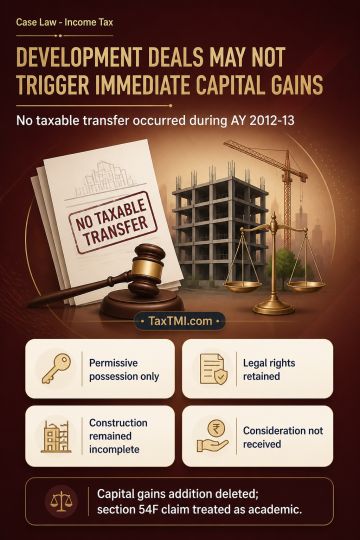
Development agreements require legal possession or effective enjoyment for capital gains transfer; permissive possession and deferred consideration de...
Prolonged sterilisation of development rights supports capital-gains treatment, while business-income disallowances cannot govern capital-gains comput...
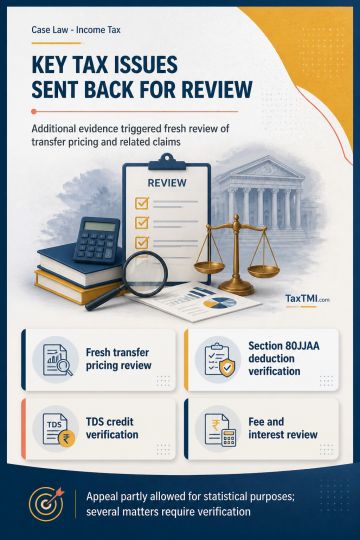
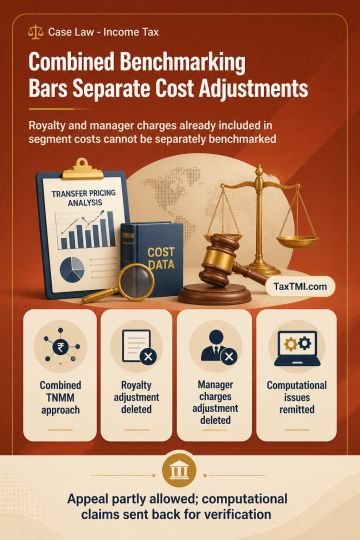
Additional evidence in transfer pricing dispute leads to fresh examination, while tax deductions, TDS credit, fee and refund interest require verifica...
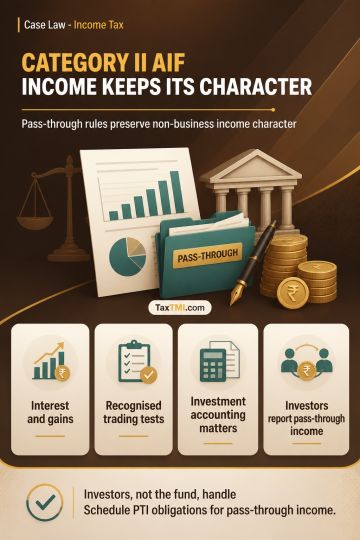
Category II AIF pass-through taxation preserves non-business income character; investment receipts cannot be reclassified without applying recognised ...
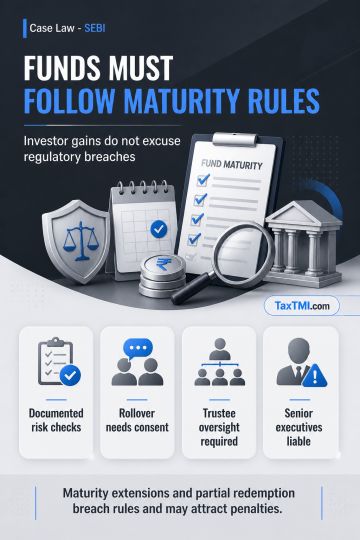
Mutual fund maturity rules require proper rollover, redemption, disclosure, and due diligence; investor gains cannot excuse regulatory breaches or pen...
Page of 4798
Press 'Enter' after typing page number.
1161 to 1180 of 95957 Results
❮
❯
❯❯
0 / 200
Expand Note
Add to Folder
No Folders have been created
+
Are you sure you want to delete "My most important" ?
The Appellate Tribunal dismissed the appeal filed by the Petitioners seeking initiation of the Corporate Insolvency Resolution Process (CIRP) against the Corporate Debtor/Respondent. The key findings were: There was no loan agreement specifying the tenure, interest rate, or payment frequency. The only evidence was the Petitioners' ledger accounts maintained by the Corporate Debtor. The Petitioners did not submit any agreement obligating the Corporate Debtor to pay interest on the alleged loan. For a debt to qualify as a "financial debt," the amount advanced must be in consideration of the time value of money, which was absent in this case. The Adjudicating Authority rightly concluded that the Petitioners did not qualify as financial creditors since no money was disbursed with consideration for the time value. The Corporate Debtor claimed to have paid the entire principal and interest for which TDS was deducted, and the Petitioners did not dispute this. The dispute was only about recovering the claimed balance interest, which the Appellate Tribunal is not a forum for debt recovery. The Petitioners are free to raise the dispute before the appropriate forum for recovery of the balance claim, if any.
The Appellate Tribunal dismissed the appeal filed by the Petitioners seeking initiation of the Corporate Insolvency Resolution Process (CIRP) against the Corporate Debtor/Respondent. The key findings were: There was no loan agreement specifying the tenure, interest rate, or payment frequency. The only evidence was the Petitioners' ledger accounts maintained by the Corporate Debtor. The Petitioners did not submit any agreement obligating the Corporate Debtor to pay interest on the alleged loan. For a debt to qualify as a "financial debt," the amount advanced must be in consideration of the time value of money, which was absent in this case. The Adjudicating Authority rightly concluded that the Petitioners did not qualify as financial creditors since no money was disbursed with consideration for the time value. The Corporate Debtor claimed to have paid the entire principal and interest for which TDS was deducted, and the Petitioners did not dispute this. The dispute was only about recovering the claimed balance interest, which the Appellate Tribunal is not a forum for debt recovery. The Petitioners are free to raise the dispute before the appropriate forum for recovery of the balance claim, if any.
Note: It is a system-generated summary and is for quick reference only.
 TaxTMI
 of 4798











 Join Channel


 TaxTMI