Commercial vehicle depreciation, scientifically determined warranty provisions and exempt-income disallowances were resolved in favour of the taxpayer...
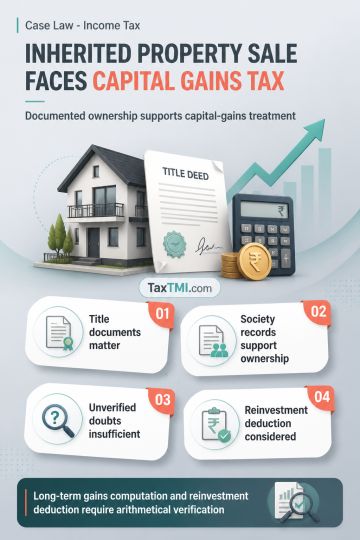
Inherited property sale proceeds require capital-gains treatment where ownership is supported by evidence, not suspicion or unverified signature doubt...
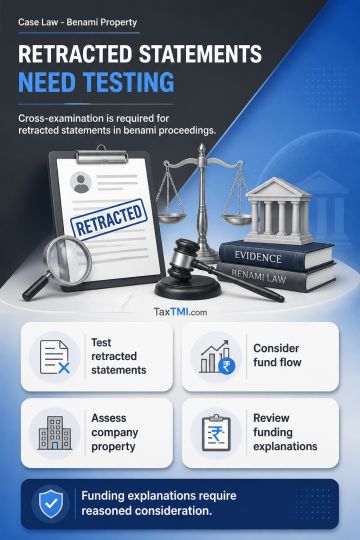
Cross-examination of retracted statements is essential where foundational evidence supports a benami allegation and documented funding explanations re...
Capital-goods exemption covers plant-modernisation accessories, while the import restriction applies only to earlier capital-goods components and spar...
Constitutional judicial review permits challenges to ECIRs and connected money-laundering proceedings where coercive action affects fundamental intere...
The Appellate Tribunal dismissed the appeal filed by the Petitioners seeking initiation of the Corporate Insolvency Resolution Process (CIRP) against the Corporate Debtor/Respondent. The key findings were: There was no loan agreement specifying the tenure, interest rate, or payment frequency. The only evidence was the Petitioners' ledger accounts maintained by the Corporate Debtor. The Petitioners did not submit any agreement obligating the Corporate Debtor to pay interest on the alleged loan. For a debt to qualify as a "financial debt," the amount advanced must be in consideration of the time value of money, which was absent in this case. The Adjudicating Authority rightly concluded that the Petitioners did not qualify as financial creditors since no money was disbursed with consideration for the time value. The Corporate Debtor claimed to have paid the entire principal and interest for which TDS was deducted, and the Petitioners did not dispute this. The dispute was only about recovering the claimed balance interest, which the Appellate Tribunal is not a forum for debt recovery. The Petitioners are free to raise the dispute before the appropriate forum for recovery of the balance claim, if any.
The Appellate Tribunal dismissed the appeal filed by the Petitioners seeking initiation of the Corporate Insolvency Resolution Process (CIRP) against the Corporate Debtor/Respondent. The key findings were: There was no loan agreement specifying the tenure, interest rate, or payment frequency. The only evidence was the Petitioners' ledger accounts maintained by the Corporate Debtor. The Petitioners did not submit any agreement obligating the Corporate Debtor to pay interest on the alleged loan. For a debt to qualify as a "financial debt," the amount advanced must be in consideration of the time value of money, which was absent in this case. The Adjudicating Authority rightly concluded that the Petitioners did not qualify as financial creditors since no money was disbursed with consideration for the time value. The Corporate Debtor claimed to have paid the entire principal and interest for which TDS was deducted, and the Petitioners did not dispute this. The dispute was only about recovering the claimed balance interest, which the Appellate Tribunal is not a forum for debt recovery. The Petitioners are free to raise the dispute before the appropriate forum for recovery of the balance claim, if any.
Note: It is a system-generated summary and is for quick reference only.
 TaxTMI
 of 4782














 Join Channel


 TaxTMI
