Transaction value rejection requires reliable corroboration; refundable VAT is excluded and temporary registration does not defeat new-vehicle exempti...
Appellate jurisdiction remains available where a wrist-worn gold ornament cannot conclusively be characterised as imported baggage at the preliminary ...
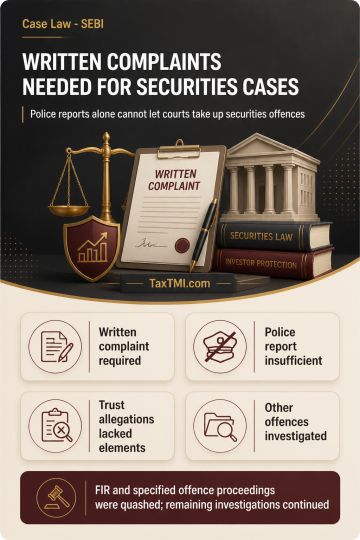
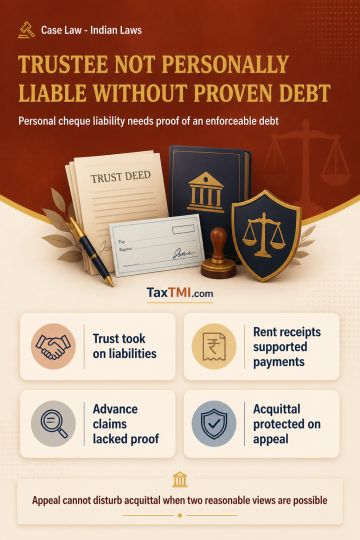
Written complaint requirement bars cognizance on police reports for securities offences, while unsupported breach of trust and cheating allegations fa...
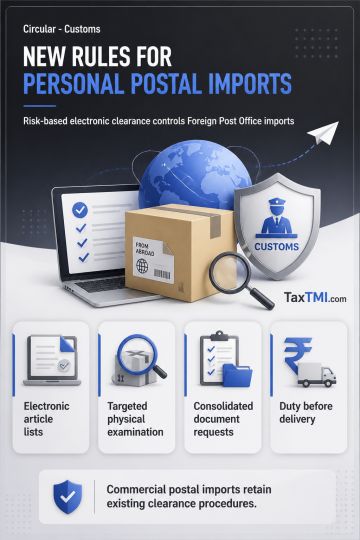
Risk-based postal import clearance standardises electronic assessment, document requests, duty realisation and delivery controls at Foreign Post Offic...
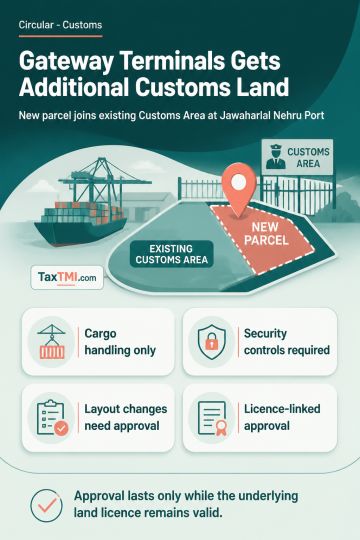
Customs Cargo Service Provider appointment extends custodianship to additional terminal land, subject to cargo-control, security and licence condition...
Benefit of exemption under S. No. 512 of Notification No. 50/2017-Customs for parts/components imported for manufacturing Lithium Ion Batteries. The department denied the exemption on the grounds that the appellant manufactured power banks instead of Lithium Ion Batteries. The Tribunal held that the appellant utilized all imported parts/components to manufacture its product, complying with the notification's conditions. The controversy centered on whether the manufactured product was a Lithium Ion Battery or a power bank. The Tribunal stated that the exemption benefit should not be extended to circumvent or stretch beyond its intended scope. The term "manufacture" in the notification must be interpreted considering the IGCR Rules, 2017. The Tribunal noted that lithium-ion cells were initially covered under S. No. 512 but were later moved to a separate entry with a 5% duty rate, indicating that the subject goods were initially exempted. The Tribunal concluded that the power bank is essentially a Lithium Ion Battery connected to a printed circuit board for voltage conversion, and the appellant rightly claimed the exemption by utilizing the imported raw materials to manufacture Lithium Ion Batteries, which were then used to make power banks. Regarding the extended period of limitation, the Tribunal held that since the appellant complied with the notification's conditions, the demand for duty not paid from January to June.
Benefit of exemption under S. No. 512 of Notification No. 50/2017-Customs for parts/components imported for manufacturing Lithium Ion Batteries. The department denied the exemption on the grounds that the appellant manufactured power banks instead of Lithium Ion Batteries. The Tribunal held that the appellant utilized all imported parts/components to manufacture its product, complying with the notification's conditions. The controversy centered on whether the manufactured product was a Lithium Ion Battery or a power bank. The Tribunal stated that the exemption benefit should not be extended to circumvent or stretch beyond its intended scope. The term "manufacture" in the notification must be interpreted considering the IGCR Rules, 2017. The Tribunal noted that lithium-ion cells were initially covered under S. No. 512 but were later moved to a separate entry with a 5% duty rate, indicating that the subject goods were initially exempted. The Tribunal concluded that the power bank is essentially a Lithium Ion Battery connected to a printed circuit board for voltage conversion, and the appellant rightly claimed the exemption by utilizing the imported raw materials to manufacture Lithium Ion Batteries, which were then used to make power banks. Regarding the extended period of limitation, the Tribunal held that since the appellant complied with the notification's conditions, the demand for duty not paid from January to June.
Note: It is a system-generated summary and is for quick reference only.
 TaxTMI
 of 4784



 Join Channel


 TaxTMI