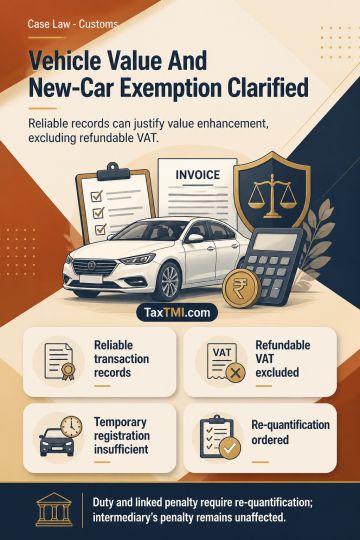
Transaction value rejection requires reliable corroboration; refundable VAT is excluded and temporary registration does not defeat new-vehicle exempti...
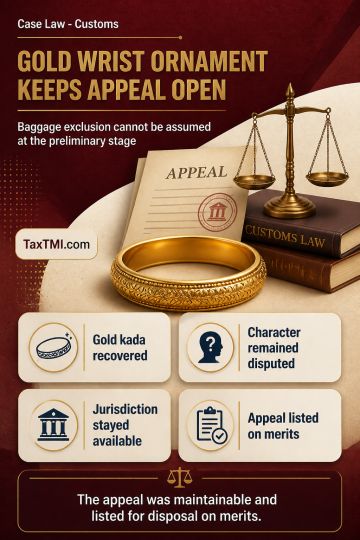
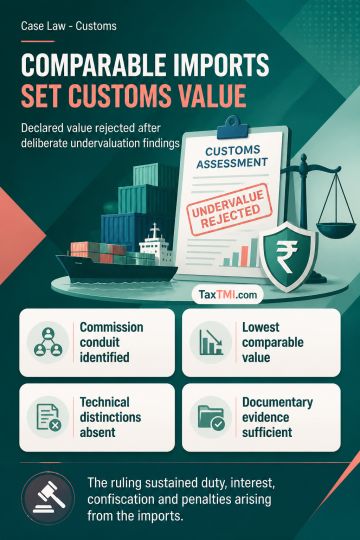
Appellate jurisdiction remains available where a wrist-worn gold ornament cannot conclusively be characterised as imported baggage at the preliminary ...
Written complaint requirement bars cognizance on police reports for securities offences, while unsupported breach of trust and cheating allegations fa...
Risk-based postal import clearance standardises electronic assessment, document requests, duty realisation and delivery controls at Foreign Post Offic...
Customs Cargo Service Provider appointment extends custodianship to additional terminal land, subject to cargo-control, security and licence condition...
The assessee claimed deduction u/s 80P(2)(d) of the Income Tax Act for interest income earned on deposits with a Cooperative Bank. The Assessing Officer and CIT(A) disallowed the deduction, contending that the Cooperative Bank does not qualify as a 'Cooperative Society'. However, the Tribunal observed that the Supreme Court in The Mavilayi Service Co-op. Bank Ltd. case has categorically ruled that Cooperative Banks are eligible for deduction u/s 80P(2)(d), unless they hold an RBI license and operate as commercial banks. Since the lower authorities did not examine the eligibility criteria as per the Supreme Court's decision, and the Tribunal had granted the deduction in earlier years without any change in facts, the Tribunal directed the Assessing Officer to allow the deduction claimed by the assessee u/s 80P(2)(d) in light of the Supreme Court's ruling.
The assessee claimed deduction u/s 80P(2)(d) of the Income Tax Act for interest income earned on deposits with a Cooperative Bank. The Assessing Officer and CIT(A) disallowed the deduction, contending that the Cooperative Bank does not qualify as a 'Cooperative Society'. However, the Tribunal observed that the Supreme Court in The Mavilayi Service Co-op. Bank Ltd. case has categorically ruled that Cooperative Banks are eligible for deduction u/s 80P(2)(d), unless they hold an RBI license and operate as commercial banks. Since the lower authorities did not examine the eligibility criteria as per the Supreme Court's decision, and the Tribunal had granted the deduction in earlier years without any change in facts, the Tribunal directed the Assessing Officer to allow the deduction claimed by the assessee u/s 80P(2)(d) in light of the Supreme Court's ruling.
Note: It is a system-generated summary and is for quick reference only.
 TaxTMI
 of 4788







 Join Channel


 TaxTMI