Statutory transfer formalities invalidated alleged share and property transfers, while retrospective record manipulation constituted oppression and mi...
Provisional attachment of laundered funds and equivalent-value property sustained, with statutory protection limited to pension, gratuity and providen...
Insolvency moratorium does not shield company officers from cheque dishonour prosecution for liability arising before corporate insolvency proceedings...
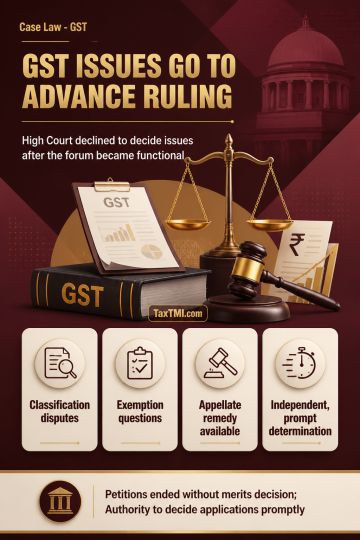
Advance-ruling mechanism governs pending GST classification, exemption and taxability disputes, limiting writ review once the specialised forum functi...
Page of 4788
Press 'Enter' after typing page number.
581 to 600 of 95752 Results
❮
❯
❯❯
0 / 200
Expand Note
Add to Folder
No Folders have been created
+
Are you sure you want to delete "My most important" ?
This document discusses the responsibilities and obligations of auditors, particularly principal auditors, in conducting audits of group financial statements under the Companies Act, 2013 and relevant auditing standards. Key points: 1. Auditors must determine necessary audit procedures to fulfill requirements of auditing standards and achieve audit objectives, even if additional procedures beyond standards are required. 2. Principal auditors remain responsible for forming and expressing opinion on group financial statements, requiring them to obtain sufficient appropriate audit evidence, including evaluating work of component auditors. 3. Use of "should" in auditing standards does not make provisions discretionary but implies presumptively mandatory responsibilities that auditors must comply with or document alternative procedures meeting objectives. 4. Principal auditors may need to review component auditors' work papers to evaluate if work is adequate, as permitted under law for discharging duties. Merely confirming component auditor's qualification is insufficient for assessing professional competence. 5. Responsibility for consolidated financial statements lies with management and board of holding company, and principal auditors must comply with relevant provisions. 6. Auditors must understand responsibilities under the Act, auditing standards, and carry out procedures accordingly in the public interest, as mandated for NFRA's oversight role.
This document discusses the responsibilities and obligations of auditors, particularly principal auditors, in conducting audits of group financial statements under the Companies Act, 2013 and relevant auditing standards. Key points: 1. Auditors must determine necessary audit procedures to fulfill requirements of auditing standards and achieve audit objectives, even if additional procedures beyond standards are required. 2. Principal auditors remain responsible for forming and expressing opinion on group financial statements, requiring them to obtain sufficient appropriate audit evidence, including evaluating work of component auditors. 3. Use of "should" in auditing standards does not make provisions discretionary but implies presumptively mandatory responsibilities that auditors must comply with or document alternative procedures meeting objectives. 4. Principal auditors may need to review component auditors' work papers to evaluate if work is adequate, as permitted under law for discharging duties. Merely confirming component auditor's qualification is insufficient for assessing professional competence. 5. Responsibility for consolidated financial statements lies with management and board of holding company, and principal auditors must comply with relevant provisions. 6. Auditors must understand responsibilities under the Act, auditing standards, and carry out procedures accordingly in the public interest, as mandated for NFRA's oversight role.
Note: It is a system-generated summary and is for quick reference only.
 TaxTMI
 of 4788













 Join Channel


 TaxTMI