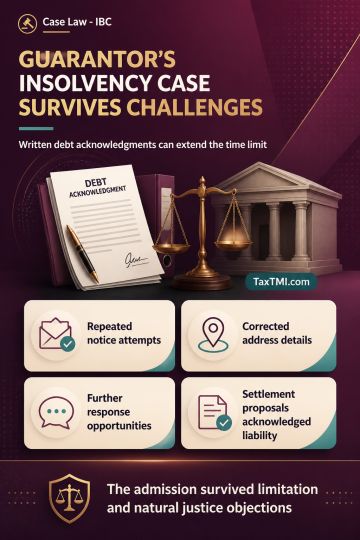
Service of notice and contractual debt acknowledgment preserved insolvency admission against a corporate guarantor despite limitation and natural just...
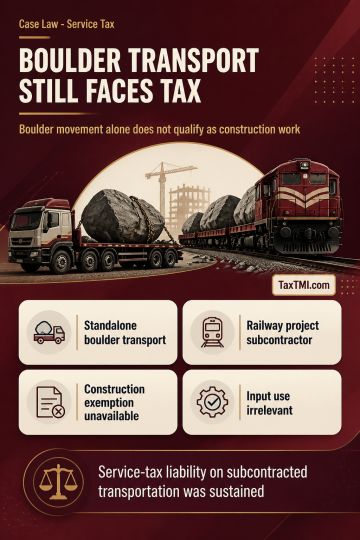
Original works exemption excludes standalone boulder transportation, leaving subcontracted railway-project transport services subject to service tax l...
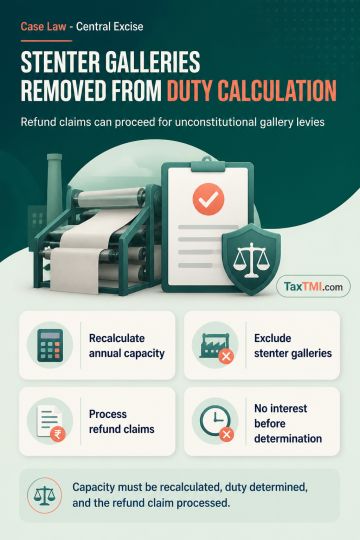
Annual production capacity determinations excluding stenter galleries support refunds for unconstitutional excise levies without an unjust-enrichment ...
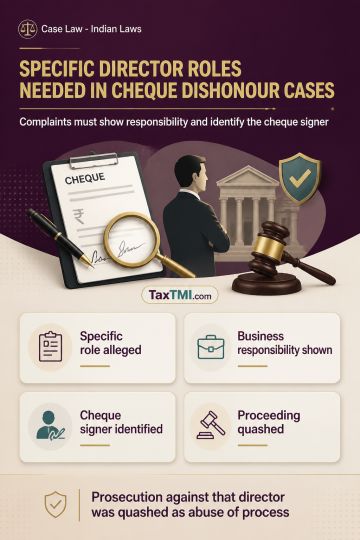
Vicarious liability for cheque dishonour requires specific allegations of responsibility and cheque signatory; generic director allegations cannot sus...
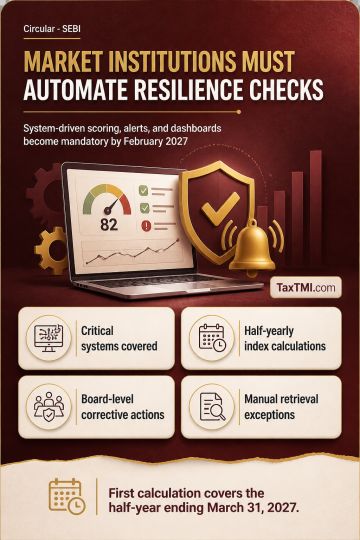
IT Resilience Index requires market infrastructure institutions to automate resilience scoring, early warnings, and continuous service-delivery monito...
The Supreme Court interpreted clauses (c) and (d) of sub-section (5) of Section 17 of the Central Goods and Services Tax Act, 2017. Regarding clause (c), the Court held that there is no scope to give any meaning other than its plain and natural meaning, excluding works contract services from input tax credit (ITC). Regarding clause (d), the Court held that the expression "plant or machinery" cannot be given the same meaning as "plant and machinery" defined in the explanation to Section 17. The expression "plant or machinery" in clause (d) should be given its ordinary meaning, and whether a building qualifies as a plant depends on the business of the registered person and the role of the building in that business. If the construction of a building is essential for supplying services like renting or leasing, it could be considered a plant under clause (d). The writ petitions were rejected, subject to this interpretation of clause (d).
The Supreme Court interpreted clauses (c) and (d) of sub-section (5) of Section 17 of the Central Goods and Services Tax Act, 2017. Regarding clause (c), the Court held that there is no scope to give any meaning other than its plain and natural meaning, excluding works contract services from input tax credit (ITC). Regarding clause (d), the Court held that the expression "plant or machinery" cannot be given the same meaning as "plant and machinery" defined in the explanation to Section 17. The expression "plant or machinery" in clause (d) should be given its ordinary meaning, and whether a building qualifies as a plant depends on the business of the registered person and the role of the building in that business. If the construction of a building is essential for supplying services like renting or leasing, it could be considered a plant under clause (d). The writ petitions were rejected, subject to this interpretation of clause (d).
Note: It is a system-generated summary and is for quick reference only.
 TaxTMI
  TaxTMI
 of 4828




 Join Channel