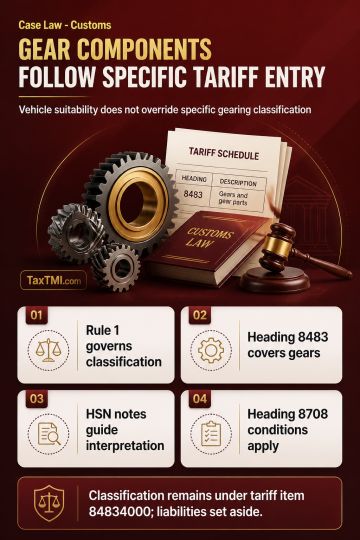
Tariff classification of vehicle gear components follows the specific gearing entry, displacing motor-vehicle parts classification and related liabili...
Necessary-party requirements limit impleadment of independent entities, while deferred consideration does not create an appealable adverse determinati...
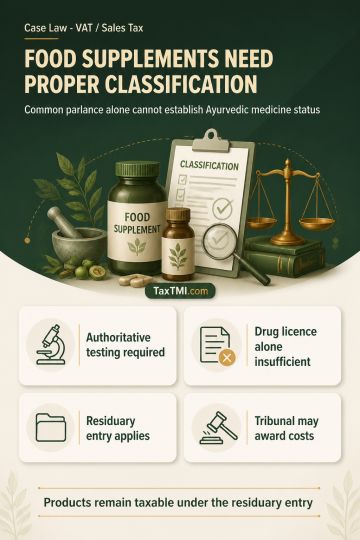
Food supplement classification requires common parlance and authoritative tests, preventing treatment as proprietary Ayurvedic medicines without suppo...
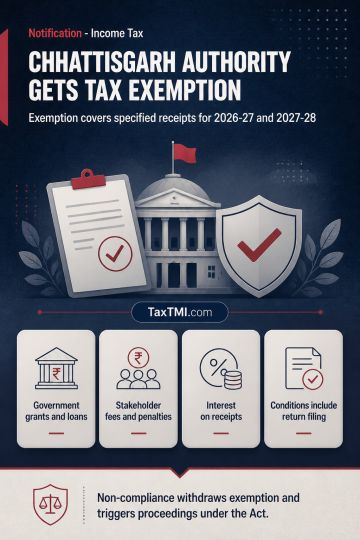
Specified regulatory authority income receives conditional tax exemption, subject to non-commercial activity, unchanged income character, and return f...
Tax exemption for regulatory authority income applies retrospectively, subject to non-commercial activity, unchanged income sources, and return-filing...
The High Court examined whether proper show cause notices were issued before passing impugned orders u/s 73(9) of the State GST Act. It held that the summary of show cause notice along with tax determination cannot substitute a valid show cause notice initiating proceedings u/s 73. The Court opined that the impugned orders were contrary to Section 73 and Rule 142(1)(a) as they were passed without issuing a proper show cause notice. Regarding the determination of tax and order attached to the summary, the Court held that as per Sections 73(3) and 73(9), only the proper officer can issue show cause notice, statement, and order. Section 2(91) defines the proper officer. Failure to authenticate by the proper officer renders the documents ineffective. The Court stated that unless Rules are amended, Rule 26(3) authentication must be followed when the proper officer issues notices/orders. On conformity with Section 75(4) and principles of natural justice, the Court held that when the statute mandates an opportunity of hearing, it must be provided. Merely mentioning the reply date in the summary without other hearing details like date, time, and venue is insufficient. If no reply is filed, passing an adverse order without a hearing opportunity would render Section 75(4) redundant. Consequently, the impugned orders were set aside, and the pet.
The High Court examined whether proper show cause notices were issued before passing impugned orders u/s 73(9) of the State GST Act. It held that the summary of show cause notice along with tax determination cannot substitute a valid show cause notice initiating proceedings u/s 73. The Court opined that the impugned orders were contrary to Section 73 and Rule 142(1)(a) as they were passed without issuing a proper show cause notice. Regarding the determination of tax and order attached to the summary, the Court held that as per Sections 73(3) and 73(9), only the proper officer can issue show cause notice, statement, and order. Section 2(91) defines the proper officer. Failure to authenticate by the proper officer renders the documents ineffective. The Court stated that unless Rules are amended, Rule 26(3) authentication must be followed when the proper officer issues notices/orders. On conformity with Section 75(4) and principles of natural justice, the Court held that when the statute mandates an opportunity of hearing, it must be provided. Merely mentioning the reply date in the summary without other hearing details like date, time, and venue is insufficient. If no reply is filed, passing an adverse order without a hearing opportunity would render Section 75(4) redundant. Consequently, the impugned orders were set aside, and the pet.
Note: It is a system-generated summary and is for quick reference only.
 TaxTMI
 of 4782












 Join Channel


 TaxTMI
