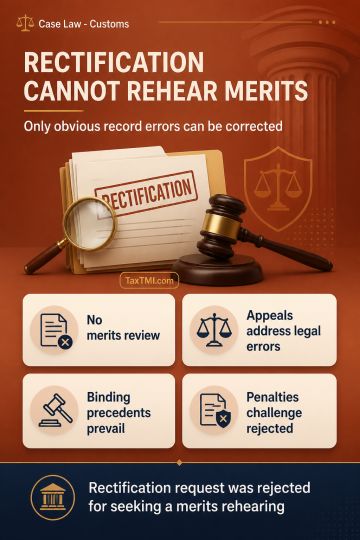
Rectification of mistake remains limited to self-evident record errors, preventing merits review through miscellaneous applications and preserving fin...
Tender creditworthiness conditions may extend to de facto Promoter Directors, with post-participation challenges generally barred absent arbitrariness...
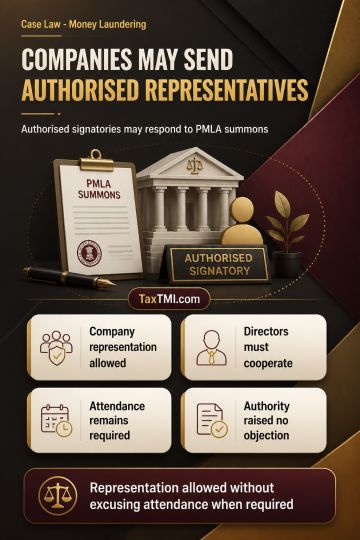
Corporate representation in PMLA summons proceedings permitted through an authorised signatory, subject to directors' continuing cooperation and atten...
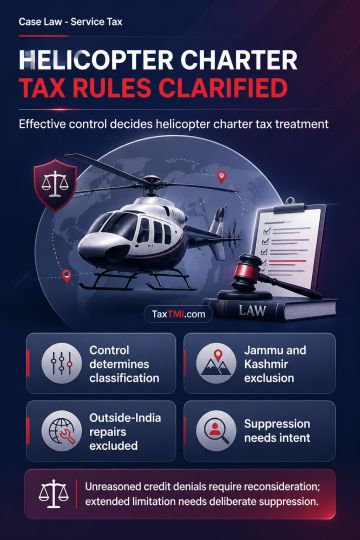
Helicopter charter classification requires effective control analysis, while territorial performance, reasoned credit orders and wilful suppression de...
Specified fund definition expands PAN exemption eligibility for registered alternative investment funds and qualifying International Financial Service...
The court dealt with the power to cancel GST registration retrospectively u/s 29 of the Central Goods and Services Tax Act, 2017. It held that while the provision enables retrospective cancellation, the mere existence of such power does not justify its invocation. The order u/s 29(2) must reflect reasons for cancelling registration retrospectively, considering the deleterious consequences. The power cannot be exercised robotically or routinely unless circumstances warrant. The impugned order lacked reasoning for retroactive cancellation, violating the statutory scheme. Relying on Ramesh Chander's case, the court emphasized that retrospective cancellation should consider denying input tax credit to customers, and such consequences must be intended and warranted. Failing to provide even rudimentary reasons, the impugned order was quashed, and the petition was allowed.
The court dealt with the power to cancel GST registration retrospectively u/s 29 of the Central Goods and Services Tax Act, 2017. It held that while the provision enables retrospective cancellation, the mere existence of such power does not justify its invocation. The order u/s 29(2) must reflect reasons for cancelling registration retrospectively, considering the deleterious consequences. The power cannot be exercised robotically or routinely unless circumstances warrant. The impugned order lacked reasoning for retroactive cancellation, violating the statutory scheme. Relying on Ramesh Chander's case, the court emphasized that retrospective cancellation should consider denying input tax credit to customers, and such consequences must be intended and warranted. Failing to provide even rudimentary reasons, the impugned order was quashed, and the petition was allowed.
Note: It is a system-generated summary and is for quick reference only.
 TaxTMI
 of 4790












 Join Channel


 TaxTMI
