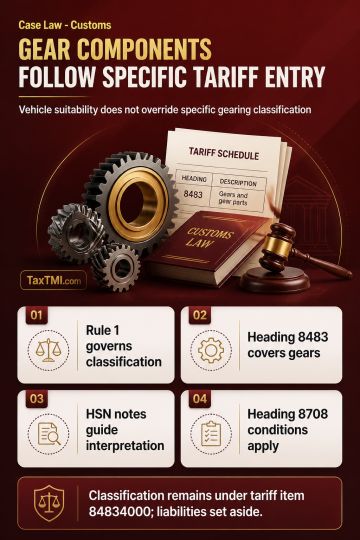
Tariff classification of vehicle gear components follows the specific gearing entry, displacing motor-vehicle parts classification and related liabili...
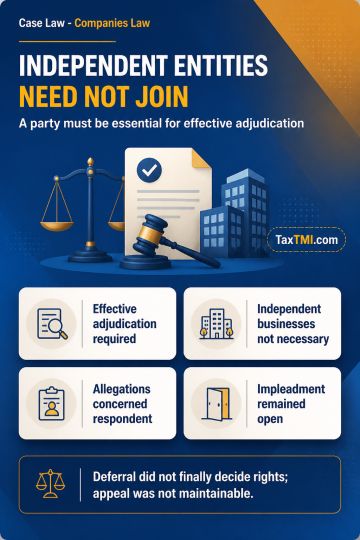
Necessary-party requirements limit impleadment of independent entities, while deferred consideration does not create an appealable adverse determinati...
Food supplement classification requires common parlance and authoritative tests, preventing treatment as proprietary Ayurvedic medicines without suppo...
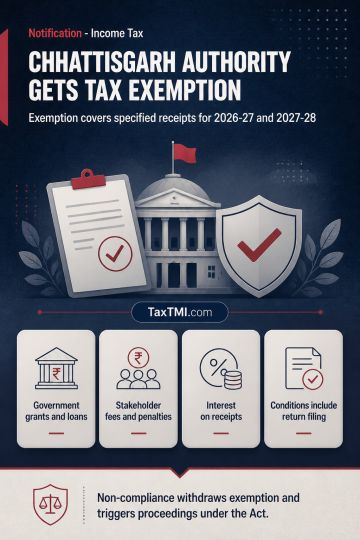
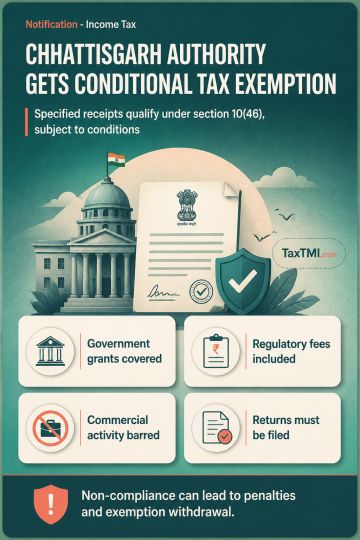
Specified regulatory authority income receives conditional tax exemption, subject to non-commercial activity, unchanged income character, and return f...
Tax exemption for regulatory authority income applies retrospectively, subject to non-commercial activity, unchanged income sources, and return-filing...
The court dealt with the power to cancel GST registration retrospectively u/s 29 of the Central Goods and Services Tax Act, 2017. It held that while the provision enables retrospective cancellation, the mere existence of such power does not justify its invocation. The order u/s 29(2) must reflect reasons for cancelling registration retrospectively, considering the deleterious consequences. The power cannot be exercised robotically or routinely unless circumstances warrant. The impugned order lacked reasoning for retroactive cancellation, violating the statutory scheme. Relying on Ramesh Chander's case, the court emphasized that retrospective cancellation should consider denying input tax credit to customers, and such consequences must be intended and warranted. Failing to provide even rudimentary reasons, the impugned order was quashed, and the petition was allowed.
The court dealt with the power to cancel GST registration retrospectively u/s 29 of the Central Goods and Services Tax Act, 2017. It held that while the provision enables retrospective cancellation, the mere existence of such power does not justify its invocation. The order u/s 29(2) must reflect reasons for cancelling registration retrospectively, considering the deleterious consequences. The power cannot be exercised robotically or routinely unless circumstances warrant. The impugned order lacked reasoning for retroactive cancellation, violating the statutory scheme. Relying on Ramesh Chander's case, the court emphasized that retrospective cancellation should consider denying input tax credit to customers, and such consequences must be intended and warranted. Failing to provide even rudimentary reasons, the impugned order was quashed, and the petition was allowed.
Note: It is a system-generated summary and is for quick reference only.
 TaxTMI
 of 4782














 Join Channel


 TaxTMI
