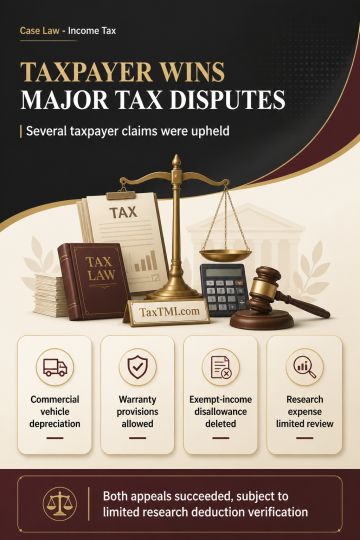
Commercial vehicle depreciation, scientifically determined warranty provisions and exempt-income disallowances were resolved in favour of the taxpayer...
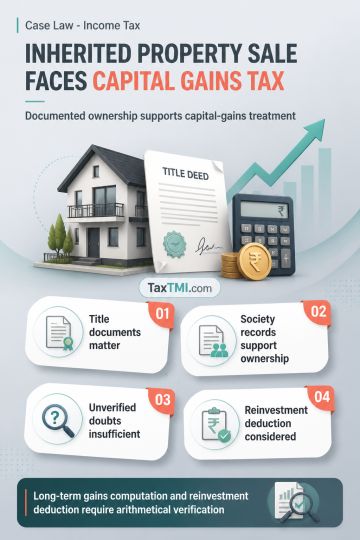
Inherited property sale proceeds require capital-gains treatment where ownership is supported by evidence, not suspicion or unverified signature doubt...
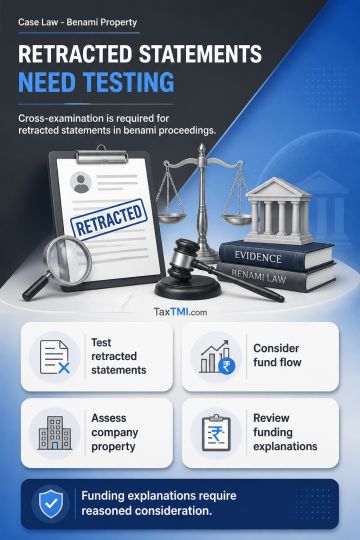
Cross-examination of retracted statements is essential where foundational evidence supports a benami allegation and documented funding explanations re...
Capital-goods exemption covers plant-modernisation accessories, while the import restriction applies only to earlier capital-goods components and spar...
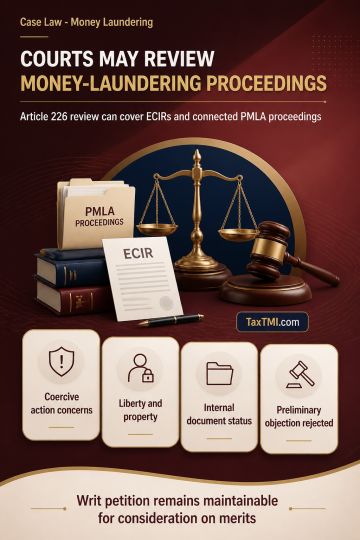
Constitutional judicial review permits challenges to ECIRs and connected money-laundering proceedings where coercive action affects fundamental intere...
The case pertains to the taxability of compensation received by the assessee for termination of a contract. The key points are: The assessee received Rs. 4,30,88,084 as compensation for terminating a bottling contract with Hindustan Coca-Cola Beverages Pvt Ltd due to trade disputes. The Revenue contended that the amount was taxable u/ss 28(iv)/28(va) or 45, arguing it did not represent termination compensation exempt under Oberoi Hotels case. However, the Tribunal, after examining the settlement agreement and financial statements, upheld the CIT(A)'s finding that the source of income had ceased, making it a non-taxable capital receipt under Oberoi Hotels. Regarding disallowance of 20% of raw material purchases, the ITAT restricted it to 10%, observing that while the assessee must justify claims, the AO cannot make ad-hoc disallowances without scientific basis if documents are unavailable. The High Court upheld the ITAT's view.
The case pertains to the taxability of compensation received by the assessee for termination of a contract. The key points are: The assessee received Rs. 4,30,88,084 as compensation for terminating a bottling contract with Hindustan Coca-Cola Beverages Pvt Ltd due to trade disputes. The Revenue contended that the amount was taxable u/ss 28(iv)/28(va) or 45, arguing it did not represent termination compensation exempt under Oberoi Hotels case. However, the Tribunal, after examining the settlement agreement and financial statements, upheld the CIT(A)'s finding that the source of income had ceased, making it a non-taxable capital receipt under Oberoi Hotels. Regarding disallowance of 20% of raw material purchases, the ITAT restricted it to 10%, observing that while the assessee must justify claims, the AO cannot make ad-hoc disallowances without scientific basis if documents are unavailable. The High Court upheld the ITAT's view.
Note: It is a system-generated summary and is for quick reference only.
 TaxTMI
 of 4782





 Join Channel


 TaxTMI
