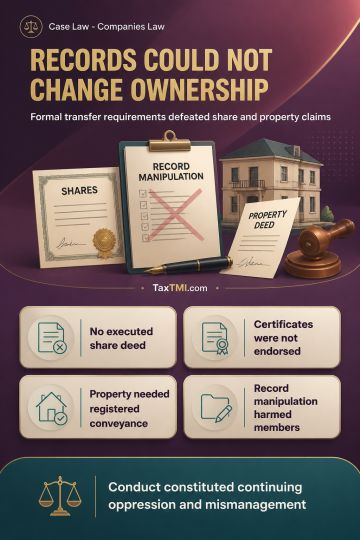
Statutory transfer formalities invalidated alleged share and property transfers, while retrospective record manipulation constituted oppression and mi...
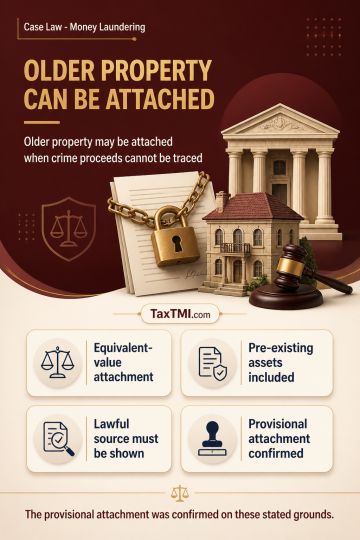
Provisional attachment of laundered funds and equivalent-value property sustained, with statutory protection limited to pension, gratuity and providen...
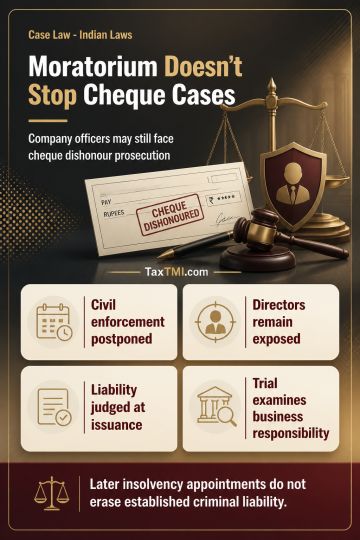
Insolvency moratorium does not shield company officers from cheque dishonour prosecution for liability arising before corporate insolvency proceedings...
The case pertains to the taxability of compensation received by the assessee for termination of a contract. The key points are: The assessee received Rs. 4,30,88,084 as compensation for terminating a bottling contract with Hindustan Coca-Cola Beverages Pvt Ltd due to trade disputes. The Revenue contended that the amount was taxable u/ss 28(iv)/28(va) or 45, arguing it did not represent termination compensation exempt under Oberoi Hotels case. However, the Tribunal, after examining the settlement agreement and financial statements, upheld the CIT(A)'s finding that the source of income had ceased, making it a non-taxable capital receipt under Oberoi Hotels. Regarding disallowance of 20% of raw material purchases, the ITAT restricted it to 10%, observing that while the assessee must justify claims, the AO cannot make ad-hoc disallowances without scientific basis if documents are unavailable. The High Court upheld the ITAT's view.
The case pertains to the taxability of compensation received by the assessee for termination of a contract. The key points are: The assessee received Rs. 4,30,88,084 as compensation for terminating a bottling contract with Hindustan Coca-Cola Beverages Pvt Ltd due to trade disputes. The Revenue contended that the amount was taxable u/ss 28(iv)/28(va) or 45, arguing it did not represent termination compensation exempt under Oberoi Hotels case. However, the Tribunal, after examining the settlement agreement and financial statements, upheld the CIT(A)'s finding that the source of income had ceased, making it a non-taxable capital receipt under Oberoi Hotels. Regarding disallowance of 20% of raw material purchases, the ITAT restricted it to 10%, observing that while the assessee must justify claims, the AO cannot make ad-hoc disallowances without scientific basis if documents are unavailable. The High Court upheld the ITAT's view.
Note: It is a system-generated summary and is for quick reference only.
 TaxTMI
 of 4792





 Join Channel


 TaxTMI