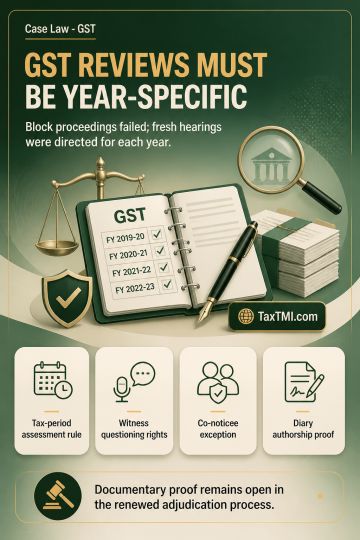
Cooperative society deposits, member-interest TDS exemption and credit-facility deduction claims require verification through records and supporting e...
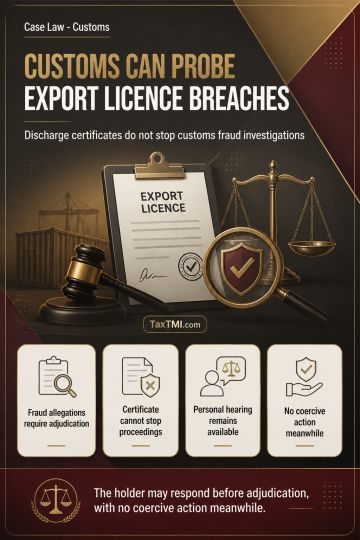
Customs jurisdiction over EPCG condition breaches survives export-obligation discharge certificates, requiring alleged fraud and misdeclaration to be ...
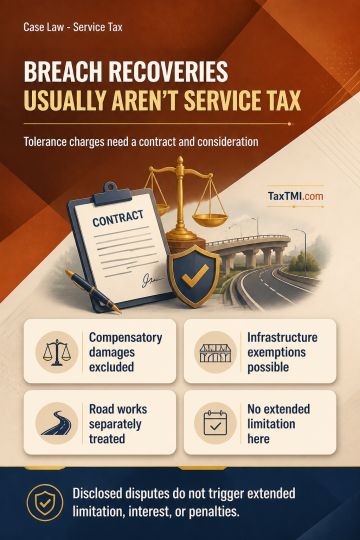
Contractual tolerance requires consideration; breach recoveries, qualifying public infrastructure services and road works escape service tax liability...
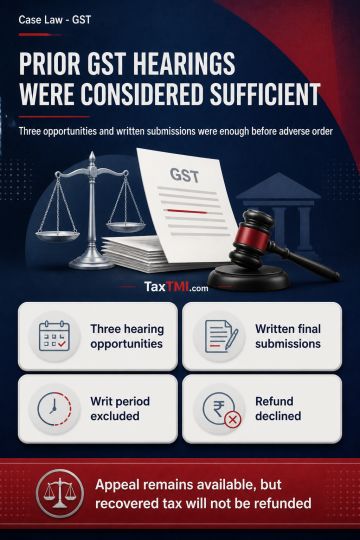
Personal hearing requirements in GST adjudication were satisfied by prior opportunities and written submissions; appellate limitation received writ-pe...
The case pertains to the taxability of compensation received by the assessee for termination of a contract. The key points are: The assessee received Rs. 4,30,88,084 as compensation for terminating a bottling contract with Hindustan Coca-Cola Beverages Pvt Ltd due to trade disputes. The Revenue contended that the amount was taxable u/ss 28(iv)/28(va) or 45, arguing it did not represent termination compensation exempt under Oberoi Hotels case. However, the Tribunal, after examining the settlement agreement and financial statements, upheld the CIT(A)'s finding that the source of income had ceased, making it a non-taxable capital receipt under Oberoi Hotels. Regarding disallowance of 20% of raw material purchases, the ITAT restricted it to 10%, observing that while the assessee must justify claims, the AO cannot make ad-hoc disallowances without scientific basis if documents are unavailable. The High Court upheld the ITAT's view.
The case pertains to the taxability of compensation received by the assessee for termination of a contract. The key points are: The assessee received Rs. 4,30,88,084 as compensation for terminating a bottling contract with Hindustan Coca-Cola Beverages Pvt Ltd due to trade disputes. The Revenue contended that the amount was taxable u/ss 28(iv)/28(va) or 45, arguing it did not represent termination compensation exempt under Oberoi Hotels case. However, the Tribunal, after examining the settlement agreement and financial statements, upheld the CIT(A)'s finding that the source of income had ceased, making it a non-taxable capital receipt under Oberoi Hotels. Regarding disallowance of 20% of raw material purchases, the ITAT restricted it to 10%, observing that while the assessee must justify claims, the AO cannot make ad-hoc disallowances without scientific basis if documents are unavailable. The High Court upheld the ITAT's view.
Note: It is a system-generated summary and is for quick reference only.
 TaxTMI
 of 4792




 Join Channel


 TaxTMI