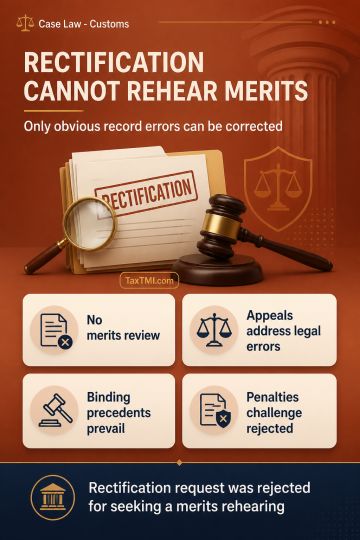
Rectification of mistake remains limited to self-evident record errors, preventing merits review through miscellaneous applications and preserving fin...
Tender creditworthiness conditions may extend to de facto Promoter Directors, with post-participation challenges generally barred absent arbitrariness...
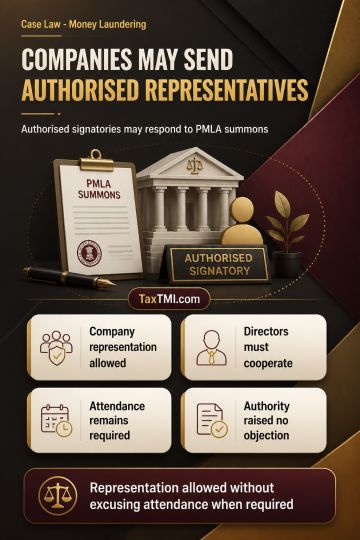
Corporate representation in PMLA summons proceedings permitted through an authorised signatory, subject to directors' continuing cooperation and atten...
Helicopter charter classification requires effective control analysis, while territorial performance, reasoned credit orders and wilful suppression de...
Page of 4796
Press 'Enter' after typing page number.
781 to 800 of 95918 Results
❮
❯
❯❯
0 / 200
Expand Note
Add to Folder
No Folders have been created
+
Are you sure you want to delete "My most important" ?
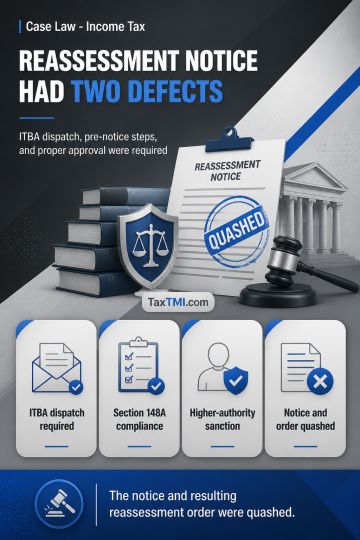
The Appellate Tribunal examined the validity of the reassessment notice issued u/s 148 and the consequent order passed u/s 147 regarding the addition made by the Assessing Officer u/s 69A, treating the long-term capital gain on the sale of shares claimed as exempt u/s 10(38) as bogus. The Tribunal held that when the reopening is based on information received from the investigation wing, the reasons must show that the Assessing Officer independently applied their mind to the information and formed their own opinion. However, in this case, the Assessing Officer merely stated the information received and their conclusion about the alleged escapement of income but did not mention what they did with the available information. The reasons must also paraphrase any investigation report forming the basis and any inquiry conducted by the Assessing Officer, along with the conclusion. If the reasons refer to any document, such document or relevant portion must be enclosed. In this case, the available information with the Assessing Officer was neither stated nor enclosed, rendering the reasons recorded not in accordance with the law. Additionally, the Assessing Officer incorrectly mentioned that the assessee did not declare the long-term capital gain in the return filed in response to the notice u/s 148, whereas the assessee had categorically shown the exempt income comprising capital gain u/s 10(38) and dividend from shares. Consequently, the notice issue.
The Appellate Tribunal examined the validity of the reassessment notice issued u/s 148 and the consequent order passed u/s 147 regarding the addition made by the Assessing Officer u/s 69A, treating the long-term capital gain on the sale of shares claimed as exempt u/s 10(38) as bogus. The Tribunal held that when the reopening is based on information received from the investigation wing, the reasons must show that the Assessing Officer independently applied their mind to the information and formed their own opinion. However, in this case, the Assessing Officer merely stated the information received and their conclusion about the alleged escapement of income but did not mention what they did with the available information. The reasons must also paraphrase any investigation report forming the basis and any inquiry conducted by the Assessing Officer, along with the conclusion. If the reasons refer to any document, such document or relevant portion must be enclosed. In this case, the available information with the Assessing Officer was neither stated nor enclosed, rendering the reasons recorded not in accordance with the law. Additionally, the Assessing Officer incorrectly mentioned that the assessee did not declare the long-term capital gain in the return filed in response to the notice u/s 148, whereas the assessee had categorically shown the exempt income comprising capital gain u/s 10(38) and dividend from shares. Consequently, the notice issue.
Note: It is a system-generated summary and is for quick reference only.
 TaxTMI
 of 4796










 Join Channel


 TaxTMI