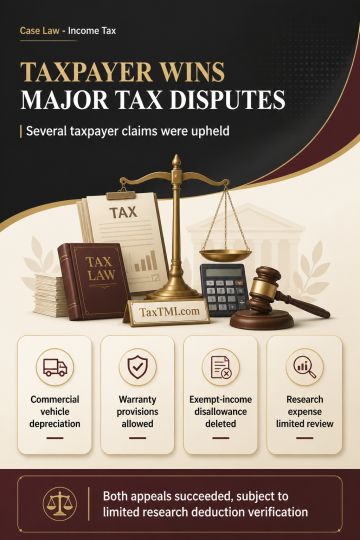
Commercial vehicle depreciation, scientifically determined warranty provisions and exempt-income disallowances were resolved in favour of the taxpayer...
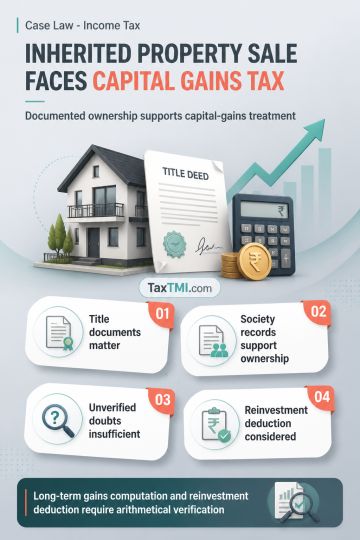
Inherited property sale proceeds require capital-gains treatment where ownership is supported by evidence, not suspicion or unverified signature doubt...
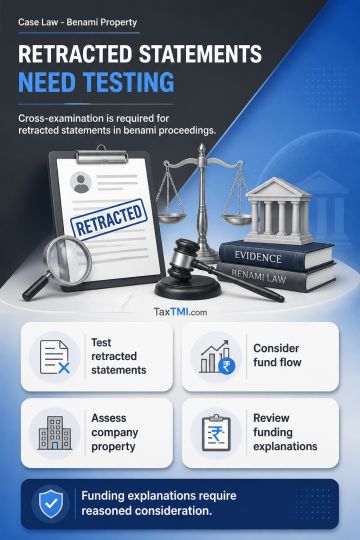
Cross-examination of retracted statements is essential where foundational evidence supports a benami allegation and documented funding explanations re...
Capital-goods exemption covers plant-modernisation accessories, while the import restriction applies only to earlier capital-goods components and spar...
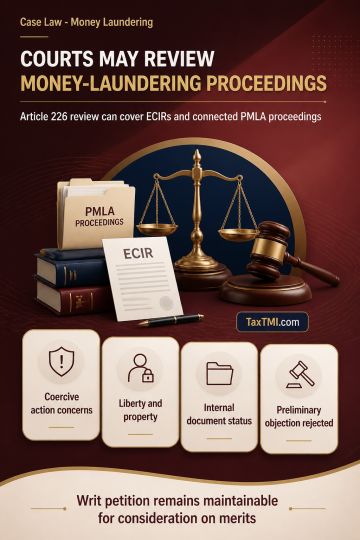
Constitutional judicial review permits challenges to ECIRs and connected money-laundering proceedings where coercive action affects fundamental intere...
The Appellate Tribunal examined the validity of the reassessment notice issued u/s 148 and the consequent order passed u/s 147 regarding the addition made by the Assessing Officer u/s 69A, treating the long-term capital gain on the sale of shares claimed as exempt u/s 10(38) as bogus. The Tribunal held that when the reopening is based on information received from the investigation wing, the reasons must show that the Assessing Officer independently applied their mind to the information and formed their own opinion. However, in this case, the Assessing Officer merely stated the information received and their conclusion about the alleged escapement of income but did not mention what they did with the available information. The reasons must also paraphrase any investigation report forming the basis and any inquiry conducted by the Assessing Officer, along with the conclusion. If the reasons refer to any document, such document or relevant portion must be enclosed. In this case, the available information with the Assessing Officer was neither stated nor enclosed, rendering the reasons recorded not in accordance with the law. Additionally, the Assessing Officer incorrectly mentioned that the assessee did not declare the long-term capital gain in the return filed in response to the notice u/s 148, whereas the assessee had categorically shown the exempt income comprising capital gain u/s 10(38) and dividend from shares. Consequently, the notice issue.
The Appellate Tribunal examined the validity of the reassessment notice issued u/s 148 and the consequent order passed u/s 147 regarding the addition made by the Assessing Officer u/s 69A, treating the long-term capital gain on the sale of shares claimed as exempt u/s 10(38) as bogus. The Tribunal held that when the reopening is based on information received from the investigation wing, the reasons must show that the Assessing Officer independently applied their mind to the information and formed their own opinion. However, in this case, the Assessing Officer merely stated the information received and their conclusion about the alleged escapement of income but did not mention what they did with the available information. The reasons must also paraphrase any investigation report forming the basis and any inquiry conducted by the Assessing Officer, along with the conclusion. If the reasons refer to any document, such document or relevant portion must be enclosed. In this case, the available information with the Assessing Officer was neither stated nor enclosed, rendering the reasons recorded not in accordance with the law. Additionally, the Assessing Officer incorrectly mentioned that the assessee did not declare the long-term capital gain in the return filed in response to the notice u/s 148, whereas the assessee had categorically shown the exempt income comprising capital gain u/s 10(38) and dividend from shares. Consequently, the notice issue.
Note: It is a system-generated summary and is for quick reference only.
 TaxTMI
 of 4782













 Join Channel


 TaxTMI
