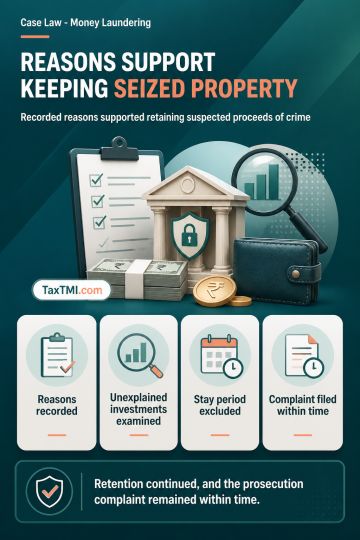
Retention of seized property survives where recorded reasons support proceeds of crime, while stayed investigation periods are excluded from limitatio...
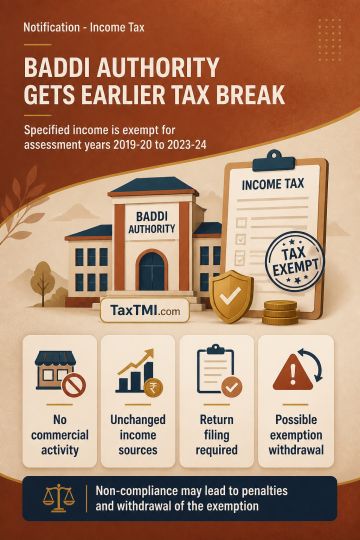
Specified income of Baddi Barotiwala Nalagarh Development Authority receives conditional tax exemption, retrospectively covering its designated assess...
Specified development authority income receives retrospective tax exemption, subject to non-commercial activity, unchanged income sources, and return-...
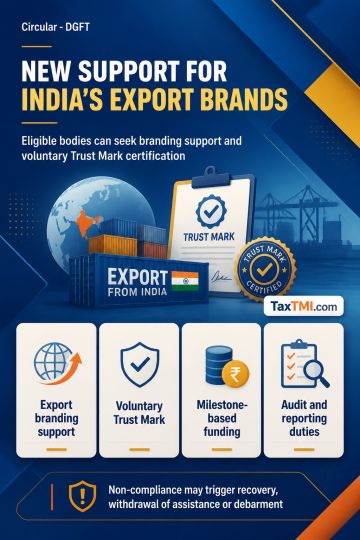
Unified Brand India framework introduces voluntary Trust Mark certification and funding support for export branding, packaging and global promotional ...
Origin Declaration authentication governs preferential tariff claims under India-UK CETA, requiring a validated reference number before import clearan...
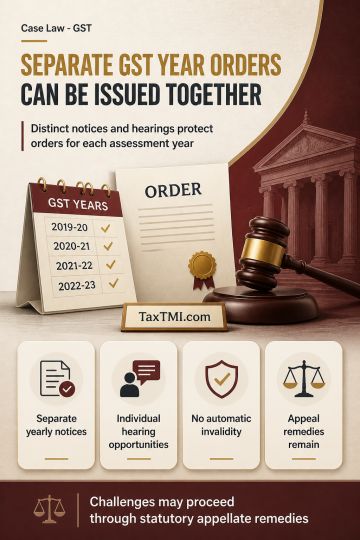
Separate assessment orders for different years remain valid when distinct notices and hearing opportunities prevent prejudice from combined proceeding...
The case pertains to the extinguishment of claims under the Insolvency and Bankruptcy Code (IBC) against Ruchi Soya Industries Limited, after the acceptance of the modified resolution plan by the National Company Law Tribunal (NCLT). The key points are: 1) The revenue department had raised a demand against Ruchi Soya for imported crude palm oil, which was not claimed during the Corporate Insolvency Resolution Process (CIRP) under IBC. 2) As per Section 32A of IBC, the revenue's demand stood extinguished since it was not part of the approved resolution plan. 3) The Gujarat High Court, in a similar case, held that upon completion of the resolution process and the revenue not lodging any claim as an operational creditor, any liability extinguishes u/ss 31 and 32A of IBC. 4) The resolution plan aims to continue the company's business as a going concern under IBC's insolvency resolution process, distinct from liquidation. 5) Rule 22 of the 1982 Rules, regarding abatement of appeals, is inapplicable when a resolution plan is approved. 6) The High Court ruled in favor of the assessee (Ruchi Soya/Patanjali), holding that the revenue's demand stood extinguished due to non-inclusion.
The case pertains to the extinguishment of claims under the Insolvency and Bankruptcy Code (IBC) against Ruchi Soya Industries Limited, after the acceptance of the modified resolution plan by the National Company Law Tribunal (NCLT). The key points are: 1) The revenue department had raised a demand against Ruchi Soya for imported crude palm oil, which was not claimed during the Corporate Insolvency Resolution Process (CIRP) under IBC. 2) As per Section 32A of IBC, the revenue's demand stood extinguished since it was not part of the approved resolution plan. 3) The Gujarat High Court, in a similar case, held that upon completion of the resolution process and the revenue not lodging any claim as an operational creditor, any liability extinguishes u/ss 31 and 32A of IBC. 4) The resolution plan aims to continue the company's business as a going concern under IBC's insolvency resolution process, distinct from liquidation. 5) Rule 22 of the 1982 Rules, regarding abatement of appeals, is inapplicable when a resolution plan is approved. 6) The High Court ruled in favor of the assessee (Ruchi Soya/Patanjali), holding that the revenue's demand stood extinguished due to non-inclusion.
Note: It is a system-generated summary and is for quick reference only.
 TaxTMI
 of 4800









 Join Channel


 TaxTMI
