Transaction value rejection requires reliable corroboration; refundable VAT is excluded and temporary registration does not defeat new-vehicle exempti...
Appellate jurisdiction remains available where a wrist-worn gold ornament cannot conclusively be characterised as imported baggage at the preliminary ...
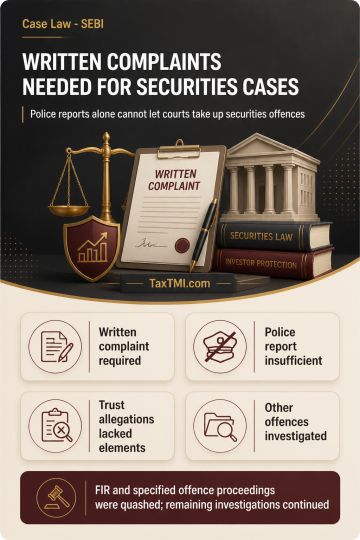
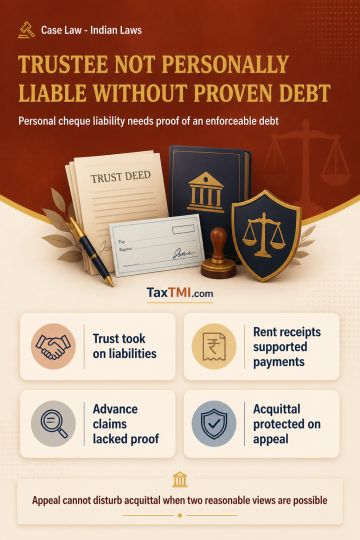
Written complaint requirement bars cognizance on police reports for securities offences, while unsupported breach of trust and cheating allegations fa...
Risk-based postal import clearance standardises electronic assessment, document requests, duty realisation and delivery controls at Foreign Post Offic...
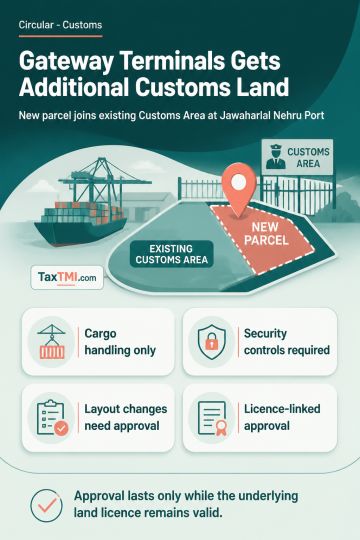
Customs Cargo Service Provider appointment extends custodianship to additional terminal land, subject to cargo-control, security and licence condition...
The case pertains to the extinguishment of claims under the Insolvency and Bankruptcy Code (IBC) against Ruchi Soya Industries Limited, after the acceptance of the modified resolution plan by the National Company Law Tribunal (NCLT). The key points are: 1) The revenue department had raised a demand against Ruchi Soya for imported crude palm oil, which was not claimed during the Corporate Insolvency Resolution Process (CIRP) under IBC. 2) As per Section 32A of IBC, the revenue's demand stood extinguished since it was not part of the approved resolution plan. 3) The Gujarat High Court, in a similar case, held that upon completion of the resolution process and the revenue not lodging any claim as an operational creditor, any liability extinguishes u/ss 31 and 32A of IBC. 4) The resolution plan aims to continue the company's business as a going concern under IBC's insolvency resolution process, distinct from liquidation. 5) Rule 22 of the 1982 Rules, regarding abatement of appeals, is inapplicable when a resolution plan is approved. 6) The High Court ruled in favor of the assessee (Ruchi Soya/Patanjali), holding that the revenue's demand stood extinguished due to non-inclusion.
The case pertains to the extinguishment of claims under the Insolvency and Bankruptcy Code (IBC) against Ruchi Soya Industries Limited, after the acceptance of the modified resolution plan by the National Company Law Tribunal (NCLT). The key points are: 1) The revenue department had raised a demand against Ruchi Soya for imported crude palm oil, which was not claimed during the Corporate Insolvency Resolution Process (CIRP) under IBC. 2) As per Section 32A of IBC, the revenue's demand stood extinguished since it was not part of the approved resolution plan. 3) The Gujarat High Court, in a similar case, held that upon completion of the resolution process and the revenue not lodging any claim as an operational creditor, any liability extinguishes u/ss 31 and 32A of IBC. 4) The resolution plan aims to continue the company's business as a going concern under IBC's insolvency resolution process, distinct from liquidation. 5) Rule 22 of the 1982 Rules, regarding abatement of appeals, is inapplicable when a resolution plan is approved. 6) The High Court ruled in favor of the assessee (Ruchi Soya/Patanjali), holding that the revenue's demand stood extinguished due to non-inclusion.
Note: It is a system-generated summary and is for quick reference only.
 TaxTMI
 of 4784






 Join Channel


 TaxTMI