Inherited property sale proceeds require capital-gains treatment where ownership is supported by evidence, not suspicion or unverified signature doubt...
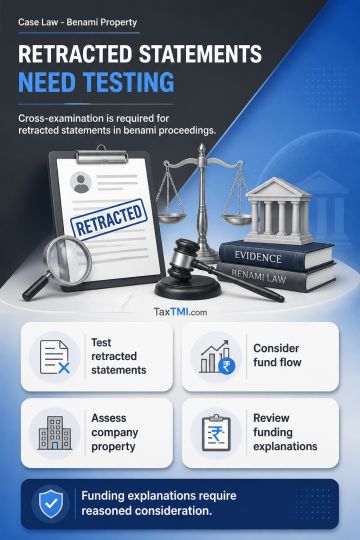
Cross-examination of retracted statements is essential where foundational evidence supports a benami allegation and documented funding explanations re...
Capital-goods exemption covers plant-modernisation accessories, while the import restriction applies only to earlier capital-goods components and spar...
Constitutional judicial review permits challenges to ECIRs and connected money-laundering proceedings where coercive action affects fundamental intere...
This case involves a challenge to the guidelines issued by the Central Bureau of Narcotics (CBN) regarding the registration of sales contracts for importing poppy seeds from Turkey. The petitioners alleged cartelization, monopolization, and fraudulent practices in the import of poppy seeds, and sought to quash the impugned guidelines. The High Court dismissed the petition, relying on its previous decision in Devki Global Capital, which held that the registration of sales contracts by the Turkish Grain Board (TMO) is an internal matter governed by Turkish law, over which Indian authorities have no jurisdiction. The Court emphasized that the CBN's role is limited to registering contracts duly registered by the TMO, as per the MoU between India and Turkey. The Court also cited the Supreme Court's ruling in Balco Employees' Union, which cautions against judicial interference in matters of economic policy unless there is manifest illegality or mala fide intent. Finding no such grounds, the Court upheld the guidelines and dismissed the petition.
This case involves a challenge to the guidelines issued by the Central Bureau of Narcotics (CBN) regarding the registration of sales contracts for importing poppy seeds from Turkey. The petitioners alleged cartelization, monopolization, and fraudulent practices in the import of poppy seeds, and sought to quash the impugned guidelines. The High Court dismissed the petition, relying on its previous decision in Devki Global Capital, which held that the registration of sales contracts by the Turkish Grain Board (TMO) is an internal matter governed by Turkish law, over which Indian authorities have no jurisdiction. The Court emphasized that the CBN's role is limited to registering contracts duly registered by the TMO, as per the MoU between India and Turkey. The Court also cited the Supreme Court's ruling in Balco Employees' Union, which cautions against judicial interference in matters of economic policy unless there is manifest illegality or mala fide intent. Finding no such grounds, the Court upheld the guidelines and dismissed the petition.
Note: It is a system-generated summary and is for quick reference only.
 TaxTMI
 of 4786





















 Join Channel


 TaxTMI