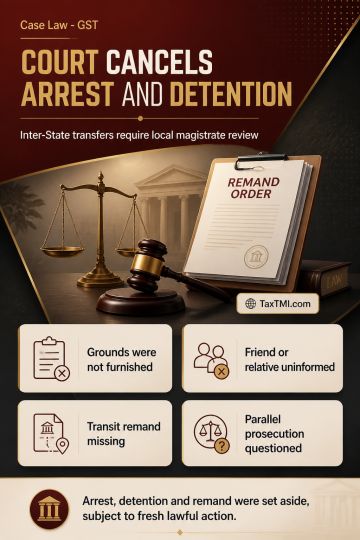
Arrest safeguards and transit remand requirements invalidated detention following inter-State transfer without communicated grounds or magistrate auth...
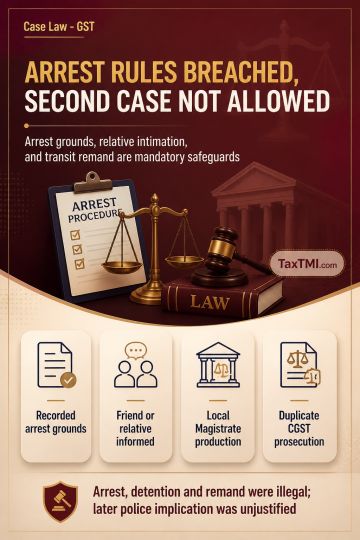
Arrest safeguards require disclosed grounds, relative intimation and transit remand, while duplicate prosecution under the CGST framework is unsustain...
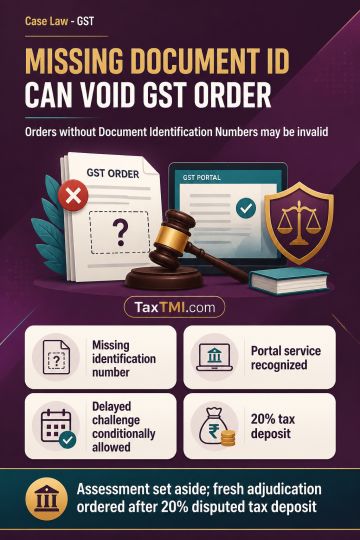
Document Identification Number defects can invalidate GST assessments, with delayed challenges entertained conditionally where patent irregularities e...
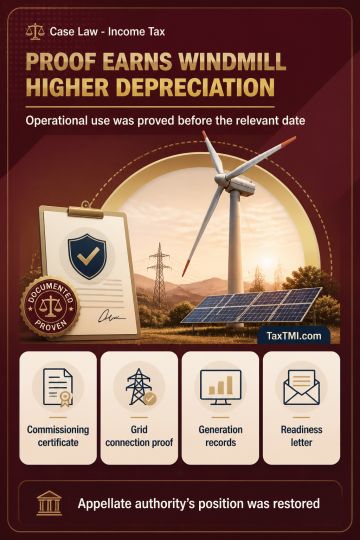
Windmill commissioning evidence supported higher depreciation where grid connection and electricity generation proved operational use before the relev...
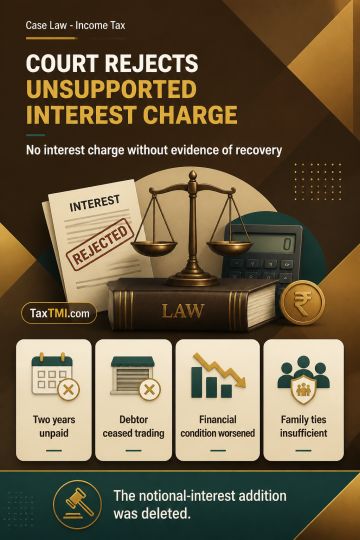
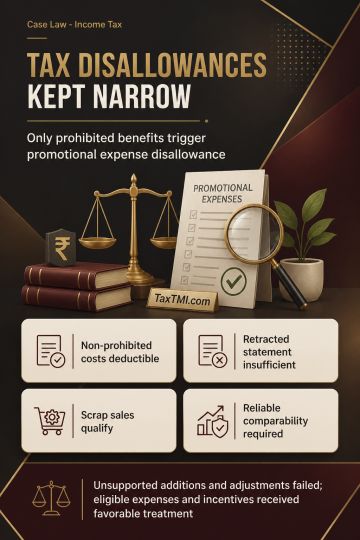
Pharmaceutical promotion and transfer-pricing comparability principles limited disallowances, while uncorroborated search allegations and unsupported ...
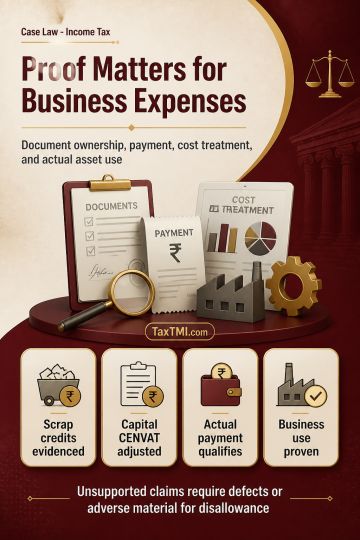
Business expenditure substantiation supports scrap credits, statutory payments and expense claims, while depreciation requires proof of actual busines...
Recovery of service tax from the appellant, where the turnover reported in the balance sheet exceeded the amount reported in the belatedly filed Form ST-3 returns. The key points are: Section 66B imposed tax on services, except those listed in the negative list u/s 66D. Clause (p) of Section 66D excluded transportation services by road for goods, except when rendered by a Goods Transport Agency (GTA) or courier agency. The revenue treated the services as taxable transportation by a GTA, but failed to provide consignment notes issued by the appellant as required by the GTA definition. Without such evidence, the turnover cannot be attributed to GTA services. The ST-3 returns, filed after inquiry initiation without late fees, lack evidentiary value and cannot ascertain tax liability. Being defective, the returns and facts therein are non est for investigation and adjudication. The CENVAT credit demand, rooted in the invalid service tax demand, is also unsustainable. The extended period of limitation was incorrectly invoked as there was no suppression of facts. The entire demand, based on the extended period, is invalid and time-barred. The pre-show cause notice consultation requirement was not met, but as the show cause notice itself failed on various grounds, this aspect became infructuous. Ultimately.
Recovery of service tax from the appellant, where the turnover reported in the balance sheet exceeded the amount reported in the belatedly filed Form ST-3 returns. The key points are: Section 66B imposed tax on services, except those listed in the negative list u/s 66D. Clause (p) of Section 66D excluded transportation services by road for goods, except when rendered by a Goods Transport Agency (GTA) or courier agency. The revenue treated the services as taxable transportation by a GTA, but failed to provide consignment notes issued by the appellant as required by the GTA definition. Without such evidence, the turnover cannot be attributed to GTA services. The ST-3 returns, filed after inquiry initiation without late fees, lack evidentiary value and cannot ascertain tax liability. Being defective, the returns and facts therein are non est for investigation and adjudication. The CENVAT credit demand, rooted in the invalid service tax demand, is also unsustainable. The extended period of limitation was incorrectly invoked as there was no suppression of facts. The entire demand, based on the extended period, is invalid and time-barred. The pre-show cause notice consultation requirement was not met, but as the show cause notice itself failed on various grounds, this aspect became infructuous. Ultimately.
Note: It is a system-generated summary and is for quick reference only.
 TaxTMI
 of 4792




 Join Channel


 TaxTMI