Rectification of mistake remains limited to self-evident record errors, preventing merits review through miscellaneous applications and preserving fin...
Tender creditworthiness conditions may extend to de facto Promoter Directors, with post-participation challenges generally barred absent arbitrariness...
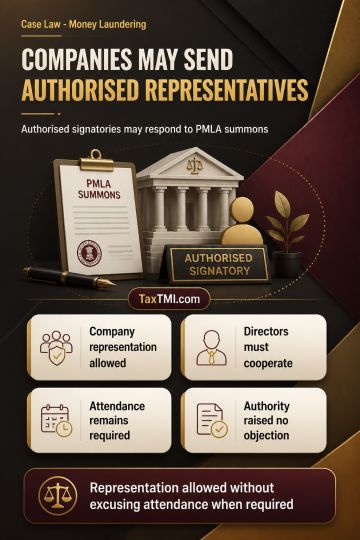
Corporate representation in PMLA summons proceedings permitted through an authorised signatory, subject to directors' continuing cooperation and atten...
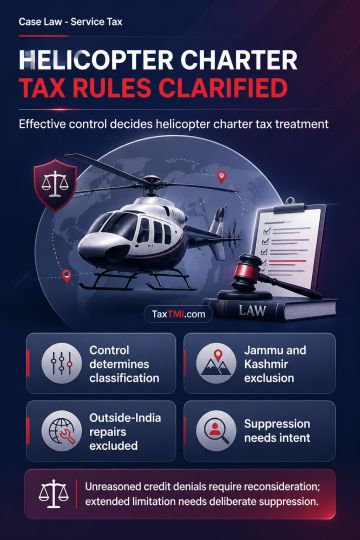
Helicopter charter classification requires effective control analysis, while territorial performance, reasoned credit orders and wilful suppression de...
Page of 4796
Press 'Enter' after typing page number.
781 to 800 of 95918 Results
❮
❯
❯❯
0 / 200
Expand Note
Add to Folder
No Folders have been created
+
Are you sure you want to delete "My most important" ?
This case deals with the extinguishment of demands due to the non-filing of claims by the revenue during the Corporate Insolvency Resolution Process (CIRP) under the Insolvency and Bankruptcy Code (IBC). The key points are: 1) Ruchi Soya underwent CIRP, and Patanjali continued its business after the resolution plan was approved. 2) The revenue did not file any claim before the Interim Resolution Professional (IRP) during CIRP. 3) As the demand was not part of the resolution plan, it stood extinguished and cannot be continued per Section 31 and 32A of the IBC. 4) The Gujarat High Court held that if the revenue does not lodge a claim as an Operational Creditor before the Resolution Professional, any liability extinguishes upon the implementation of the Resolution Plan. 5) The resolution plan aims to continue the company's business as a going concern under the IBC's scheme. 6) Rule 22 of the 1982 Rules, which deals with abatement, is not applicable when a resolution plan is approved under the IBC. 7) The substantial question of law was answered in favor of the assessee against the revenue.
This case deals with the extinguishment of demands due to the non-filing of claims by the revenue during the Corporate Insolvency Resolution Process (CIRP) under the Insolvency and Bankruptcy Code (IBC). The key points are: 1) Ruchi Soya underwent CIRP, and Patanjali continued its business after the resolution plan was approved. 2) The revenue did not file any claim before the Interim Resolution Professional (IRP) during CIRP. 3) As the demand was not part of the resolution plan, it stood extinguished and cannot be continued per Section 31 and 32A of the IBC. 4) The Gujarat High Court held that if the revenue does not lodge a claim as an Operational Creditor before the Resolution Professional, any liability extinguishes upon the implementation of the Resolution Plan. 5) The resolution plan aims to continue the company's business as a going concern under the IBC's scheme. 6) Rule 22 of the 1982 Rules, which deals with abatement, is not applicable when a resolution plan is approved under the IBC. 7) The substantial question of law was answered in favor of the assessee against the revenue.
Note: It is a system-generated summary and is for quick reference only.
 TaxTMI
 of 4796











 Join Channel


 TaxTMI