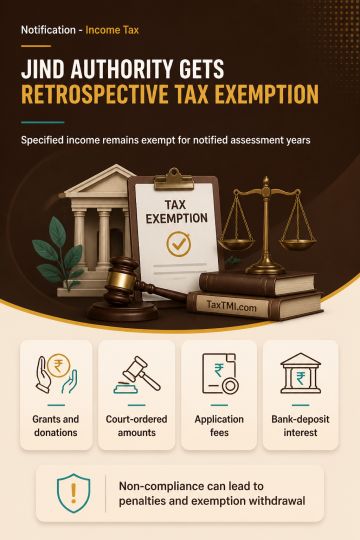
Tax exemption for specified legal-services authority income applies retrospectively, subject to non-commercial activity, unchanged income sources, and...
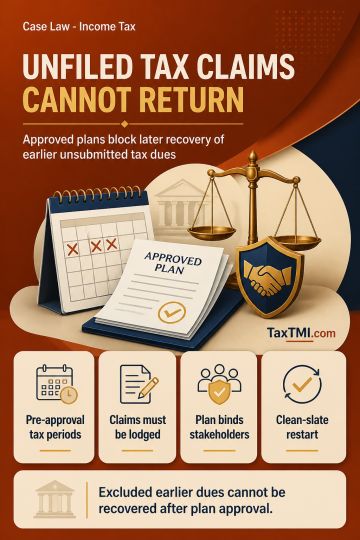
Approved resolution plans extinguish unsubmitted pre-approval tax claims, preventing later recovery outside the insolvency process and preserving a cl...
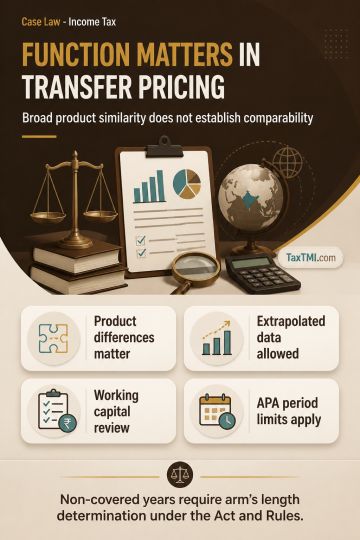
Transfer pricing comparability requires functional alignment and permits working capital adjustment, while APA margins cannot govern non-covered years...
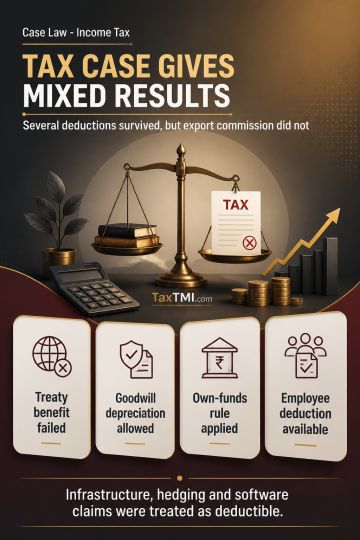
Treaty benefit, goodwill depreciation and hedging costs: export commission disallowed, while key business deductions and depreciation claims succeeded...
Page of 4790
Press 'Enter' after typing page number.
681 to 700 of 95794 Results
❮
❯
❯❯
0 / 200
Expand Note
Add to Folder
No Folders have been created
+
Are you sure you want to delete "My most important" ?
The CESTAT held that in the absence of Section 3A of the Central Excise Act, 1944, and Rules 96ZO, ZP, and ZQ of the Central Excise Rules, 1944, along with any saving clause, the adjudicating authority lacked statutory power to decide matters related to the compounded levy scheme after March 1, 2001. Consequently, the orders-in-original passed by the adjudicating authority, holding the appellants liable to pay duty under the compounded levy scheme, were non-est and lacked legal authority. The entire proceedings, including the show cause notices and adjudication thereof, were vitiated. Without a valid provision or saving clause, the adjudication proceedings were illegal and incorrect, and no demand could be confirmed. Therefore, the impugned orders were unsustainable, and the appeal was allowed.
The CESTAT held that in the absence of Section 3A of the Central Excise Act, 1944, and Rules 96ZO, ZP, and ZQ of the Central Excise Rules, 1944, along with any saving clause, the adjudicating authority lacked statutory power to decide matters related to the compounded levy scheme after March 1, 2001. Consequently, the orders-in-original passed by the adjudicating authority, holding the appellants liable to pay duty under the compounded levy scheme, were non-est and lacked legal authority. The entire proceedings, including the show cause notices and adjudication thereof, were vitiated. Without a valid provision or saving clause, the adjudication proceedings were illegal and incorrect, and no demand could be confirmed. Therefore, the impugned orders were unsustainable, and the appeal was allowed.
Note: It is a system-generated summary and is for quick reference only.
 TaxTMI
 of 4790




 Join Channel


 TaxTMI