Transaction value rejection requires reliable corroboration; refundable VAT is excluded and temporary registration does not defeat new-vehicle exempti...
Appellate jurisdiction remains available where a wrist-worn gold ornament cannot conclusively be characterised as imported baggage at the preliminary ...
Written complaint requirement bars cognizance on police reports for securities offences, while unsupported breach of trust and cheating allegations fa...
Risk-based postal import clearance standardises electronic assessment, document requests, duty realisation and delivery controls at Foreign Post Offic...
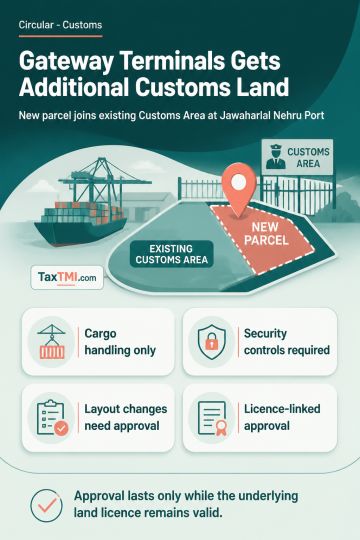
Customs Cargo Service Provider appointment extends custodianship to additional terminal land, subject to cargo-control, security and licence condition...
Classification of services provided by Grant Thornton, India to develop the "Grant Thornton" brand name and the payment received towards reimbursement of "Brand Development Expenses". It examines whether these services constitute business auxiliary services or intermediary services, and whether they qualify as export of services. The Tribunal held that Grant Thornton, India was not acting as an intermediary but providing services on its own account for promoting the brand in India. The transaction did not fall under the intermediary services rule, and the place of provision was the location of the recipient, Grant Thornton, London, outside India. As payment was received in convertible foreign currency, the conditions for export of services were satisfied. The Tribunal relied on previous decisions clarifying the meaning of intermediary services and the scope of export of services. It concluded that Grant Thornton, India was not an intermediary, and the services provided to Grant Thornton, London constituted export of services, dismissing the appeal against the order dropping the proceedings.
Classification of services provided by Grant Thornton, India to develop the "Grant Thornton" brand name and the payment received towards reimbursement of "Brand Development Expenses". It examines whether these services constitute business auxiliary services or intermediary services, and whether they qualify as export of services. The Tribunal held that Grant Thornton, India was not acting as an intermediary but providing services on its own account for promoting the brand in India. The transaction did not fall under the intermediary services rule, and the place of provision was the location of the recipient, Grant Thornton, London, outside India. As payment was received in convertible foreign currency, the conditions for export of services were satisfied. The Tribunal relied on previous decisions clarifying the meaning of intermediary services and the scope of export of services. It concluded that Grant Thornton, India was not an intermediary, and the services provided to Grant Thornton, London constituted export of services, dismissing the appeal against the order dropping the proceedings.
Note: It is a system-generated summary and is for quick reference only.
 TaxTMI
 of 4784















 Join Channel


 TaxTMI