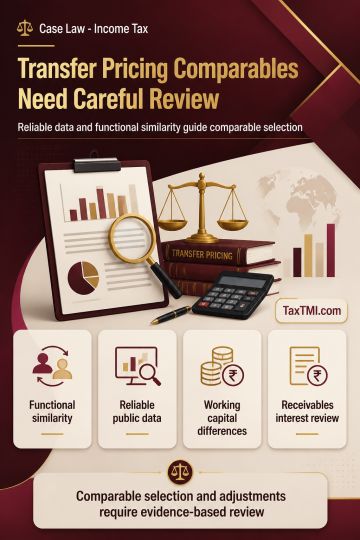
Transfer pricing comparability requires functional alignment, reliable financial data, and careful review of working capital and receivables adjustmen...
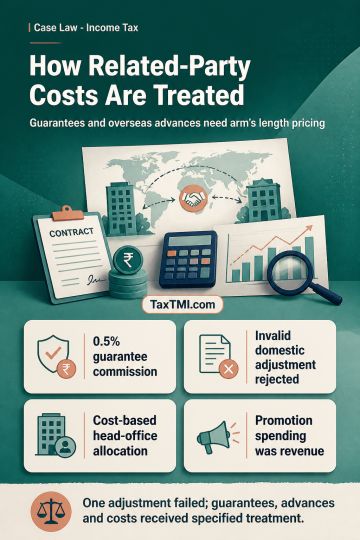
Transfer pricing rules require benchmarking corporate guarantees and associated-enterprise advances, while invalid domestic-transaction adjustments ca...
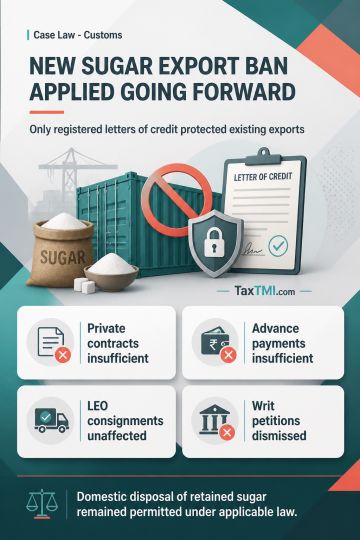
Prospective sugar export prohibition required registered letters of credit; private contracts and export quotas created no enforceable continuation ri...
Retroactive interim-moratorium exclusion permits protective asset disclosure and preservation measures against personal guarantors pending arbitration...
The appellant, engaged in manufacturing SS Hose Assembly, Flange & Fittings, also procured MS Round, TMT Bars, etc., performed work on them, and cleared them to buyers after availing CENVAT credit on inputs. The entire CENVAT credit was reversed upon clearance to buyers. The demand of Rs. 1,46,75,425/- towards CENVAT credit and u/s 11D indicates the credit was properly reversed. The goods' clearance falls u/r 3(5) of CCR, 2004 rather than finished goods clearance. The appellant provided documentary evidence of receiving goods, accounting in books, and banking channel payments. The CESTAT held that denying CENVAT credit was unjustified. Regarding time limitation, the show cause notice was issued belatedly in 2013 for transactions during 2008-10, which were part of ER-1 returns relied upon. No suppression was established, making the demand time-barred. The appeals were allowed on merits and time bar.
The appellant, engaged in manufacturing SS Hose Assembly, Flange & Fittings, also procured MS Round, TMT Bars, etc., performed work on them, and cleared them to buyers after availing CENVAT credit on inputs. The entire CENVAT credit was reversed upon clearance to buyers. The demand of Rs. 1,46,75,425/- towards CENVAT credit and u/s 11D indicates the credit was properly reversed. The goods' clearance falls u/r 3(5) of CCR, 2004 rather than finished goods clearance. The appellant provided documentary evidence of receiving goods, accounting in books, and banking channel payments. The CESTAT held that denying CENVAT credit was unjustified. Regarding time limitation, the show cause notice was issued belatedly in 2013 for transactions during 2008-10, which were part of ER-1 returns relied upon. No suppression was established, making the demand time-barred. The appeals were allowed on merits and time bar.
Note: It is a system-generated summary and is for quick reference only.
 TaxTMI
 of 4788













 Join Channel


 TaxTMI