Defined public benefit can retain charitable character; registration renewal requires examining genuine activities and legal compliance, not surplus a...
Capital reduction is distinct from share buy-back, preventing buy-back tax; restructuring interest and related business deductions also survive scruti...
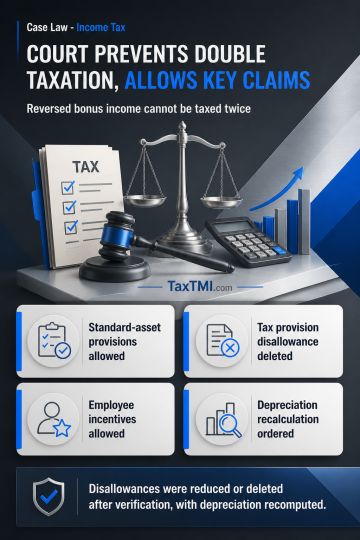
Transfer pricing and tax deductions upheld on established principles, while employee contributions and warranty provisions returned for fresh examinat...
Captive transfer pricing relies on industrial consumer tariffs, while genuine quotations can benchmark effluent treatment transfers under the Other Me...
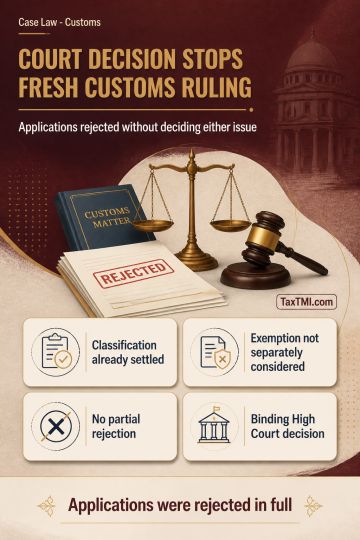
Specific tariff classification for ophthalmic instruments and extended limitation principles determine the treatment of duty demands, confiscation, an...
Integrated golf function determines classification, placing launch monitors and simulators under other golf equipment rather than measuring instrument...
Acquittal of the accused in a cheque dishonor case. The court observed that once the accused raises a probable defense by leading evidence to show no debt/liability existed, the presumptions u/ss 118 and 139 of the Negotiable Instruments Act disappear. The burden then shifts to the complainant to prove the existence of debt as a matter of fact. In this case, the accused denied issuing the cheque and his signatures. Expert opinion was obtained, and the trial court found the complainant failed to prove the debt/liability's existence, mode of loan advancement, or documentary evidence. The high court found no perversity in the acquittal order, dismissing the petition challenging the acquittal.
Acquittal of the accused in a cheque dishonor case. The court observed that once the accused raises a probable defense by leading evidence to show no debt/liability existed, the presumptions u/ss 118 and 139 of the Negotiable Instruments Act disappear. The burden then shifts to the complainant to prove the existence of debt as a matter of fact. In this case, the accused denied issuing the cheque and his signatures. Expert opinion was obtained, and the trial court found the complainant failed to prove the debt/liability's existence, mode of loan advancement, or documentary evidence. The high court found no perversity in the acquittal order, dismissing the petition challenging the acquittal.
Note: It is a system-generated summary and is for quick reference only.
 TaxTMI
 of 4798




















 Join Channel


 TaxTMI