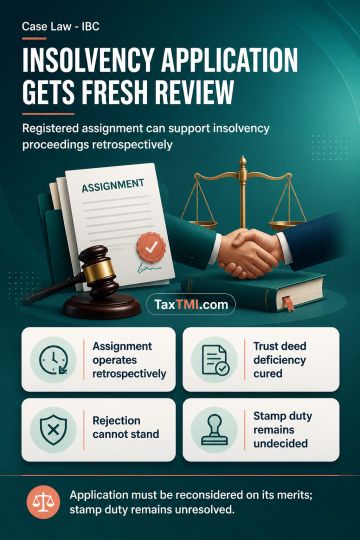
Transfer pricing and tax deductions upheld on established principles, while employee contributions and warranty provisions returned for fresh examinat...
Captive transfer pricing relies on industrial consumer tariffs, while genuine quotations can benchmark effluent treatment transfers under the Other Me...
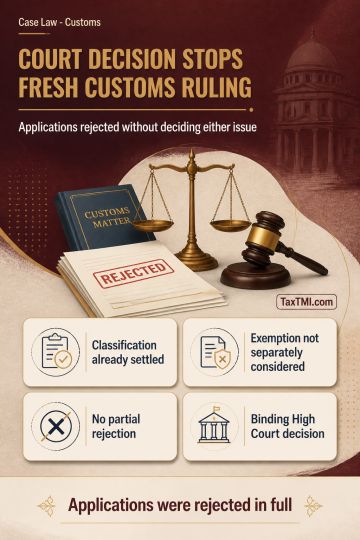
Specific tariff classification for ophthalmic instruments and extended limitation principles determine the treatment of duty demands, confiscation, an...
Integrated golf function determines classification, placing launch monitors and simulators under other golf equipment rather than measuring instrument...
Public servant status under anti-corruption law extends to recognised stock exchange leadership; constitutional and sanction challenges do not succeed...
Acquiescence, homebuyer protection and clean-slate resolution principles prevent landowners from disrupting an integrated project through late termina...
This document provides guidance on compounding of contraventions under the Foreign Exchange Management Act (FEMA), 1999. It outlines the process, eligibility criteria, and computation matrix for determining the compounding amount payable for various types of contraventions. Key points: - Certain contraventions related to foreign investment, external commercial borrowings, overseas investment, and branch/liaison offices can be compounded by RBI's Regional Offices. - Applicants must submit a compounding application along with the prescribed fee of Rs. 10,000 plus GST. - Cases involving serious contraventions like money laundering, terror financing, or affecting national sovereignty are not eligible for compounding. - The compounding amount is calculated based on factors such as the sum involved, duration of contravention, undue gains made, and repetitive nature of the contravention. - A detailed computation matrix with formulas is provided for calculating the compounding amount for different types of contraventions. - The compounding authority will pass an order after giving the applicant an opportunity for a personal hearing. - The compounded amount must be paid within 15 days from the date of the compounding order. - Summary information about compounding orders will be hosted on RBI's website. The document also covers procedural aspects like submission of applications, payment modes, and issuance of compounding orders.
This document provides guidance on compounding of contraventions under the Foreign Exchange Management Act (FEMA), 1999. It outlines the process, eligibility criteria, and computation matrix for determining the compounding amount payable for various types of contraventions. Key points: - Certain contraventions related to foreign investment, external commercial borrowings, overseas investment, and branch/liaison offices can be compounded by RBI's Regional Offices. - Applicants must submit a compounding application along with the prescribed fee of Rs. 10,000 plus GST. - Cases involving serious contraventions like money laundering, terror financing, or affecting national sovereignty are not eligible for compounding. - The compounding amount is calculated based on factors such as the sum involved, duration of contravention, undue gains made, and repetitive nature of the contravention. - A detailed computation matrix with formulas is provided for calculating the compounding amount for different types of contraventions. - The compounding authority will pass an order after giving the applicant an opportunity for a personal hearing. - The compounded amount must be paid within 15 days from the date of the compounding order. - Summary information about compounding orders will be hosted on RBI's website. The document also covers procedural aspects like submission of applications, payment modes, and issuance of compounding orders.
Note: It is a system-generated summary and is for quick reference only.
 TaxTMI
 of 4805




















 Join Channel


 TaxTMI