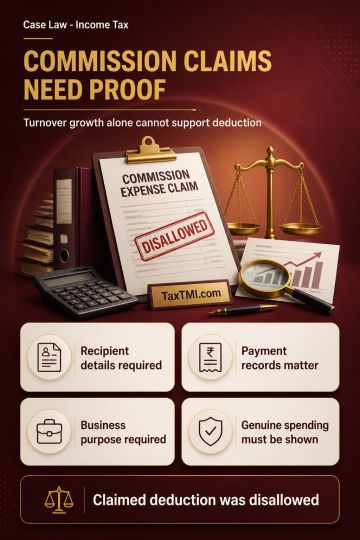
Business expenditure deduction requires proof of genuine commission payments and commercial allowability; turnover growth alone cannot validate the cl...
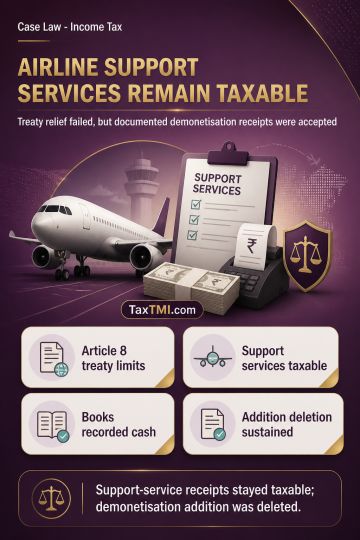
Article 8 treaty coverage excluded third-party airline support services, while documented demonetisation cash receipts remained accepted business inco...
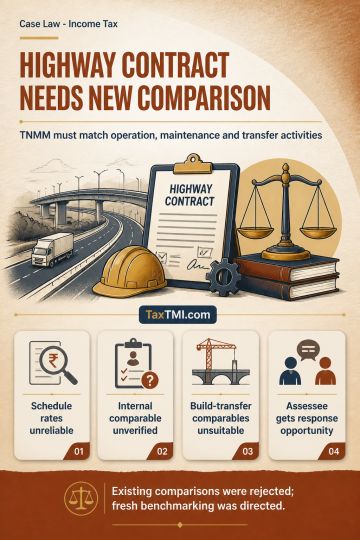
Functional comparability under TNMM requires highway contract benchmarks to reflect operation, maintenance and transfer activities, requiring fresh be...
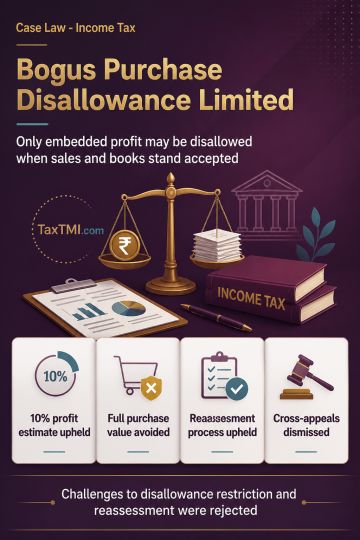
The case pertains to the estimation of income and disallowance of bogus purchases. The purchases were deemed sham transactions fabricated through bogus paper concerns engaged in providing accommodation entries. The Income Tax Appellate Tribunal (ITAT) partly allowed the Revenue's appeal, holding that for bogus purchases, the addition at the rate of 6% of the bogus purchases was fair and reasonable. The High Court upheld the ITAT's view, stating that the conclusion was based on the material and analysis of facts and figures available. The court found no substantial questions of law arising from the ITAT's decision to reduce the disallowance from 12.5% to 6% for the bogus purchases.
The case pertains to the estimation of income and disallowance of bogus purchases. The purchases were deemed sham transactions fabricated through bogus paper concerns engaged in providing accommodation entries. The Income Tax Appellate Tribunal (ITAT) partly allowed the Revenue's appeal, holding that for bogus purchases, the addition at the rate of 6% of the bogus purchases was fair and reasonable. The High Court upheld the ITAT's view, stating that the conclusion was based on the material and analysis of facts and figures available. The court found no substantial questions of law arising from the ITAT's decision to reduce the disallowance from 12.5% to 6% for the bogus purchases.
Note: It is a system-generated summary and is for quick reference only.
 TaxTMI
  TaxTMI
 of 4826



 Join Channel


