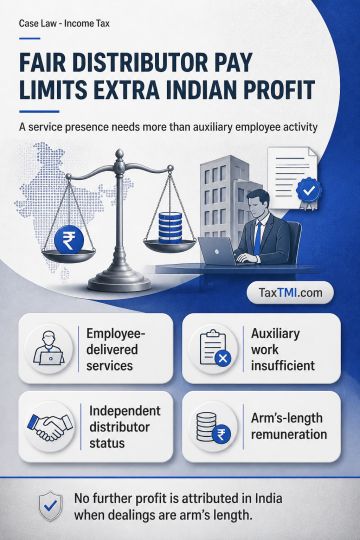
Service permanent establishment requires non-auxiliary services, while arm's-length distributor remuneration precludes further profit attribution in I...
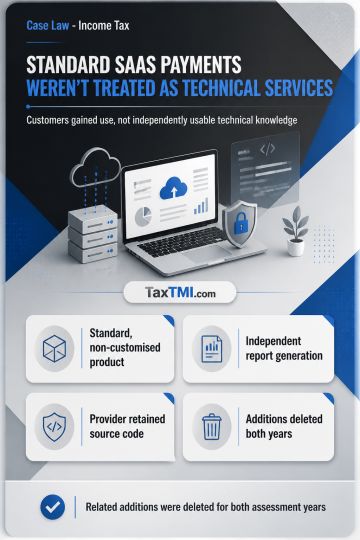
Make-available condition excludes standard SaaS subscription receipts where customers receive no independently usable technical knowledge after subscr...
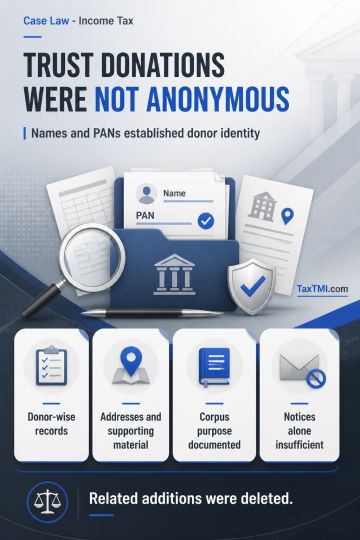
Anonymous donation classification fails where charitable trusts maintain undisputed donor identity records and evidence corpus contributions' intended...
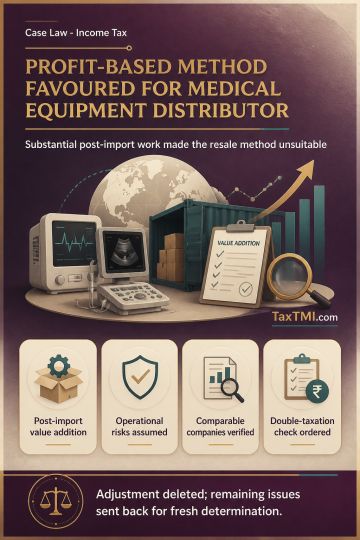
Transfer pricing method selection favours TNMM where medical-equipment distribution involves substantial post-import value addition and operational ri...
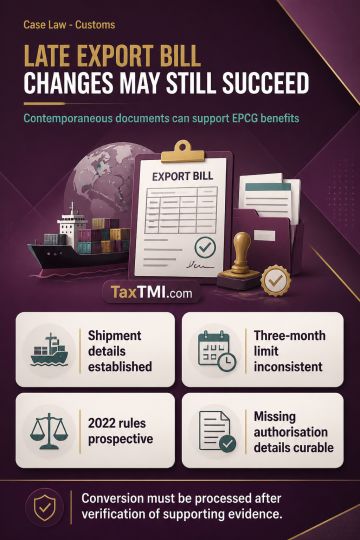
Post-export shipping bill conversion remains available where contemporaneous evidence supports EPCG benefits despite curable procedural omissions and ...
The case pertains to the estimation of income and disallowance of bogus purchases. The purchases were deemed sham transactions fabricated through bogus paper concerns engaged in providing accommodation entries. The Income Tax Appellate Tribunal (ITAT) partly allowed the Revenue's appeal, holding that for bogus purchases, the addition at the rate of 6% of the bogus purchases was fair and reasonable. The High Court upheld the ITAT's view, stating that the conclusion was based on the material and analysis of facts and figures available. The court found no substantial questions of law arising from the ITAT's decision to reduce the disallowance from 12.5% to 6% for the bogus purchases.
The case pertains to the estimation of income and disallowance of bogus purchases. The purchases were deemed sham transactions fabricated through bogus paper concerns engaged in providing accommodation entries. The Income Tax Appellate Tribunal (ITAT) partly allowed the Revenue's appeal, holding that for bogus purchases, the addition at the rate of 6% of the bogus purchases was fair and reasonable. The High Court upheld the ITAT's view, stating that the conclusion was based on the material and analysis of facts and figures available. The court found no substantial questions of law arising from the ITAT's decision to reduce the disallowance from 12.5% to 6% for the bogus purchases.
Note: It is a system-generated summary and is for quick reference only.
 TaxTMI
  TaxTMI
 of 4819



 Join Channel