Bank account freezing requires statutory authority; anti-money-laundering compliance and KYC monitoring do not permit unilateral indefinite restrictio...
Handicraft job work receives concessional GST only for registered principals and predominantly handmade goods; commercial resin articles remain taxabl...
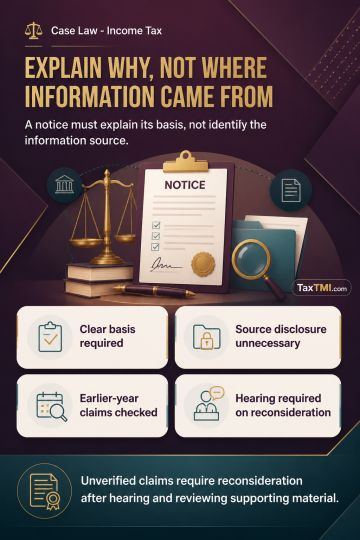
Reassessment disclosure requirements permit stated reasons without revealing information sources, but prior-taxation claims require full examination b...
Page of 4821
Press 'Enter' after typing page number.
101 to 120 of 96406 Results
❮
❯
❯❯
0 / 200
Expand Note
Add to Folder
No Folders have been created
+
Are you sure you want to delete "My most important" ?
The Tamil Nadu Protection of Interests of Depositors Act (TNPID Act), 1997, is a special enactment intended to protect depositors' rights and provide a mechanism for disbursement of assets of the accused, apart from punishing them. The Insolvency and Bankruptcy Code (IBC), 2016, overrides inconsistent provisions in other laws, as per Section 238. However, the Madras High Court held that the TNPID Act's purpose, upheld by the Supreme Court despite marginal encroachment into Central legislations, cannot be ignored. The Court ruled that the NCLT order declaring attachments under the TNPID Act null and void was contrary to settled principles of law. The State's sovereign power and duty to protect public interest through the TNPID Act was reiterated, allowing the petition.
The Tamil Nadu Protection of Interests of Depositors Act (TNPID Act), 1997, is a special enactment intended to protect depositors' rights and provide a mechanism for disbursement of assets of the accused, apart from punishing them. The Insolvency and Bankruptcy Code (IBC), 2016, overrides inconsistent provisions in other laws, as per Section 238. However, the Madras High Court held that the TNPID Act's purpose, upheld by the Supreme Court despite marginal encroachment into Central legislations, cannot be ignored. The Court ruled that the NCLT order declaring attachments under the TNPID Act null and void was contrary to settled principles of law. The State's sovereign power and duty to protect public interest through the TNPID Act was reiterated, allowing the petition.
Note: It is a system-generated summary and is for quick reference only.
 TaxTMI
  TaxTMI
 of 4821



















 Join Channel