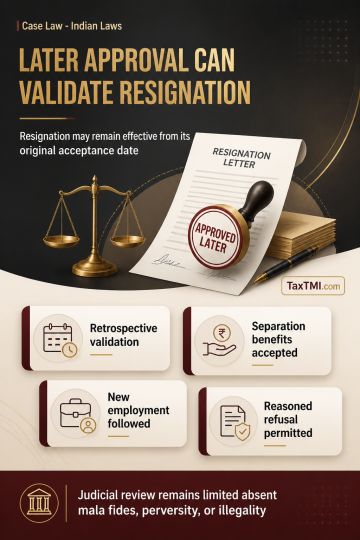
Ratification of resignation acceptance validates separation retrospectively, while withdrawal may be refused through reasoned administrative discretio...
Nature-dependent electricity contracts receive new Ind AS accounting, hedge designation, transition and financial-statement disclosure requirements fr...
Alternative GST remedy permitted protective writ intervention for ex parte adjudication, preserving independent appellate review of input tax credit d...
Assessment against deceased sole proprietor requires proceedings against the legal representative, rendering prior assessment and appellate orders inv...
Residential waste collection classification under SAC 999423 defeats composite-supply exemption where facilitating goods are not transferred to the lo...
The Tamil Nadu Protection of Interests of Depositors Act (TNPID Act), 1997, is a special enactment intended to protect depositors' rights and provide a mechanism for disbursement of assets of the accused, apart from punishing them. The Insolvency and Bankruptcy Code (IBC), 2016, overrides inconsistent provisions in other laws, as per Section 238. However, the Madras High Court held that the TNPID Act's purpose, upheld by the Supreme Court despite marginal encroachment into Central legislations, cannot be ignored. The Court ruled that the NCLT order declaring attachments under the TNPID Act null and void was contrary to settled principles of law. The State's sovereign power and duty to protect public interest through the TNPID Act was reiterated, allowing the petition.
The Tamil Nadu Protection of Interests of Depositors Act (TNPID Act), 1997, is a special enactment intended to protect depositors' rights and provide a mechanism for disbursement of assets of the accused, apart from punishing them. The Insolvency and Bankruptcy Code (IBC), 2016, overrides inconsistent provisions in other laws, as per Section 238. However, the Madras High Court held that the TNPID Act's purpose, upheld by the Supreme Court despite marginal encroachment into Central legislations, cannot be ignored. The Court ruled that the NCLT order declaring attachments under the TNPID Act null and void was contrary to settled principles of law. The State's sovereign power and duty to protect public interest through the TNPID Act was reiterated, allowing the petition.
Note: It is a system-generated summary and is for quick reference only.
 TaxTMI
  TaxTMI
 of 4828





















 Join Channel