Service permanent establishment requires non-auxiliary services, while arm's-length distributor remuneration precludes further profit attribution in I...
Make-available condition excludes standard SaaS subscription receipts where customers receive no independently usable technical knowledge after subscr...
Anonymous donation classification fails where charitable trusts maintain undisputed donor identity records and evidence corpus contributions' intended...
Transfer pricing method selection favours TNMM where medical-equipment distribution involves substantial post-import value addition and operational ri...
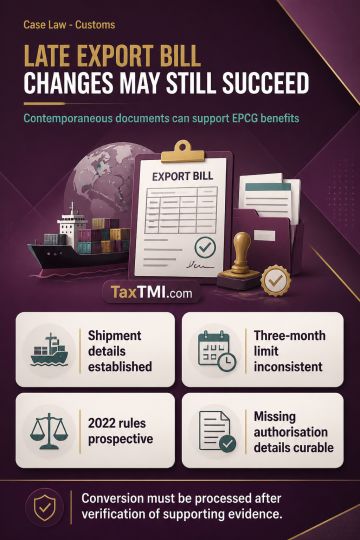
Post-export shipping bill conversion remains available where contemporaneous evidence supports EPCG benefits despite curable procedural omissions and ...
The Tamil Nadu Protection of Interests of Depositors Act (TNPID Act), 1997, is a special enactment intended to protect depositors' rights and provide a mechanism for disbursement of assets of the accused, apart from punishing them. The Insolvency and Bankruptcy Code (IBC), 2016, overrides inconsistent provisions in other laws, as per Section 238. However, the Madras High Court held that the TNPID Act's purpose, upheld by the Supreme Court despite marginal encroachment into Central legislations, cannot be ignored. The Court ruled that the NCLT order declaring attachments under the TNPID Act null and void was contrary to settled principles of law. The State's sovereign power and duty to protect public interest through the TNPID Act was reiterated, allowing the petition.
The Tamil Nadu Protection of Interests of Depositors Act (TNPID Act), 1997, is a special enactment intended to protect depositors' rights and provide a mechanism for disbursement of assets of the accused, apart from punishing them. The Insolvency and Bankruptcy Code (IBC), 2016, overrides inconsistent provisions in other laws, as per Section 238. However, the Madras High Court held that the TNPID Act's purpose, upheld by the Supreme Court despite marginal encroachment into Central legislations, cannot be ignored. The Court ruled that the NCLT order declaring attachments under the TNPID Act null and void was contrary to settled principles of law. The State's sovereign power and duty to protect public interest through the TNPID Act was reiterated, allowing the petition.
Note: It is a system-generated summary and is for quick reference only.
 TaxTMI
  TaxTMI
 of 4826





















 Join Channel


