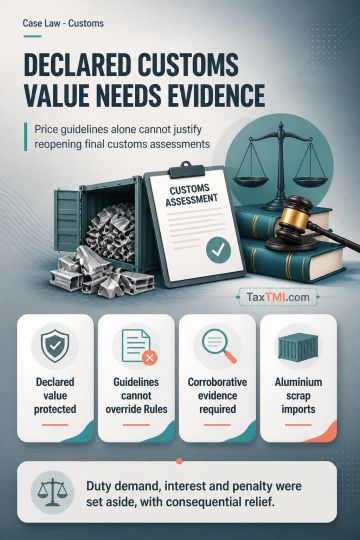
Transaction value cannot be rejected solely on non-statutory valuation guidelines without corroborative evidence supporting reassessment of final cust...
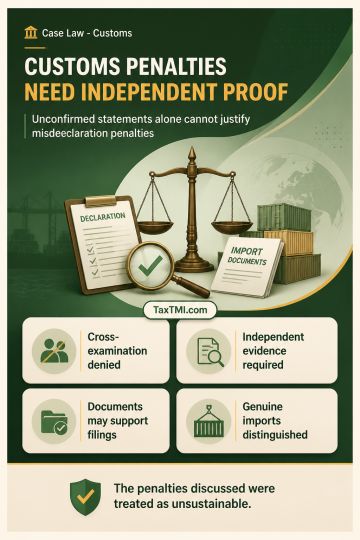
Cross-examination rights and corroborated evidence limit customs penalties for misdeclaration in genuine import transactions involving documented clea...
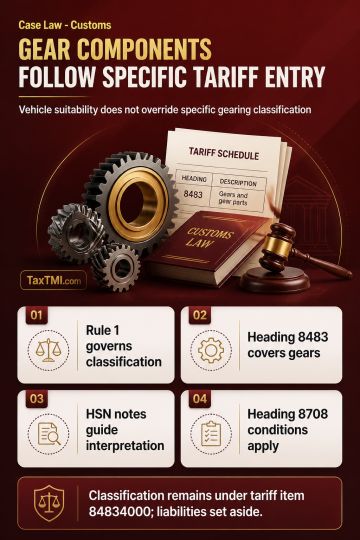
Tariff classification of vehicle gear components follows the specific gearing entry, displacing motor-vehicle parts classification and related liabili...
Necessary-party requirements limit impleadment of independent entities, while deferred consideration does not create an appealable adverse determinati...
Food supplement classification requires common parlance and authoritative tests, preventing treatment as proprietary Ayurvedic medicines without suppo...
Loose papers found during a search at the residences of individuals contained notings and calculations presumed by the Assessing Officer (AO) to relate to undisclosed income and investments of one individual. However, the evidence failed to establish any connection between the notings and that individual's activities or sources of income. The notings pertained to expenses, vehicle purchases, and numerical entries, but no regular income was identified for that person to correlate with such expenses. The loose papers were found at another individual's residence, whose business records were accepted. The Tribunal held that the AO wrongly attributed the loose paper notings to the first individual without establishing any link or means of income, when they likely related to the second individual's accepted business. Consequently, the additions made by the AO based on the loose papers were deleted for lack of credible evidence connecting them to the first individual's undisclosed income or investments.
Loose papers found during a search at the residences of individuals contained notings and calculations presumed by the Assessing Officer (AO) to relate to undisclosed income and investments of one individual. However, the evidence failed to establish any connection between the notings and that individual's activities or sources of income. The notings pertained to expenses, vehicle purchases, and numerical entries, but no regular income was identified for that person to correlate with such expenses. The loose papers were found at another individual's residence, whose business records were accepted. The Tribunal held that the AO wrongly attributed the loose paper notings to the first individual without establishing any link or means of income, when they likely related to the second individual's accepted business. Consequently, the additions made by the AO based on the loose papers were deleted for lack of credible evidence connecting them to the first individual's undisclosed income or investments.
Note: It is a system-generated summary and is for quick reference only.
 TaxTMI
 of 4805













 Join Channel


 TaxTMI
