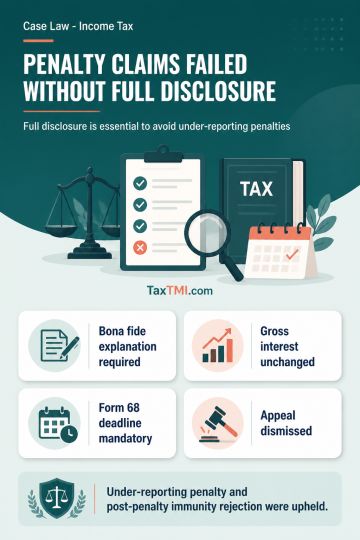
Bona fide disclosure requirements govern under-reporting penalties, and post-penalty immunity applications cannot secure available statutory protectio...
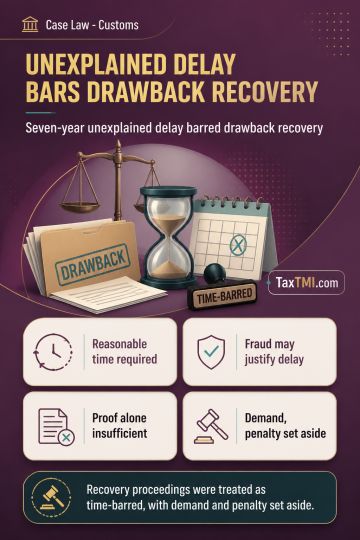
Certificate-of-origin verification procedure governs preferential customs benefits; denial without retroactive verification was set aside with consequ...
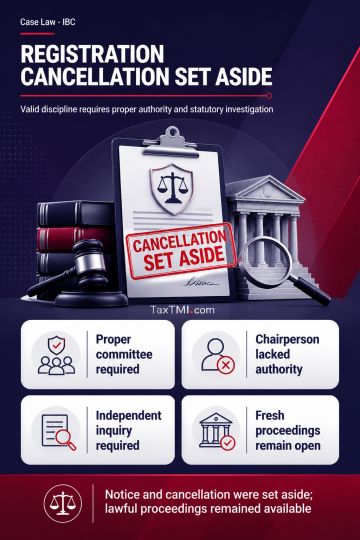
Disciplinary Committee jurisdiction and mandatory investigation requirements invalidated cancellation of an insolvency professional's registration and...
Retention of seized property survives where recorded reasons support proceeds of crime, while stayed investigation periods are excluded from limitatio...
The assessee borrowed loans from financial institutions at an interest rate of 12.75% and advanced loans to group companies or relatives at 12% interest rate. The assessee restricted the claim of interest expense u/s 57 to 12%, being the interest earned. The Principal Commissioner of Income Tax (PCIT) invoked revision u/s 263, disallowing the interest income, concluding the assessee failed to substantiate the nexus between the interest-bearing loans taken and advances made. The PCIT also held the Assessing Officer (AO) wrongly added unexplained cash credits to income without considering the assessee's submissions. The Income Tax Appellate Tribunal (ITAT) observed the assessee disclosed rental income correctly. Relying on the Supreme Court's decision in Malabar Industrial Co. Ltd., the ITAT held the PCIT failed to demonstrate the AO's order was erroneous due to inadequate inquiry. The AO conducted necessary inquiries and applied his mind. No prejudice was caused to the Revenue. The PCIT's order was unsustainable in law, and the assessee's appeal was allowed.
The assessee borrowed loans from financial institutions at an interest rate of 12.75% and advanced loans to group companies or relatives at 12% interest rate. The assessee restricted the claim of interest expense u/s 57 to 12%, being the interest earned. The Principal Commissioner of Income Tax (PCIT) invoked revision u/s 263, disallowing the interest income, concluding the assessee failed to substantiate the nexus between the interest-bearing loans taken and advances made. The PCIT also held the Assessing Officer (AO) wrongly added unexplained cash credits to income without considering the assessee's submissions. The Income Tax Appellate Tribunal (ITAT) observed the assessee disclosed rental income correctly. Relying on the Supreme Court's decision in Malabar Industrial Co. Ltd., the ITAT held the PCIT failed to demonstrate the AO's order was erroneous due to inadequate inquiry. The AO conducted necessary inquiries and applied his mind. No prejudice was caused to the Revenue. The PCIT's order was unsustainable in law, and the assessee's appeal was allowed.
Note: It is a system-generated summary and is for quick reference only.
 TaxTMI
  TaxTMI
 of 4809
















 Join Channel