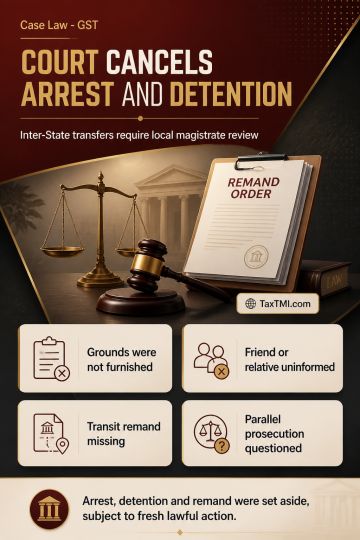
Arrest safeguards and transit remand requirements invalidated detention following inter-State transfer without communicated grounds or magistrate auth...
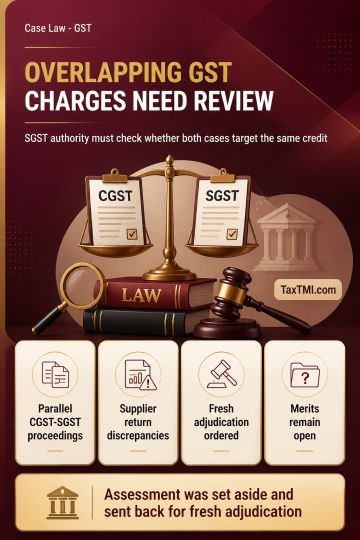
Arrest safeguards require disclosed grounds, relative intimation and transit remand, while duplicate prosecution under the CGST framework is unsustain...
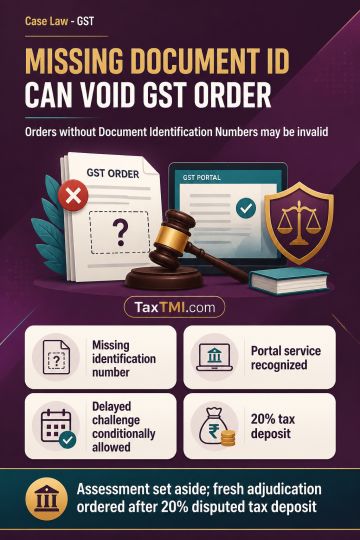
Document Identification Number defects can invalidate GST assessments, with delayed challenges entertained conditionally where patent irregularities e...
Windmill commissioning evidence supported higher depreciation where grid connection and electricity generation proved operational use before the relev...
The assessee borrowed loans from financial institutions at an interest rate of 12.75% and advanced loans to group companies or relatives at 12% interest rate. The assessee restricted the claim of interest expense u/s 57 to 12%, being the interest earned. The Principal Commissioner of Income Tax (PCIT) invoked revision u/s 263, disallowing the interest income, concluding the assessee failed to substantiate the nexus between the interest-bearing loans taken and advances made. The PCIT also held the Assessing Officer (AO) wrongly added unexplained cash credits to income without considering the assessee's submissions. The Income Tax Appellate Tribunal (ITAT) observed the assessee disclosed rental income correctly. Relying on the Supreme Court's decision in Malabar Industrial Co. Ltd., the ITAT held the PCIT failed to demonstrate the AO's order was erroneous due to inadequate inquiry. The AO conducted necessary inquiries and applied his mind. No prejudice was caused to the Revenue. The PCIT's order was unsustainable in law, and the assessee's appeal was allowed.
The assessee borrowed loans from financial institutions at an interest rate of 12.75% and advanced loans to group companies or relatives at 12% interest rate. The assessee restricted the claim of interest expense u/s 57 to 12%, being the interest earned. The Principal Commissioner of Income Tax (PCIT) invoked revision u/s 263, disallowing the interest income, concluding the assessee failed to substantiate the nexus between the interest-bearing loans taken and advances made. The PCIT also held the Assessing Officer (AO) wrongly added unexplained cash credits to income without considering the assessee's submissions. The Income Tax Appellate Tribunal (ITAT) observed the assessee disclosed rental income correctly. Relying on the Supreme Court's decision in Malabar Industrial Co. Ltd., the ITAT held the PCIT failed to demonstrate the AO's order was erroneous due to inadequate inquiry. The AO conducted necessary inquiries and applied his mind. No prejudice was caused to the Revenue. The PCIT's order was unsustainable in law, and the assessee's appeal was allowed.
Note: It is a system-generated summary and is for quick reference only.
 TaxTMI
 of 4805












 Join Channel


 TaxTMI
