Inherited property sale proceeds require capital-gains treatment where ownership is supported by evidence, not suspicion or unverified signature doubt...
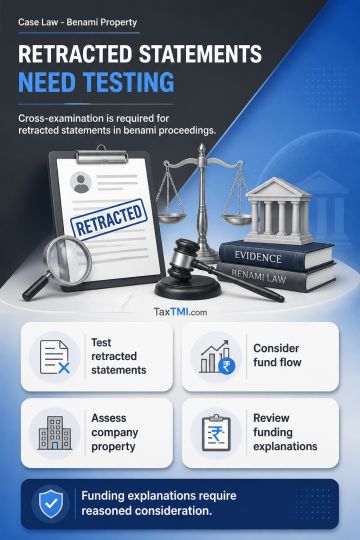
Cross-examination of retracted statements is essential where foundational evidence supports a benami allegation and documented funding explanations re...
Capital-goods exemption covers plant-modernisation accessories, while the import restriction applies only to earlier capital-goods components and spar...
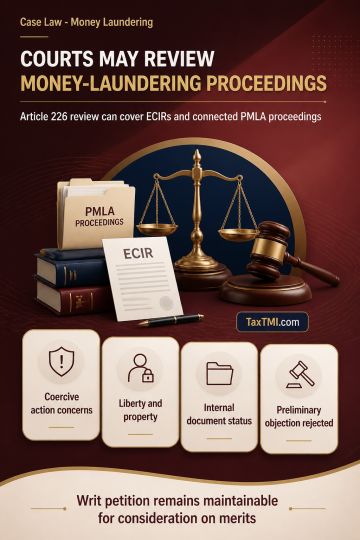
Constitutional judicial review permits challenges to ECIRs and connected money-laundering proceedings where coercive action affects fundamental intere...
The assessee borrowed loans from financial institutions at an interest rate of 12.75% and advanced loans to group companies or relatives at 12% interest rate. The assessee restricted the claim of interest expense u/s 57 to 12%, being the interest earned. The Principal Commissioner of Income Tax (PCIT) invoked revision u/s 263, disallowing the interest income, concluding the assessee failed to substantiate the nexus between the interest-bearing loans taken and advances made. The PCIT also held the Assessing Officer (AO) wrongly added unexplained cash credits to income without considering the assessee's submissions. The Income Tax Appellate Tribunal (ITAT) observed the assessee disclosed rental income correctly. Relying on the Supreme Court's decision in Malabar Industrial Co. Ltd., the ITAT held the PCIT failed to demonstrate the AO's order was erroneous due to inadequate inquiry. The AO conducted necessary inquiries and applied his mind. No prejudice was caused to the Revenue. The PCIT's order was unsustainable in law, and the assessee's appeal was allowed.
The assessee borrowed loans from financial institutions at an interest rate of 12.75% and advanced loans to group companies or relatives at 12% interest rate. The assessee restricted the claim of interest expense u/s 57 to 12%, being the interest earned. The Principal Commissioner of Income Tax (PCIT) invoked revision u/s 263, disallowing the interest income, concluding the assessee failed to substantiate the nexus between the interest-bearing loans taken and advances made. The PCIT also held the Assessing Officer (AO) wrongly added unexplained cash credits to income without considering the assessee's submissions. The Income Tax Appellate Tribunal (ITAT) observed the assessee disclosed rental income correctly. Relying on the Supreme Court's decision in Malabar Industrial Co. Ltd., the ITAT held the PCIT failed to demonstrate the AO's order was erroneous due to inadequate inquiry. The AO conducted necessary inquiries and applied his mind. No prejudice was caused to the Revenue. The PCIT's order was unsustainable in law, and the assessee's appeal was allowed.
Note: It is a system-generated summary and is for quick reference only.
 TaxTMI
 of 4805
















 Join Channel


 TaxTMI