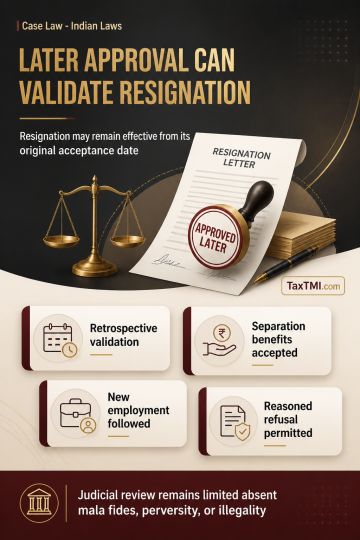
Ratification of resignation acceptance validates separation retrospectively, while withdrawal may be refused through reasoned administrative discretio...
Nature-dependent electricity contracts receive new Ind AS accounting, hedge designation, transition and financial-statement disclosure requirements fr...
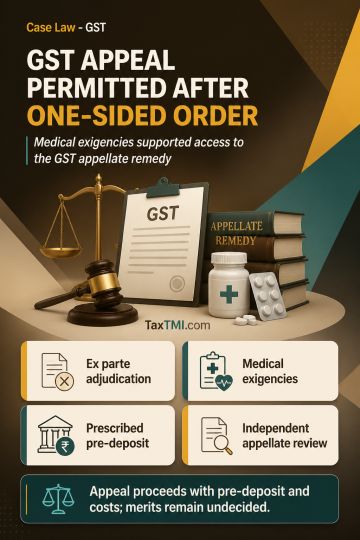
Alternative GST remedy permitted protective writ intervention for ex parte adjudication, preserving independent appellate review of input tax credit d...
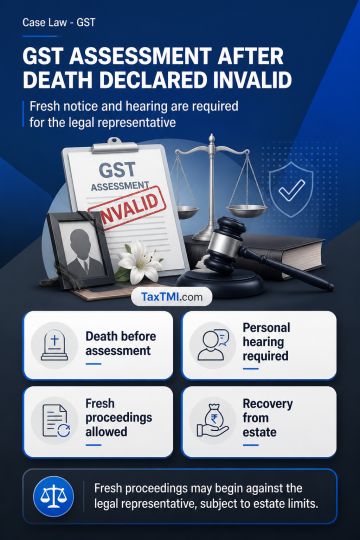
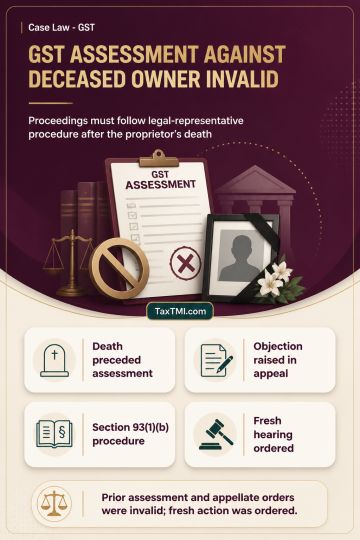
Assessment against deceased sole proprietor requires proceedings against the legal representative, rendering prior assessment and appellate orders inv...
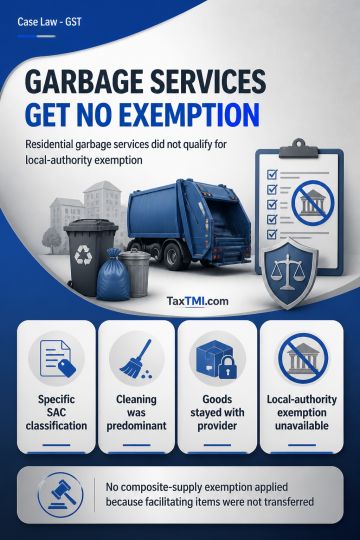
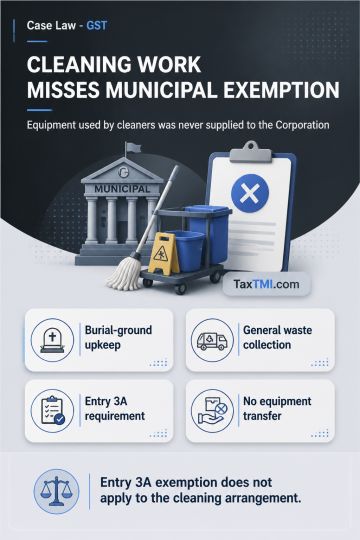
Residential waste collection classification under SAC 999423 defeats composite-supply exemption where facilitating goods are not transferred to the lo...
Page of 4800
Press 'Enter' after typing page number.
161 to 180 of 96000 Results
❮
❯
❯❯
0 / 200
Expand Note
Add to Folder
No Folders have been created
+
Are you sure you want to delete "My most important" ?
The case pertains to the classification of imported goods such as binding material, parts for brake, disc brake pads, tool for mould, etc. under the Customs Tariff Headings (CTH) 38249090/38247900 or CTH 68138900. The key points are: The imported materials are more appropriately classifiable under Chapter Heading 6813 as friction material based on their composition and usage in brake pad manufacturing. The Material Safety Data Sheet also identifies them as friction material. Friction materials not mounted for brakes or clutches fall under CTH 6813. However, when mounted, including friction material fixed to a metal plate for disc brakes, they are classified as parts of the machines or vehicles for which they are designed. The imported product consists of a friction material bonded with a steel backing plate, forming an integrated component used in automotive vehicle brakes. Therefore, it is more appropriately classifiable under CTH 6813 and not under CTH 3824. Regarding the invocation of the extended period, the Tribunal held that in the absence of any finding of positive suppression by the importer, misclassification cannot be equated with misdeclaration within the meaning of Section 28(4) of the Customs Act, 1962. Considering the importer's consistent classification practice and regular imports, attributing any.
The case pertains to the classification of imported goods such as binding material, parts for brake, disc brake pads, tool for mould, etc. under the Customs Tariff Headings (CTH) 38249090/38247900 or CTH 68138900. The key points are: The imported materials are more appropriately classifiable under Chapter Heading 6813 as friction material based on their composition and usage in brake pad manufacturing. The Material Safety Data Sheet also identifies them as friction material. Friction materials not mounted for brakes or clutches fall under CTH 6813. However, when mounted, including friction material fixed to a metal plate for disc brakes, they are classified as parts of the machines or vehicles for which they are designed. The imported product consists of a friction material bonded with a steel backing plate, forming an integrated component used in automotive vehicle brakes. Therefore, it is more appropriately classifiable under CTH 6813 and not under CTH 3824. Regarding the invocation of the extended period, the Tribunal held that in the absence of any finding of positive suppression by the importer, misclassification cannot be equated with misdeclaration within the meaning of Section 28(4) of the Customs Act, 1962. Considering the importer's consistent classification practice and regular imports, attributing any.
Note: It is a system-generated summary and is for quick reference only.
 TaxTMI
 of 4800









 Join Channel


 TaxTMI