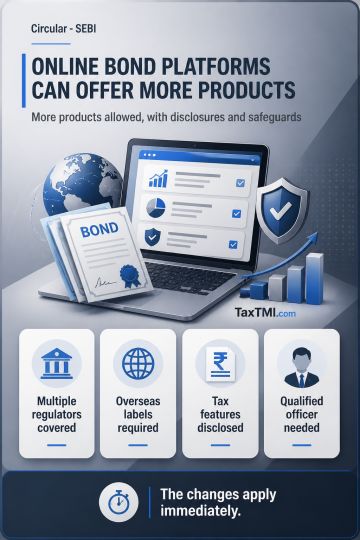
Online bond platforms may offer overseas-regulated products and tax-specific bonds subject to disclosures, compliance safeguards and revised complianc...
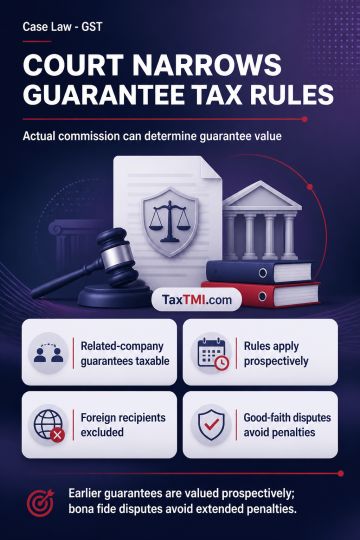
Corporate guarantee valuation permits actual ascertainable commission while barring retroactive application and extended-period penalties for bona fid...
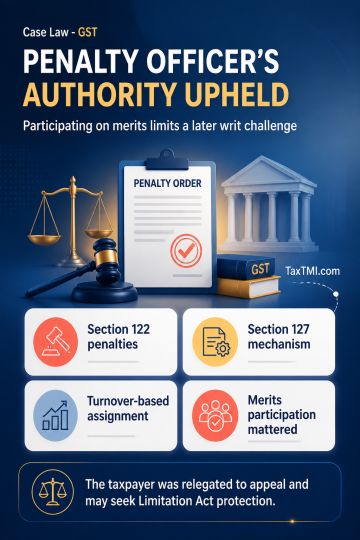
Proper-officer jurisdiction under UPGST penalty provisions upheld; participation on merits prevents bypassing the statutory appellate remedy through w...
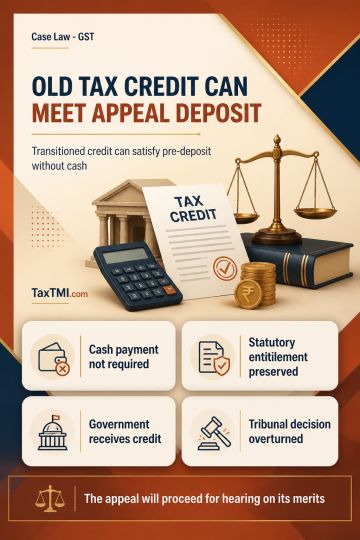
Transitioned CENVAT credit may validly satisfy mandatory pre-deposit requirements for legacy service tax appeals through Electronic Credit Ledger debi...
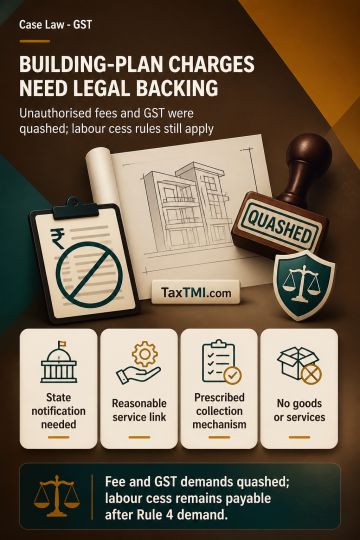
Building-plan sanction charges require statutory authority; unauthorised fees and GST were quashed, while labour cess must follow prescribed collectio...
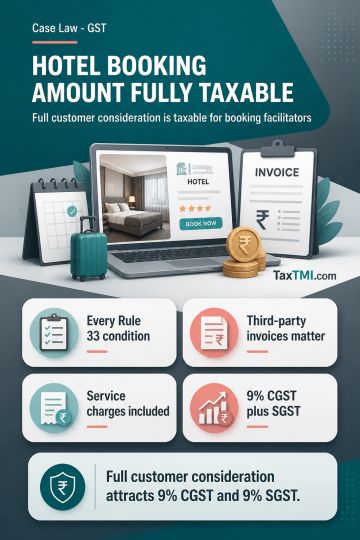
Pure-agent exclusion fails where hotel booking facilitators receive third-party services themselves, making entire customer consideration taxable as r...
The case pertains to the classification of imported goods such as binding material, parts for brake, disc brake pads, tool for mould, etc. under the Customs Tariff Headings (CTH) 38249090/38247900 or CTH 68138900. The key points are: The imported materials are more appropriately classifiable under Chapter Heading 6813 as friction material based on their composition and usage in brake pad manufacturing. The Material Safety Data Sheet also identifies them as friction material. Friction materials not mounted for brakes or clutches fall under CTH 6813. However, when mounted, including friction material fixed to a metal plate for disc brakes, they are classified as parts of the machines or vehicles for which they are designed. The imported product consists of a friction material bonded with a steel backing plate, forming an integrated component used in automotive vehicle brakes. Therefore, it is more appropriately classifiable under CTH 6813 and not under CTH 3824. Regarding the invocation of the extended period, the Tribunal held that in the absence of any finding of positive suppression by the importer, misclassification cannot be equated with misdeclaration within the meaning of Section 28(4) of the Customs Act, 1962. Considering the importer's consistent classification practice and regular imports, attributing any.
The case pertains to the classification of imported goods such as binding material, parts for brake, disc brake pads, tool for mould, etc. under the Customs Tariff Headings (CTH) 38249090/38247900 or CTH 68138900. The key points are: The imported materials are more appropriately classifiable under Chapter Heading 6813 as friction material based on their composition and usage in brake pad manufacturing. The Material Safety Data Sheet also identifies them as friction material. Friction materials not mounted for brakes or clutches fall under CTH 6813. However, when mounted, including friction material fixed to a metal plate for disc brakes, they are classified as parts of the machines or vehicles for which they are designed. The imported product consists of a friction material bonded with a steel backing plate, forming an integrated component used in automotive vehicle brakes. Therefore, it is more appropriately classifiable under CTH 6813 and not under CTH 3824. Regarding the invocation of the extended period, the Tribunal held that in the absence of any finding of positive suppression by the importer, misclassification cannot be equated with misdeclaration within the meaning of Section 28(4) of the Customs Act, 1962. Considering the importer's consistent classification practice and regular imports, attributing any.
Note: It is a system-generated summary and is for quick reference only.
 TaxTMI
 of 4800







 Join Channel


 TaxTMI