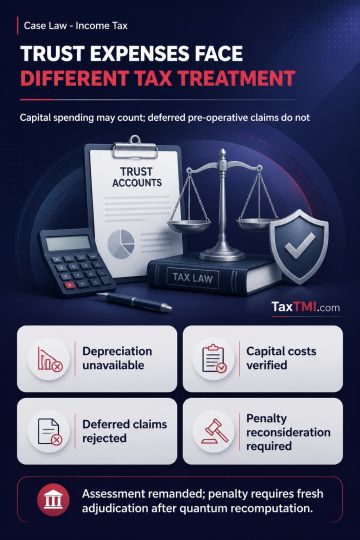
Charitable trust income application permits verified capital expenditure but rejects deferred pre-operative claims and requires reconsideration of con...
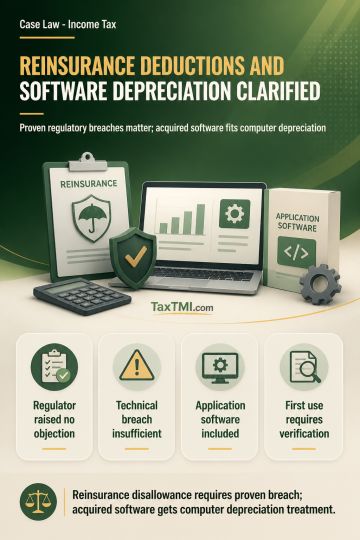
Reinsurance premium deductions require established regulatory breaches, while independently acquired software qualifies within the computer depreciati...
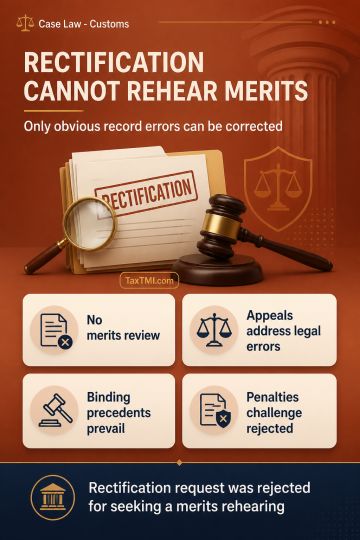
Rectification of mistake remains limited to self-evident record errors, preventing merits review through miscellaneous applications and preserving fin...
Tender creditworthiness conditions may extend to de facto Promoter Directors, with post-participation challenges generally barred absent arbitrariness...
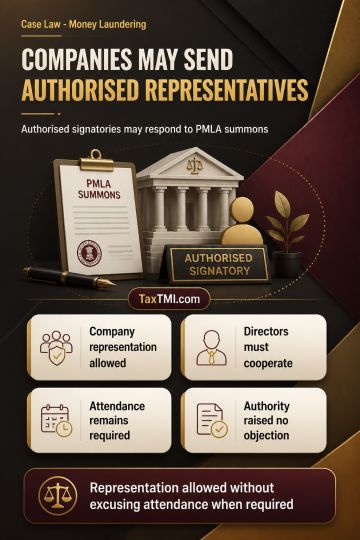
Corporate representation in PMLA summons proceedings permitted through an authorised signatory, subject to directors' continuing cooperation and atten...
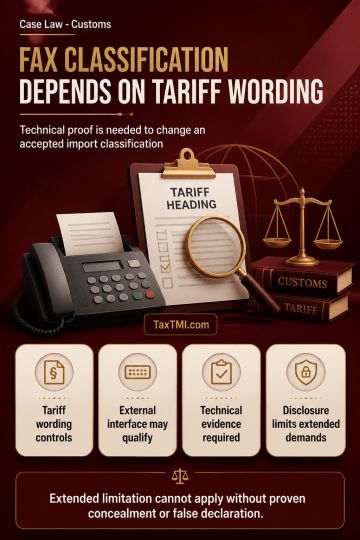
The case pertains to the classification of imported goods such as binding material, parts for brake, disc brake pads, tool for mould, etc. under the Customs Tariff Headings (CTH) 38249090/38247900 or CTH 68138900. The key points are: The imported materials are more appropriately classifiable under Chapter Heading 6813 as friction material based on their composition and usage in brake pad manufacturing. The Material Safety Data Sheet also identifies them as friction material. Friction materials not mounted for brakes or clutches fall under CTH 6813. However, when mounted, including friction material fixed to a metal plate for disc brakes, they are classified as parts of the machines or vehicles for which they are designed. The imported product consists of a friction material bonded with a steel backing plate, forming an integrated component used in automotive vehicle brakes. Therefore, it is more appropriately classifiable under CTH 6813 and not under CTH 3824. Regarding the invocation of the extended period, the Tribunal held that in the absence of any finding of positive suppression by the importer, misclassification cannot be equated with misdeclaration within the meaning of Section 28(4) of the Customs Act, 1962. Considering the importer's consistent classification practice and regular imports, attributing any.
The case pertains to the classification of imported goods such as binding material, parts for brake, disc brake pads, tool for mould, etc. under the Customs Tariff Headings (CTH) 38249090/38247900 or CTH 68138900. The key points are: The imported materials are more appropriately classifiable under Chapter Heading 6813 as friction material based on their composition and usage in brake pad manufacturing. The Material Safety Data Sheet also identifies them as friction material. Friction materials not mounted for brakes or clutches fall under CTH 6813. However, when mounted, including friction material fixed to a metal plate for disc brakes, they are classified as parts of the machines or vehicles for which they are designed. The imported product consists of a friction material bonded with a steel backing plate, forming an integrated component used in automotive vehicle brakes. Therefore, it is more appropriately classifiable under CTH 6813 and not under CTH 3824. Regarding the invocation of the extended period, the Tribunal held that in the absence of any finding of positive suppression by the importer, misclassification cannot be equated with misdeclaration within the meaning of Section 28(4) of the Customs Act, 1962. Considering the importer's consistent classification practice and regular imports, attributing any.
Note: It is a system-generated summary and is for quick reference only.
 TaxTMI
 of 4805









 Join Channel


 TaxTMI
