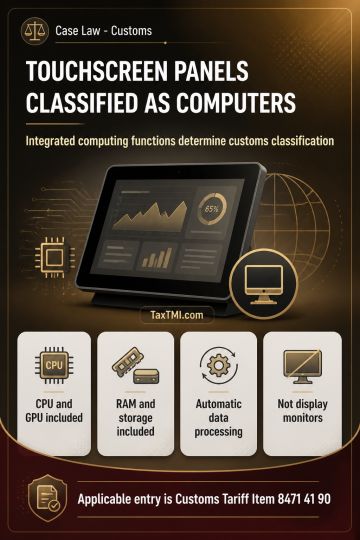
Interactive touchscreen panels with integrated computing functions fall under automatic data-processing machines rather than display monitors for cust...
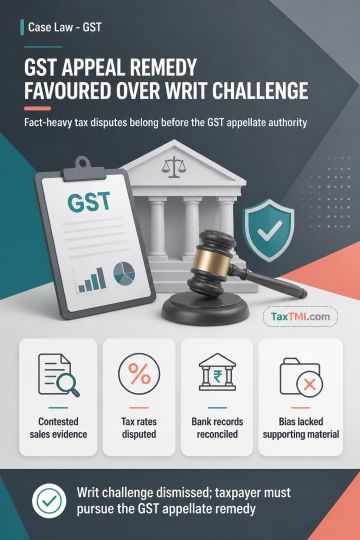
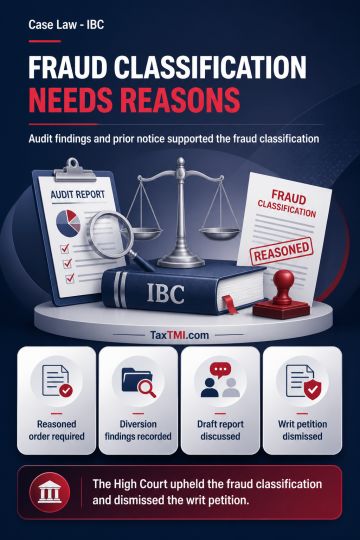
Ex parte injunction service requirements were substantially met, while civil recovery and SFIO investigation into provident fund defalcation continued...
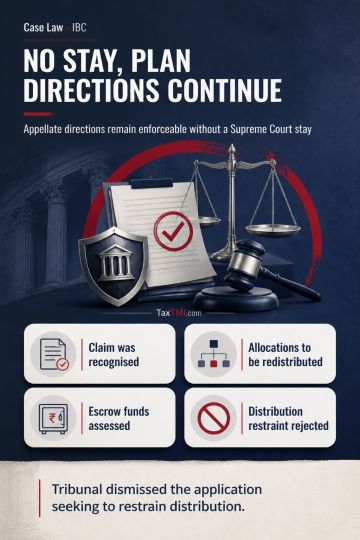
Enforcement of resolution-plan directions continues without a Supreme Court stay, preventing suspension of redistribution and escrowed-fund distributi...
Third-party ownership claims over attached property require Special Court adjudication where purchasers lack registered sale deeds and bona fides rema...
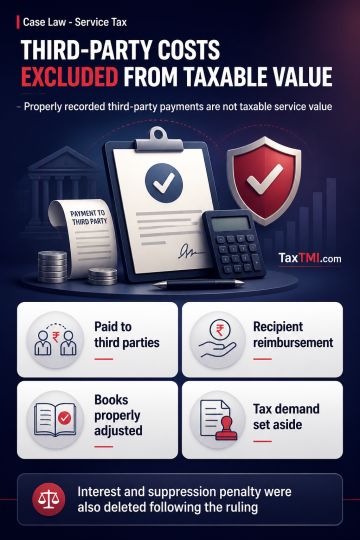
Pure-agent reimbursements in clearing and forwarding services are excluded from taxable value when qualifying third-party payments are properly record...
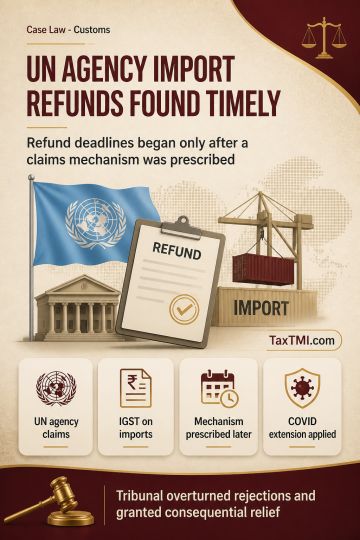
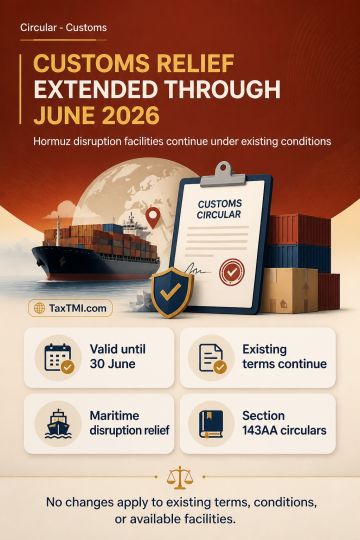
Customs relief for Strait of Hormuz maritime disruptions remains available, with existing conditions continuing unchanged through the extended validit...
The case pertains to the classification of imported goods such as binding material, parts for brake, disc brake pads, tool for mould, etc. under the Customs Tariff Headings (CTH) 38249090/38247900 or CTH 68138900. The key points are: The imported materials are more appropriately classifiable under Chapter Heading 6813 as friction material based on their composition and usage in brake pad manufacturing. The Material Safety Data Sheet also identifies them as friction material. Friction materials not mounted for brakes or clutches fall under CTH 6813. However, when mounted, including friction material fixed to a metal plate for disc brakes, they are classified as parts of the machines or vehicles for which they are designed. The imported product consists of a friction material bonded with a steel backing plate, forming an integrated component used in automotive vehicle brakes. Therefore, it is more appropriately classifiable under CTH 6813 and not under CTH 3824. Regarding the invocation of the extended period, the Tribunal held that in the absence of any finding of positive suppression by the importer, misclassification cannot be equated with misdeclaration within the meaning of Section 28(4) of the Customs Act, 1962. Considering the importer's consistent classification practice and regular imports, attributing any.
The case pertains to the classification of imported goods such as binding material, parts for brake, disc brake pads, tool for mould, etc. under the Customs Tariff Headings (CTH) 38249090/38247900 or CTH 68138900. The key points are: The imported materials are more appropriately classifiable under Chapter Heading 6813 as friction material based on their composition and usage in brake pad manufacturing. The Material Safety Data Sheet also identifies them as friction material. Friction materials not mounted for brakes or clutches fall under CTH 6813. However, when mounted, including friction material fixed to a metal plate for disc brakes, they are classified as parts of the machines or vehicles for which they are designed. The imported product consists of a friction material bonded with a steel backing plate, forming an integrated component used in automotive vehicle brakes. Therefore, it is more appropriately classifiable under CTH 6813 and not under CTH 3824. Regarding the invocation of the extended period, the Tribunal held that in the absence of any finding of positive suppression by the importer, misclassification cannot be equated with misdeclaration within the meaning of Section 28(4) of the Customs Act, 1962. Considering the importer's consistent classification practice and regular imports, attributing any.
Note: It is a system-generated summary and is for quick reference only.
 TaxTMI
 of 4803









 Join Channel


 TaxTMI