Necessary-party requirements limit impleadment of independent entities, while deferred consideration does not create an appealable adverse determinati...
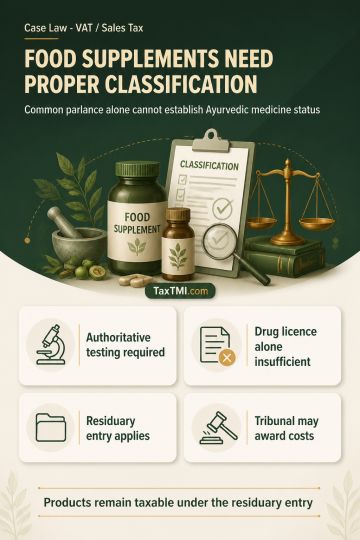
Food supplement classification requires common parlance and authoritative tests, preventing treatment as proprietary Ayurvedic medicines without suppo...
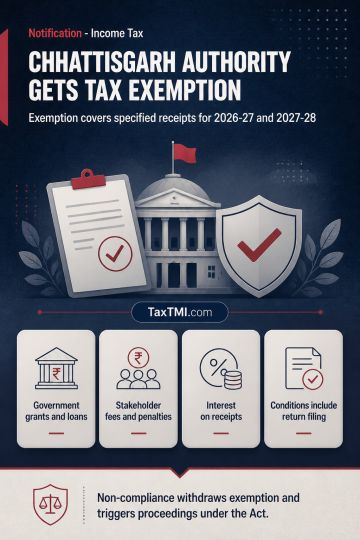
Specified regulatory authority income receives conditional tax exemption, subject to non-commercial activity, unchanged income character, and return f...
Tax exemption for regulatory authority income applies retrospectively, subject to non-commercial activity, unchanged income sources, and return-filing...
Input tax credit conditions remain constitutionally valid, with eligible recipient claims considered under GST circulars and retrospective filing dead...
Service tax liability cannot be imposed twice on the same transaction. The appellant, as a service recipient, was required to pay 75% of the service tax under the reverse charge mechanism for manpower supply agency services. However, the undisputed fact is that the service provider, M/s. Kalpataru Job Management, had already discharged 100% of the applicable service tax, as reflected in their invoice. Demanding service tax from the appellant would amount to recovering the tax twice, which is impermissible. The CESTAT Bangalore Bench in Kerala Ceramics Ltd vs CCE case held that if the transporter has discharged the service tax liability and provided documentary evidence, the same cannot be demanded from the recipient. Since 100% service tax was paid by the service provider, it cannot be recovered from the appellant. Consequently, the impugned order is set aside, and the appeal is allowed.
Service tax liability cannot be imposed twice on the same transaction. The appellant, as a service recipient, was required to pay 75% of the service tax under the reverse charge mechanism for manpower supply agency services. However, the undisputed fact is that the service provider, M/s. Kalpataru Job Management, had already discharged 100% of the applicable service tax, as reflected in their invoice. Demanding service tax from the appellant would amount to recovering the tax twice, which is impermissible. The CESTAT Bangalore Bench in Kerala Ceramics Ltd vs CCE case held that if the transporter has discharged the service tax liability and provided documentary evidence, the same cannot be demanded from the recipient. Since 100% service tax was paid by the service provider, it cannot be recovered from the appellant. Consequently, the impugned order is set aside, and the appeal is allowed.
Note: It is a system-generated summary and is for quick reference only.
 TaxTMI
 of 4805
















 Join Channel


 TaxTMI

