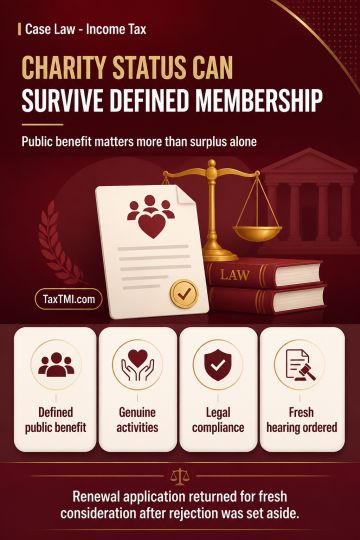
Defined public benefit can retain charitable character; registration renewal requires examining genuine activities and legal compliance, not surplus a...
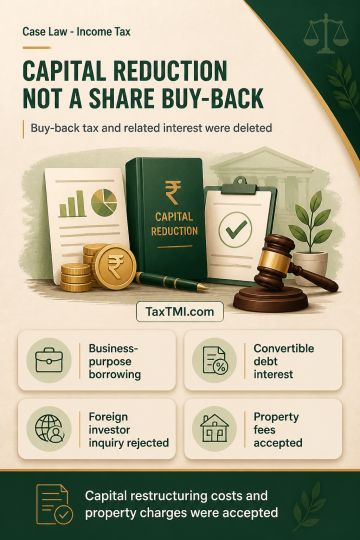
Capital reduction is distinct from share buy-back, preventing buy-back tax; restructuring interest and related business deductions also survive scruti...
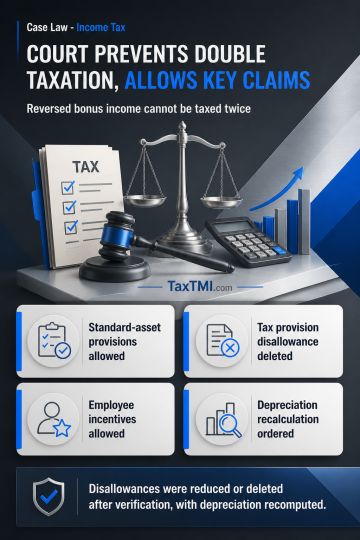
Transfer pricing and tax deductions upheld on established principles, while employee contributions and warranty provisions returned for fresh examinat...
Captive transfer pricing relies on industrial consumer tariffs, while genuine quotations can benchmark effluent treatment transfers under the Other Me...
Specific tariff classification for ophthalmic instruments and extended limitation principles determine the treatment of duty demands, confiscation, an...
Wrongful transfer of credit attributable to all units by the Input Service Distributor (ISD) exclusively to the respondent, contravening the second proviso to Rule 3(4) of the Cenvat Credit Rules. The tribunal held that the credit of service tax paid on Clearing & Forwarding Agents Services is eligible as it is a post-manufacturing activity not used in or in relation to manufacturing goods. The proviso limiting credit availment does not apply when credit is availed based on invoices issued by ISD. The department lacks jurisdiction to question the correctness of credit distributed by ISD from the recipient merely availing credit based on ISD invoices. Services like advertisement, manpower recruitment, market research are used by all units, and no input service was exclusively utilized in respondent's Guwahati units. Hence, ISD correctly followed Section 7(b). The extended period of limitation cannot be invoked as respondent and ISD regularly filed returns showing Cenvat Credit availed without concealing material facts. Interest and penalty are not applicable since the service tax demand itself is unsustainable. The tribunal upheld the Commissioner's order dismissing the Revenue's appeal.
Wrongful transfer of credit attributable to all units by the Input Service Distributor (ISD) exclusively to the respondent, contravening the second proviso to Rule 3(4) of the Cenvat Credit Rules. The tribunal held that the credit of service tax paid on Clearing & Forwarding Agents Services is eligible as it is a post-manufacturing activity not used in or in relation to manufacturing goods. The proviso limiting credit availment does not apply when credit is availed based on invoices issued by ISD. The department lacks jurisdiction to question the correctness of credit distributed by ISD from the recipient merely availing credit based on ISD invoices. Services like advertisement, manpower recruitment, market research are used by all units, and no input service was exclusively utilized in respondent's Guwahati units. Hence, ISD correctly followed Section 7(b). The extended period of limitation cannot be invoked as respondent and ISD regularly filed returns showing Cenvat Credit availed without concealing material facts. Interest and penalty are not applicable since the service tax demand itself is unsustainable. The tribunal upheld the Commissioner's order dismissing the Revenue's appeal.
Note: It is a system-generated summary and is for quick reference only.
 TaxTMI
 of 4805















 Join Channel


 TaxTMI

