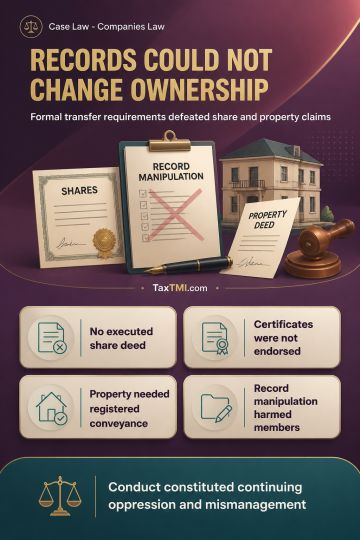
Statutory transfer formalities invalidated alleged share and property transfers, while retrospective record manipulation constituted oppression and mi...
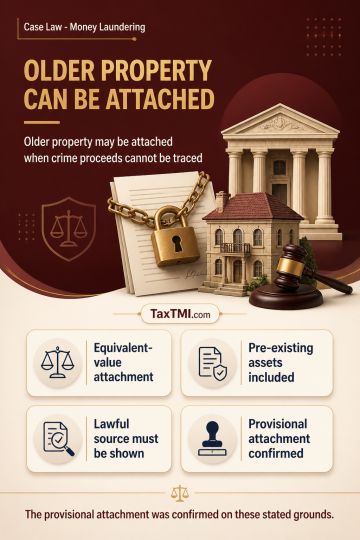
Provisional attachment of laundered funds and equivalent-value property sustained, with statutory protection limited to pension, gratuity and providen...
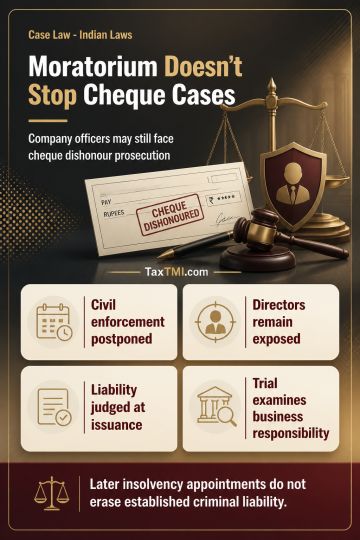
Insolvency moratorium does not shield company officers from cheque dishonour prosecution for liability arising before corporate insolvency proceedings...
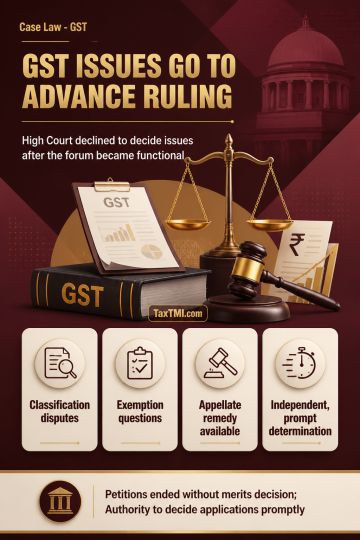
Advance-ruling mechanism governs pending GST classification, exemption and taxability disputes, limiting writ review once the specialised forum functi...
Page of 4805
Press 'Enter' after typing page number.
921 to 940 of 96092 Results
❮
❯
❯❯
0 / 200
Expand Note
Add to Folder
No Folders have been created
+
Are you sure you want to delete "My most important" ?
Wrongful transfer of credit attributable to all units by the Input Service Distributor (ISD) exclusively to the respondent, contravening the second proviso to Rule 3(4) of the Cenvat Credit Rules. The tribunal held that the credit of service tax paid on Clearing & Forwarding Agents Services is eligible as it is a post-manufacturing activity not used in or in relation to manufacturing goods. The proviso limiting credit availment does not apply when credit is availed based on invoices issued by ISD. The department lacks jurisdiction to question the correctness of credit distributed by ISD from the recipient merely availing credit based on ISD invoices. Services like advertisement, manpower recruitment, market research are used by all units, and no input service was exclusively utilized in respondent's Guwahati units. Hence, ISD correctly followed Section 7(b). The extended period of limitation cannot be invoked as respondent and ISD regularly filed returns showing Cenvat Credit availed without concealing material facts. Interest and penalty are not applicable since the service tax demand itself is unsustainable. The tribunal upheld the Commissioner's order dismissing the Revenue's appeal.
Wrongful transfer of credit attributable to all units by the Input Service Distributor (ISD) exclusively to the respondent, contravening the second proviso to Rule 3(4) of the Cenvat Credit Rules. The tribunal held that the credit of service tax paid on Clearing & Forwarding Agents Services is eligible as it is a post-manufacturing activity not used in or in relation to manufacturing goods. The proviso limiting credit availment does not apply when credit is availed based on invoices issued by ISD. The department lacks jurisdiction to question the correctness of credit distributed by ISD from the recipient merely availing credit based on ISD invoices. Services like advertisement, manpower recruitment, market research are used by all units, and no input service was exclusively utilized in respondent's Guwahati units. Hence, ISD correctly followed Section 7(b). The extended period of limitation cannot be invoked as respondent and ISD regularly filed returns showing Cenvat Credit availed without concealing material facts. Interest and penalty are not applicable since the service tax demand itself is unsustainable. The tribunal upheld the Commissioner's order dismissing the Revenue's appeal.
Note: It is a system-generated summary and is for quick reference only.
 TaxTMI
 of 4805





 Join Channel


 TaxTMI