Defined public benefit can retain charitable character; registration renewal requires examining genuine activities and legal compliance, not surplus a...
Capital reduction is distinct from share buy-back, preventing buy-back tax; restructuring interest and related business deductions also survive scruti...
Transfer pricing and tax deductions upheld on established principles, while employee contributions and warranty provisions returned for fresh examinat...
Captive transfer pricing relies on industrial consumer tariffs, while genuine quotations can benchmark effluent treatment transfers under the Other Me...
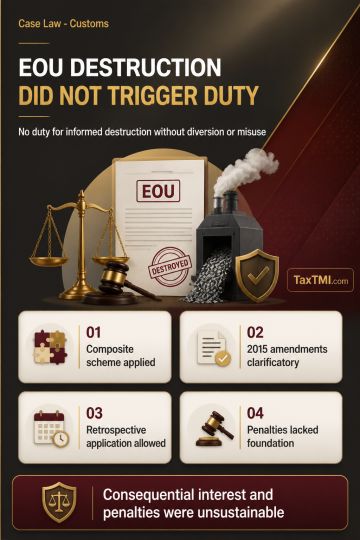
Specific tariff classification for ophthalmic instruments and extended limitation principles determine the treatment of duty demands, confiscation, an...
The assessee challenged the penalty imposed u/s 271(1)(c) for short credit of sale consideration received from the sale of copyrights and cable rights. The issue centered around whether the penalty was levied for concealment of income or furnishing inaccurate particulars of income. The notice issued u/s 274 read with Section 271(1)(c) did not specify the nature of the default. Judicial precedents have held that when the charge is not clearly specified in the penalty notice, the penalty proceedings are rendered invalid. The Hon'ble Supreme Court and Karnataka High Court have ruled that vague notices u/s 274 render the penalty proceedings void ab initio. In the present case, the Assessing Officer failed to specify the exact charge, which is a procedural lapse. Even on merits, the addition sustained by the CIT(Appeals) related to a disputed adjustment of sale consideration, with no finding that the assessee deliberately concealed income or furnished inaccurate particulars. The assessee's explanation appeared bonafide, and there was no evidence of malafide intention. Consequently, the imposition of penalty could not be sustained, and the assessee's appeal was allowed.
The assessee challenged the penalty imposed u/s 271(1)(c) for short credit of sale consideration received from the sale of copyrights and cable rights. The issue centered around whether the penalty was levied for concealment of income or furnishing inaccurate particulars of income. The notice issued u/s 274 read with Section 271(1)(c) did not specify the nature of the default. Judicial precedents have held that when the charge is not clearly specified in the penalty notice, the penalty proceedings are rendered invalid. The Hon'ble Supreme Court and Karnataka High Court have ruled that vague notices u/s 274 render the penalty proceedings void ab initio. In the present case, the Assessing Officer failed to specify the exact charge, which is a procedural lapse. Even on merits, the addition sustained by the CIT(Appeals) related to a disputed adjustment of sale consideration, with no finding that the assessee deliberately concealed income or furnished inaccurate particulars. The assessee's explanation appeared bonafide, and there was no evidence of malafide intention. Consequently, the imposition of penalty could not be sustained, and the assessee's appeal was allowed.
Note: It is a system-generated summary and is for quick reference only.
 TaxTMI
 of 4805



















 Join Channel


 TaxTMI