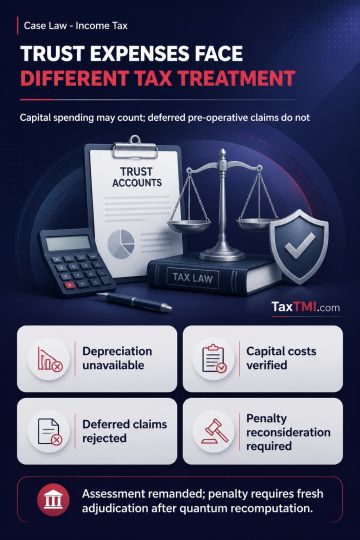
Charitable trust income application permits verified capital expenditure but rejects deferred pre-operative claims and requires reconsideration of con...
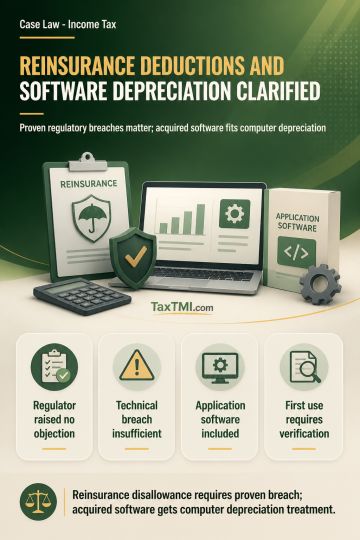
Reinsurance premium deductions require established regulatory breaches, while independently acquired software qualifies within the computer depreciati...
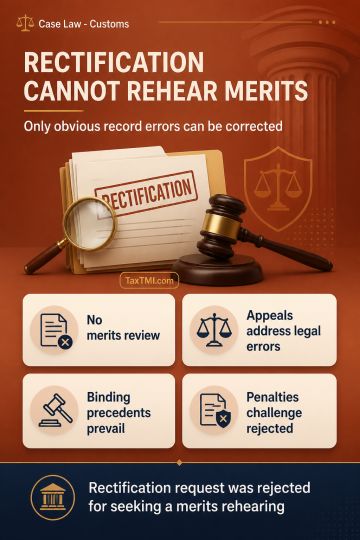
Rectification of mistake remains limited to self-evident record errors, preventing merits review through miscellaneous applications and preserving fin...
Tender creditworthiness conditions may extend to de facto Promoter Directors, with post-participation challenges generally barred absent arbitrariness...
Corporate representation in PMLA summons proceedings permitted through an authorised signatory, subject to directors' continuing cooperation and atten...
Interpretation of the phrase "reason to believe" u/s 110 of the Customs Act, which is a crucial safeguard for authorizing officers to conduct searches. The court examined the legal principles governing "reason to believe," emphasizing that it cannot be arbitrary, capricious, or whimsical, and must be based on material evidence. The officer must independently apply their mind and not merely reproduce statutory words mechanically. The reasons must be self-explanatory and cannot be supported by extraneous material. In the present case, the suspected opinion of local traders that the seized dried areca nuts were of foreign origin was deemed unreliable and unacceptable, as their origin could not be conclusively determined by mere visual inspection. The court held that the seizure memo lacked valid reasons and set it aside, discharging the bank guarantee and ordering the release of the seized goods within three months.
Interpretation of the phrase "reason to believe" u/s 110 of the Customs Act, which is a crucial safeguard for authorizing officers to conduct searches. The court examined the legal principles governing "reason to believe," emphasizing that it cannot be arbitrary, capricious, or whimsical, and must be based on material evidence. The officer must independently apply their mind and not merely reproduce statutory words mechanically. The reasons must be self-explanatory and cannot be supported by extraneous material. In the present case, the suspected opinion of local traders that the seized dried areca nuts were of foreign origin was deemed unreliable and unacceptable, as their origin could not be conclusively determined by mere visual inspection. The court held that the seizure memo lacked valid reasons and set it aside, discharging the bank guarantee and ordering the release of the seized goods within three months.
Note: It is a system-generated summary and is for quick reference only.
 TaxTMI
 of 4805













 Join Channel


 TaxTMI
