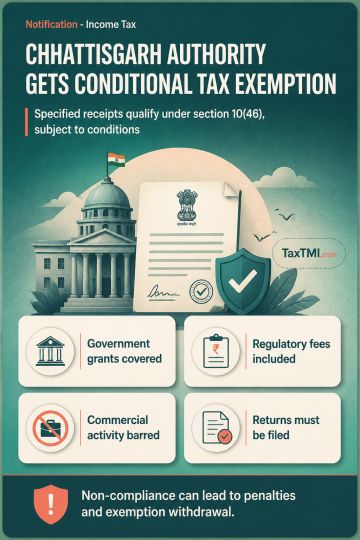
Specified regulatory authority income receives conditional tax exemption, subject to non-commercial activity, unchanged income character, and return f...
Tax exemption for regulatory authority income applies retrospectively, subject to non-commercial activity, unchanged income sources, and return-filing...
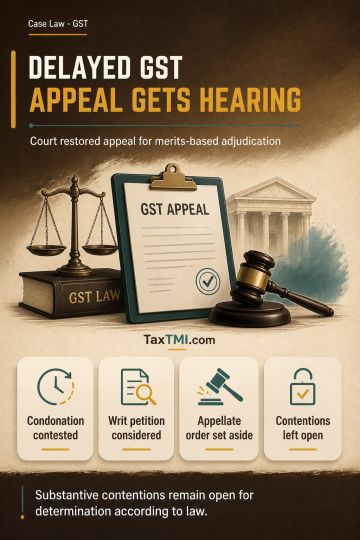
Input tax credit conditions remain constitutionally valid, with eligible recipient claims considered under GST circulars and retrospective filing dead...
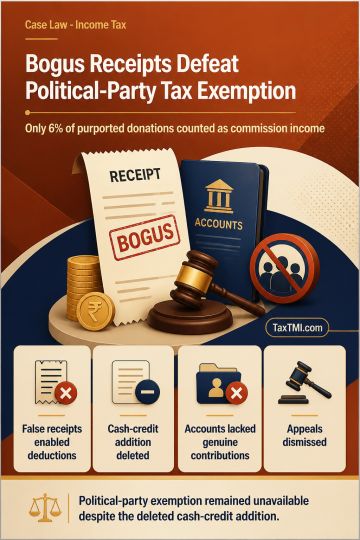
Bogus donation receipts justified commission income assessment and defeated political-party tax exemption for inaccurate accounts and reporting failur...
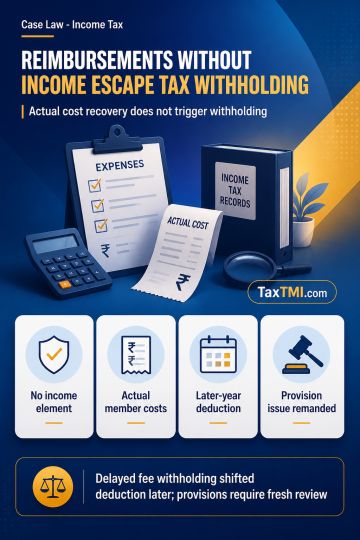
Pure reimbursement without income element escapes tax withholding, while delayed withholding and unsupported provisions face deferred or renewed scrut...
Public benefit requirement defeats charitable registration where residents' association services are reciprocal, member-only facilities governed by mu...
Interpretation of the phrase "reason to believe" u/s 110 of the Customs Act, which is a crucial safeguard for authorizing officers to conduct searches. The court examined the legal principles governing "reason to believe," emphasizing that it cannot be arbitrary, capricious, or whimsical, and must be based on material evidence. The officer must independently apply their mind and not merely reproduce statutory words mechanically. The reasons must be self-explanatory and cannot be supported by extraneous material. In the present case, the suspected opinion of local traders that the seized dried areca nuts were of foreign origin was deemed unreliable and unacceptable, as their origin could not be conclusively determined by mere visual inspection. The court held that the seizure memo lacked valid reasons and set it aside, discharging the bank guarantee and ordering the release of the seized goods within three months.
Interpretation of the phrase "reason to believe" u/s 110 of the Customs Act, which is a crucial safeguard for authorizing officers to conduct searches. The court examined the legal principles governing "reason to believe," emphasizing that it cannot be arbitrary, capricious, or whimsical, and must be based on material evidence. The officer must independently apply their mind and not merely reproduce statutory words mechanically. The reasons must be self-explanatory and cannot be supported by extraneous material. In the present case, the suspected opinion of local traders that the seized dried areca nuts were of foreign origin was deemed unreliable and unacceptable, as their origin could not be conclusively determined by mere visual inspection. The court held that the seizure memo lacked valid reasons and set it aside, discharging the bank guarantee and ordering the release of the seized goods within three months.
Note: It is a system-generated summary and is for quick reference only.
 TaxTMI
 of 4805


















 Join Channel


 TaxTMI