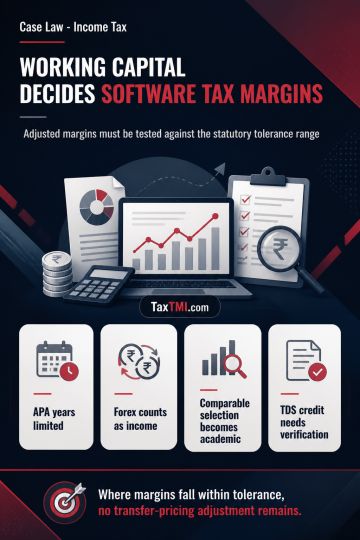
Working-capital adjustment determines whether software-services transfer-pricing margins fall within the statutory tolerance range, eliminating any ad...
Permanent establishment deductions upheld for expatriate salaries, direct costs and trading losses, while head-office costs require fresh classificati...
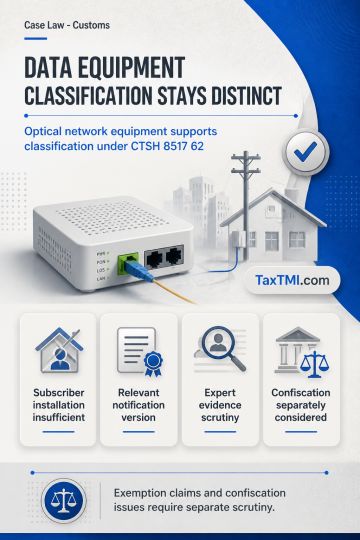
Data transmission equipment classification under CTSH 8517 62 remains distinct from residual classification, with exemption evidence requiring scrutin...
The appellant challenged the demand of customs duty and penalties imposed on the grounds of alleged clandestine clearance of short found goods from their factory premises. The Tribunal held that the Revenue failed to provide corroborative evidence or conduct proper investigation from the transporter and buyer to establish the clandestine removal. Relying solely on the statement of the appellant's director without cross-examination is not sustainable. The burden of proof lies on the Revenue to establish their case beyond doubt with sufficient evidence. As the Revenue failed to discharge this burden effectively, the demand was set aside, and the appeal was allowed.
The appellant challenged the demand of customs duty and penalties imposed on the grounds of alleged clandestine clearance of short found goods from their factory premises. The Tribunal held that the Revenue failed to provide corroborative evidence or conduct proper investigation from the transporter and buyer to establish the clandestine removal. Relying solely on the statement of the appellant's director without cross-examination is not sustainable. The burden of proof lies on the Revenue to establish their case beyond doubt with sufficient evidence. As the Revenue failed to discharge this burden effectively, the demand was set aside, and the appeal was allowed.
Note: It is a system-generated summary and is for quick reference only.
 TaxTMI
 of 4805














 Join Channel


 TaxTMI